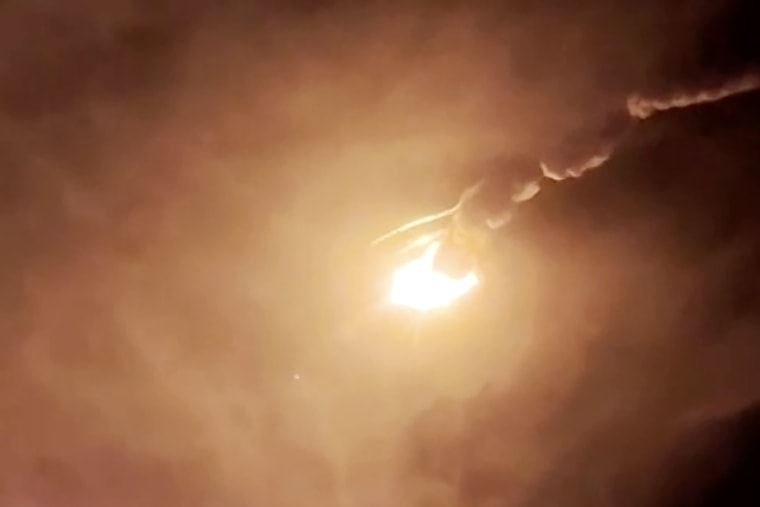
On Monday, China’s Long March 7A rocket carrying the ChinaSat-4B satellite encountered an in-flight anomaly shortly after takeoff. The launch took place at 8:02 p.m. Beijing time from the Wenchang space launch site in Hainan, a southern island province. China’s state-run news agency, Xinhua, reported the mission’s failure, and the cause is under investigation. The Chinese National Space Administration has yet to provide a response to inquiries about the incident.
SpaceX founder Elon Musk commented on the incident on social media, noting the inherent challenges of rocket technology. “Rockets are insanely hard,” Musk remarked, expressing hope for a quick recovery.
Jonathan McDowell, an honorary professor at Durham University, observed that launch footage revealed the rocket was destroyed at a low altitude and speed. This destruction prevented the satellite and debris from reaching orbit. This failure marks the Long March 7A’s first unsuccessful flight since its debut in March 2020 when another in-flight malfunction occurred.
After the initial setback, the Long March 7A successfully completed over a dozen missions after resuming flights a year later. A report, briefly posted online, identified the payload as Zhongxing-4B, also known as ChinaSat-4B, and specified the launcher as a modified Long March 7A rocket.
The ChinaSat-4B is considered part of the ChinaSat-4 series. China describes this series as vital for delivering voice, data, radio, and television transmissions. These high-orbit satellites are crucial for broadcasting and telecommunications across wide areas, including remote locations without terrestrial network access. The specific capabilities of ChinaSat-4B remain unclear.
The Long March 7A is designed for high-orbit missions, and findings from the ongoing investigation will determine if this failure is isolated or linked to broader issues within the rocket program.
Industry expert Blaine Curcio highlighted that the Long March 7A primarily serves to deploy communications satellites to high orbit. Consequently, this incident should not significantly disrupt other launches, particularly those involving China’s smaller satellites in low Earth orbit.
Meanwhile, preparations for the Chang’e-7 lunar mission continue at Wenchang. Official statements plan for a launch in the second half of 2026, although potential windows exist earlier, including this month. The mission will utilize a Long March 5 rocket, distinct from the Long March 7A, limiting the recent failure’s impact on the Chang’e-7 timeline.
Leave a Reply