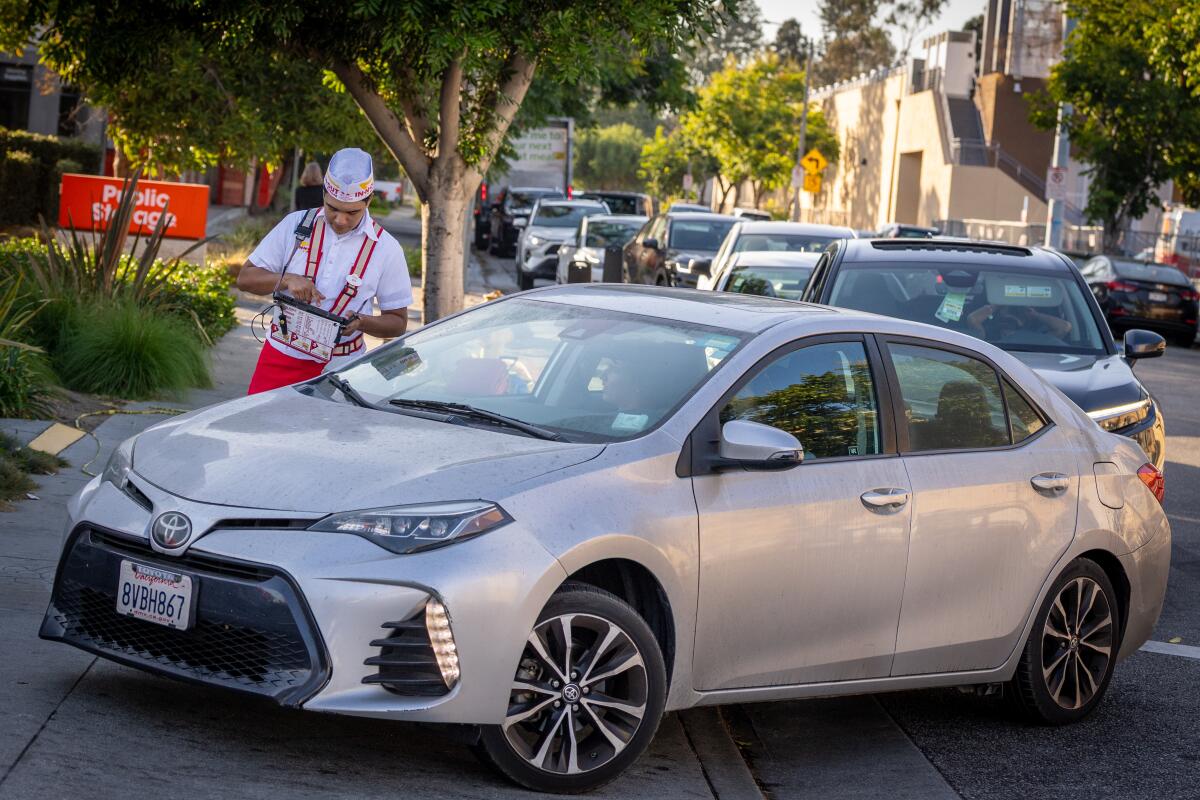
While many cities and their residents eagerly welcome burger icon In-N-Out to open new locations, Culver City in Southern California has pushed back. Residents raised concerns when In-N-Out showed interest in opening a drive-through in the community, citing pollution, traffic congestion, and safety near schools.
The City Council responded by imposing a moratorium on new drive-throughs. This decision has drawn national attention, reflecting broader concerns about the spread of drive-through restaurants. These setups have flourished due to their car-friendly designs, deemed essential for financial viability by retail businesses.
The recent pandemic further popularized drive-throughs as they offer a low-contact food acquisition method. California’s first drive-through appeared in Baldwin Park in 1948 through In-N-Out, marking a significant shift in American dining habits. However, Culver City represents a growing backlash against this trend.
“Drive-throughs are pollution monsters,” resident Leah Pressman stated at a council meeting. Others shared worries over traffic dangers and food aromas disrupting children’s studies at a nearby school.
In response to this community opposition, the City Council extended an initial 45-day moratorium to a full year, giving time to study the impacts and consider a permanent ban. Council member Bubba Fish noted strong engagement from diverse residents who oppose drive-throughs in their neighborhoods.
Advocates argue that banning drive-throughs could enhance neighborhood walkability and support local shops. Vanessa Martin, a community organizer, emphasized the benefits for people with disabilities and vulnerable groups.
Though drive-through bans aren’t new, several cities implemented them in the 1980s and 1990s. According to Marcel Moran of San José State University, drive-throughs contribute to pollution and social isolation.
Daniel Mendoza from the University of Utah highlighted emissions from idling cars. Studies of drive-through configurations in Houston found lower emissions with fewer stops and lanes.
Weather-triggered advisories in Texas warned residents to avoid drive-throughs due to elevated ozone levels from idling cars, posing health risks.
In previous decades, California cities like Santa Barbara enacted bans or restrictions on drive-throughs due to traffic, noise, and aesthetics concerns. Long Beach developed zoning restrictions in 2019 to manage the influx.
However, bans aren’t always permanent. Carlsbad softened its drive-through policies recently, recognizing potential revenue gains. A local ban led nearby cities to attract businesses just outside city limits.
Jot Condie from the California Restaurant Association advised Culver City to thoroughly consider the community’s diverse needs, emphasizing accessibility drive-throughs provide.
The temporary moratorium in Culver City exempts existing drive-throughs from changes. The proposed In-N-Out, if approved, would be the first new drive-through since 1997. The development plan includes substantial parking and lanes around an outdoor seating area.
While drive-through bans seem novel to California’s car culture, Council member Albert Vera acknowledged how community voices changed his mind from initially supporting In-N-Out’s proposal.
Leave a Reply