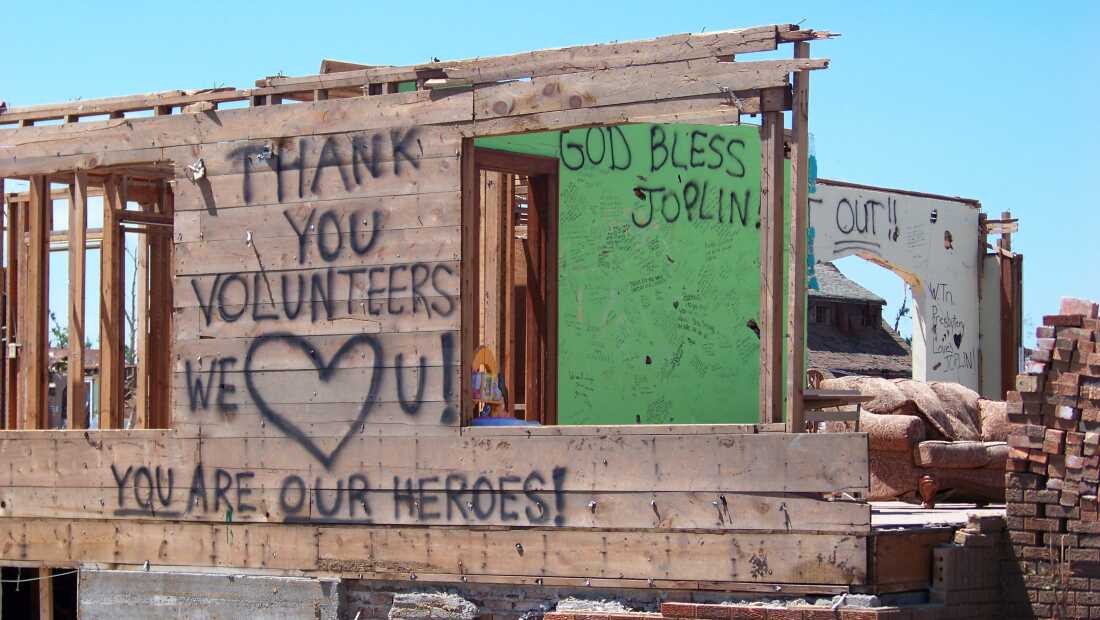
In the aftermath of a devastating tornado, thousands of volunteers from across the United States arrived in Joplin to assist. They inscribed messages of hope on damaged houses. Later, Joplin residents expressed their gratitude with a message addressed to these volunteers.
Nanda Nunnelly had recently returned from a trip when, on May 22, 2011, a massive, multi-vortex tornado struck Joplin, Missouri. She remembers seeing an ominous green hue in the sky. When the tornado alarms sounded, she sought refuge in a closet with her husband and dog. “It became so loud that it felt silent,” Nunnelly recalls. While hiding, she wondered if the 200 mph winds would claim her life, prompting her to pray, “If I’m dying, dear God, please don’t let it hurt.” Nunnelly survived, but her home was destroyed, and many in the city were displaced. This tornado, spanning three-quarters of a mile, became one of the deadliest in U.S. history, resulting in nearly 160 fatalities.
Despite the tragedy, Joplin quickly became a symbol of resilience and cooperation. Community compassion remains a hallmark of the city’s recovery years after the event. Within months, nearly 100,000 volunteers from across the nation helped clear debris and rebuild. Researchers from Columbia University noted the absence of major political disputes over recovery efforts. Schools managed to reopen on schedule by the following fall.
Darren Fullerton, who coordinated a Red Cross emergency shelter at Missouri Southern State University, remembers the outpouring of kindness in those hectic weeks. Ranchers cooked steakhouses for volunteers. A university dean, having lost his home, set up sleeping arrangements for others. A clown entertained children at the shelter. “People emerged from nowhere to help,” Fullerton remarks.
One of the first priorities after the tornado was clearing millions of cubic yards of debris, a task managed by government, private sectors, volunteer agencies, and ordinary citizens.
Joplin’s then vice-mayor, Melodee Colbert-Kean, notes that recovery efforts broke down social barriers. “Skin color, political affiliations didn’t matter,” she says. “We all aimed to meet needs where we saw them.”
Social psychologist Jamil Zaki describes this as “catastrophe compassion” — a surge of kindness among strangers during disasters. Zaki, Stanford’s Social Neuroscience Lab director, explains that crises like Joplin’s tornado encourage people to identify as “survivors,” fostering strong connections with others in the same situation.
For Nanda Nunnelly, personal reflection during the storm left a lasting impact. While sheltering in a closet, she recalled bullying a girl in eighth grade. This thought prompted her to later reach out and apologize through a personal Facebook message. Nunnelly believes the tornado’s ordeal drove her to give back to others. She returned to Joplin, joining a community center board assisting the unhoused during extreme weather.
Zaki mentions the concept of “altruism born of suffering,” where personal hardships often lead to benevolent actions. This idea explains why people who have faced struggles often assist others experiencing similar challenges.
Jane Cage recalls church groups with chainsaws clearing fallen trees and Harley Davidson riders buying school supplies for local children after the tornado. Such memories continue bonding Joplin’s tornado survivors, even years later. However, community bonds can weaken over time; some research indicates that altruistic communities formed post-disaster often dissolve after several months.
Zaki and other experts believe that preserving the ethos of solidarity requires intentional efforts like group meetings and commemorations. Years after the disaster, Joplin residents established “One Joplin,” a collaborative group that continues community service efforts.
Minister Jay St. Clair transformed his church into a refuge for nursing home residents and now manages a transitional housing program. “From the start, we realized ‘we’re better together,'” he states. Observing and addressing community needs became sharper post-tornado, according to St. Clair.
Data from over 150 countries during the pandemic indicates a rise in kindness, although many Americans perceived the opposite. Disasters reveal our true nature, Zaki affirms, often more positively than expected.
Pauline Bartolone is a journalist in the San Francisco Bay area, receiving support from the “Spreading Love Through the Media” initiative.
Leave a Reply