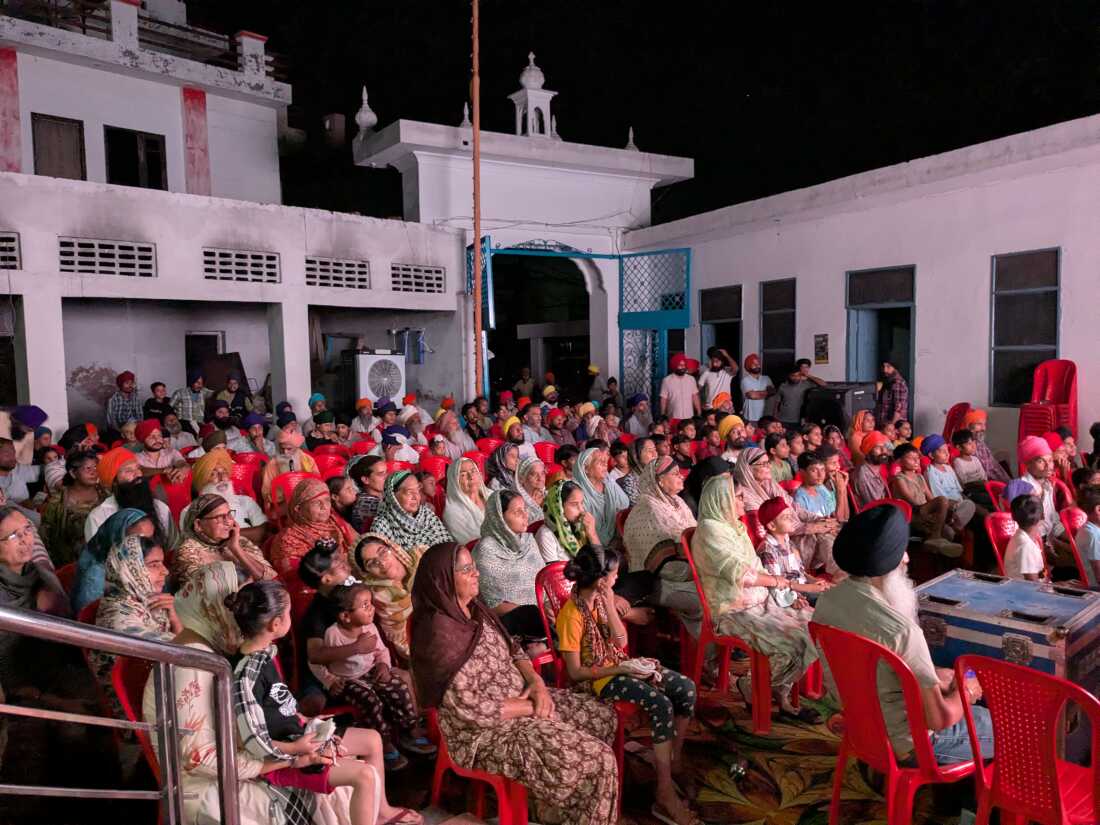
In early July, villagers in Bandala, Punjab, attended the screening of Satluj, a film banned by the Indian government over ‘national security’ concerns. Despite the government’s stance, many locals came together at the Sikh temple to watch the movie. Without a theatrical release certificate, the film was removed from streaming soon after its online debut. The Ministry of Information and Broadcasting did not provide NPR with any comments.
Promotional posters for Satluj, a film telling the story of Jaswant Singh Khalra, appeared widely throughout the village. Khalra was an activist known for documenting police-led killings during a violent separatist period beginning in 1984. The Indian army had stormed the Golden Temple in 1984, leading to a series of tragic events including the assassination of Indira Gandhi.
Typically, the Indian government has restricted or requested edits to several films, but the reaction to the Satluj ban has been notably defiant. Sikh leaders encouraged viewings across Punjab, leading to community-led screenings. Sociologist Sanjay Srivastava notes this illustrates unresolved tensions highlighted in the film.
The 1990s Sikh Separatist Movement
Set in the 1990s, the film addresses the aftermath of the Sikh separatist movement’s militant turn. Sarabjit Singh Verka, a lawyer with the Punjab Human Rights Organisation, shared stories of violence where police felt justified in killing militants. Officers often operated with few restraints, sometimes misusing their power for extortion and cover-ups. Jaswant Singh Khalra collected evidence of these killings, seeking justice through legal systems before his own abduction and demise in 1995.
Human rights lawyer Verka emphasizes the need for a truth and reconciliation commission to truly discover past events. Khalra’s compiled data alleged high numbers of unlawful deaths, but without government acknowledgment, many perpetrators faced no accountability. The film highlights these themes.
Resistance to Government Censorship
The film’s creators, including director Honey Trehan, faced prolonged delays from film certification boards. Though Satluj drew from credible sources, hesitation continued. The film was quickly pulled from streaming service Zee5, referencing ongoing developments. While frustration grew, bootleg versions circulated widely. Some Indian officials voiced concern that the film could spur separatist sentiments.
Film journalist Anna M.M. Vetticad critiques the government’s use of cinema for propaganda. She believes the film’s real focus—investigating human rights abuses—was overlooked in political considerations. Despite fears of exacerbating regional tensions, the film underscores official misconduct.
The Importance of Memory
For some viewers, such as Ranjit Singh Babbar, Satluj represents personal history. Babbar was young when police detained his father in 1990, demanding ransom later deemed futile. The family’s inability to find his father left them in a state of incompleteness, without even a death certificate.
Jaswant Singh Khalra brought hope, symbolizing the potential for justice within a democratic framework. The continued suppression of his story suggests a marginalization of communities like the Sikhs in broader Indian society.
Leave a Reply