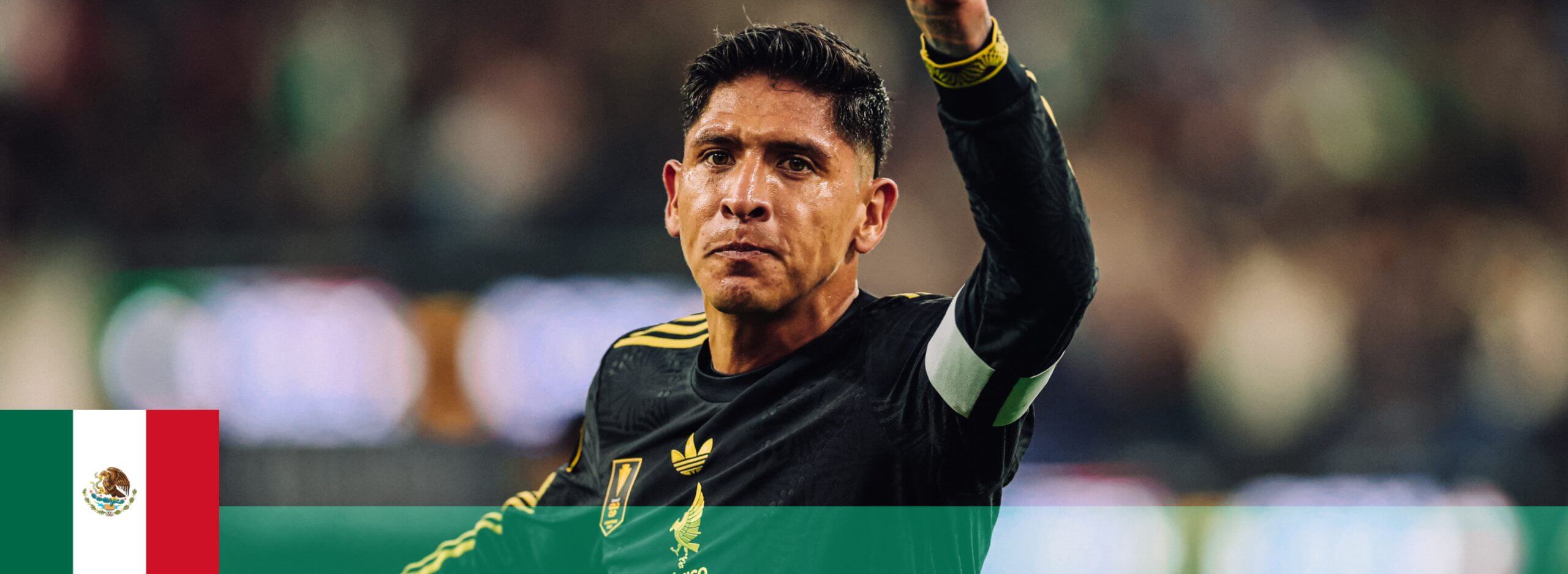
The 48 teams competing at this summer’s World Cup are making their final preparations for the tournament in the United States, Canada, and Mexico. They have qualified for what will be the biggest World Cup yet, expanded from the 32 teams that had competed since the 1998 edition in France, with a host of debutants and plenty of countries not regularly seen on the global stage.
Our writers have spent months watching the sides involved and compiling this guide to every country that will take the field this summer. This article is detailed, but that also means it is long. You can search for a particular national team you would like to know more about or jump to the group you are particularly interested in.
Group A
Mexico
How did they qualify?Mexico has consistently been a World Cup participant. The last time they failed to qualify for the finals was the 1982 edition, although they did also miss out in 1990 because they were banned by FIFA. As one of the three co-hosts for 2026, they qualified automatically.
What is their World Cup pedigree?Mexico is among the more consistent qualifying nations in World Cup history. While at times they have struggled during Concacaf qualification, Mexico typically performs well at World Cups and punches above its weight. That reputation suffered a blow in 2022, though, when El Tri (pronounced “Tree”) went out of the group stage for the first time since 1978. That was a shocking moment for them, even though Mexico has not yet advanced beyond the quarter-final stage of a World Cup. The last time they hosted, as the sole venue for a 24-team tournament in 1986, a penalty shootout defeat by West Germany in the last eight dashed their dreams of reaching the semis on home soil.
Who is the coach?Javier Aguirre is in his third stint as Mexico head coach. The affable 66-year-old was seen as a can’t-miss hire in July after both Diego Cocca and Jaime Lozano failed to impress following the four-year cycle of Argentinian Gerardo Martino, which ended with the 2022 World Cup. Aguirre is a former Mexico international who featured in midfield for his country at the 1986 World Cup. He has coached Mexico at two previous World Cups. In 2002 in Japan and South Korea, his side suffered a humiliating 2-0 defeat by arch-rivals the United States in the round of 16. Eight years later in South Africa, Mexico was again eliminated in that first knockout round, this time 3-1 against Argentina.
How do they play?Aguirre told reporters in September that he preferred Mexico to play in a frenetic style rather than dominate possession. While Martino prepared the team to defend with the ball, Aguirre shifted Mexico’s tactics to be more focused on quick combination play in midfield and transition moments. That style is more typical of a Mexican national team. In winning both Concacaf’s Nations League and Gold Cup tournaments in 2025, Aguirre’s stamp on the side began to develop, but tactically Mexico tends to fall into spells of ponderous and often risk-averse football. The expectation is that pride and a home crowd will elevate them when the World Cup begins.
Who is their key player?Midfield prodigy Gilberto Mora, 17, will grab many headlines, but Fulham striker Raul Jimenez is Mexico’s leading man heading into the World Cup. Now 34, Jimenez will be part of his fourth World Cup finals. However, in 2014, 2018, and 2022, he was not Mexico’s first-choice No. 9. At that most recent tournament, he had not fully recovered from the serious head injury he suffered in 2020. This summer, Jimenez will carry Mexico’s hopes of finally breaking through in the knockout rounds. Despite the emergence of Milan center-forward Santiago Gimenez, the 24-year-old’s elder namesake has been more clinical for Mexico during the run-up to the World Cup.
What are the key things to know about their final squad?There isn’t a country at this World Cup under more pressure than Mexico. After failing to impress four years ago in Qatar, Mexican football hit rock bottom. There was little hope that this generation of players could exceed Mexico’s lofty expectations. If the country is behind them and Aguirre’s side plays well, watch out for the co-hosts. If results don’t go Mexico’s way, the country could turn on them in a heartbeat.
What else should we know about them?Mexico has battled back from the darkest period in the national team’s history. They lost three consecutive regional finals to the USMNT between 2021 and 2023. It was a humbling two-year span, during which Mexico was stripped of their traditional moniker as kings of Concacaf. Mexicans hope that a home World Cup will lead to a renewed dominance in North America.
South Africa
How did they qualify?Controversially. South Africa was leading Group C in African qualifying when it was announced in September they would lose three points after fielding the ineligible Teboho Mokoena in their 2-0 victory over Lesotho in March. The forfeit of that match, resulting instead in a 3-0 defeat, threw qualification wide open, with South Africa falling to second place, behind Benin on goal difference. Their anxiety increased when Benin won their next game and South Africa could only draw in Zimbabwe. Yet while Nigeria beat Benin 4-0, South Africa eased past Rwanda 3-0 in the last qualifier – a sequence of results that saw Bafana Bafana through. Nigeria reached the play-offs (which they lost) at Benin’s expense.
What is their World Cup pedigree?This is South Africa’s fourth World Cup and their first since hosting the tournament in 2010. Having never made it out of the group stage, there is confidence they might correct that unwanted record this time around. South Africa was among the favorites for AFCON, held in Morocco at the end of 2025, having finished third in the 2023 edition of the competition, but exited in the round of 16 to Cameroon. This is nevertheless a technical team, with a mix of experience and youth, and there is a growing feeling inside the country they are better equipped than ever to make a mark on a global stage.
Who is the coach?Hugo Broos will be 74 by the time he retires from management after the World Cup. He arrived in South Africa four years ago after the previous coach, Molefi Ntseki, was fired for losing to Sudan when he only needed to secure a draw to qualify for AFCON 2022 in Cameroon. Broos, a Belgian who spent most of his playing career with Anderlecht, moved into African football with clubs in Algeria before steering Cameroon to the AFCON title in 2017. Before AFCON 2025, he was reported by the United Democratic Movement (UDM) to the South African Human Rights Commission (SAHRC) for using ‘racially coded’ language following Mbekezeli Mbokazi’s decision to join Chicago Fire from the Orlando Pirates.
How do they play?Bafana Bafana have a reputation for producing some of the most technically gifted footballers in Africa. Broos has delivered a side that is organized but fluid, usually with a 4-3-3 shape depending on availability. The core of the regular starting XI includes players mainly from Mamelodi Sundowns, the dominant force in South Africa, along with the Orlando Pirates.
Who is their key player?Captain and goalkeeper Ronwen Williams was nominated for FIFA’s Lev Yashin award in 2024 due to his penalty-saving exploits at AFCON in Ivory Coast earlier that year. But Williams is not merely a shot-stopper; his footwork helps South Africa build play from the back.
What are the key things to know about their final squad?Sixteen players from a squad of 26 come from just two clubs, Mamelodi Sundowns, and Orlando Pirates. On the same Sunday late in May, both clubs achieved historical success: Pirates won the South African Premiership for the first time since 2012, beating Sundowns (the winner of eight previous titles) by a point. A few hours later, Sundowns became the CAF Champions League winners for the first time in a decade after beating Morocco’s FAR Rabat over two legs. Both sets of players should arrive at the World Cup with confidence.
What else should we know about them?There has been less flow of players moving from South Africa to Europe in recent times for a variety of reasons, not least more competitive pay being on offer at wealthy clubs like Mamelodi Sundowns. The rise of their rivals, the Orlando Pirates, however, has sharpened interest in South African talents, not least Mbokazi, who moved to Chicago Fire late in 2025. Twenty-four-year-old Oswin Appollis is another option, having scored 11 goals in 28 games for the national team.
South Korea
How did they qualify?With great ease. Sixteen matches over two group stages, 11 victories, five draws, and no defeats meant South Korea coasted through qualifying, albeit Jordan was the hardest team they faced in what was a pretty favorable draw, with Iraq, Oman, and China their next toughest opponents.
What is their World Cup pedigree?South Korea remains the only Asian nation to play in a World Cup semi-final, which they managed with (some would say considerable) home advantage in 2002. They are World Cup regulars, having qualified for 11 tournaments in a row since 1986, albeit other than their semi-final high they have only progressed past the group stages on two other occasions (2010, 2022). When they did so in Qatar, it was via one of the most dramatic games of the tournament, beating Portugal in stoppage time, before losing to Brazil in the last 16.
Who is the coach?Hong Myung-bo is a legendary figure in South Korean football. The defender played at four World Cups (from 1990 to 2002) and was the first Asian player to be listed for the Golden Ball award, finishing third behind Oliver Kahn and Ronaldo in 2002. After moving into management with South Korea’s youth sides, he led the country to a bronze medal at the 2012 Olympics, but under his watch, the senior side tanked at the 2014 World Cup, failing to win a match and Hong resigned. After winning successive K-League titles with Ulsan HD, he got a second shot as South Korea boss in 2024.
How do they play?Well, it’s still a work in progress. Hong was hired to make South Korea more efficient, with the Korean FA wanting him to replicate how his Ulsan HD team placed an emphasis on build-up and pressing intensity, but covering less distance during matches (the federation also noted that Argentina won the 2022 World Cup despite being at the lower end for distance covered). Given they breezed through qualification, recent friendlies against tougher opponents have been used for experimentation, with Hong utilizing 3-4-3 with mixed results (a 5-0 walloping by Brazil was followed up by an encouraging 2-0 victory over Paraguay).
Who is their key player?The core of South Korea’s team remains their big names who play in Europe; Lee Kang-in (Paris Saint-Germain), Kim Min-jae (Bayern Munich), Lee Jae-sung (Mainz), and, when he’s fit, Hwang Hee-chan (Wolverhampton Wanderers). However, the undoubted star, leader, talisman, figurehead, and poster boy, not least with this World Cup mostly taking place where he now plies his trade, is captain, record cap holder, and almost record goalscorer (he needs six more to break the record) Son Heung-min. The 33-year-old plays in what will possibly be his last World Cup.
What are the key things to know about their final squad?Midfield general Hwang In-beom was a doubt having missed the past two months of the season for Feyenoord, but he made the list and returned to action during a 5-0 friendly victory over Trinidad and Tobago in late March. Son scored in that match, which was a relief given his LAFC dry spell (two goals in 21 matches this season) amid doubts over star names. South Korea’s squad has plenty of familiar faces, but with Son struggling, Hwang In-beom struggling for fitness, Lee lacking minutes at PSG, and Hwang Hee-chan playing poorly for Wolves, there have been concerns about how ready the team will be to take on the world.
What else should we know about them?South Korea is heading into the World Cup on the back of a tumultuous period under previous boss Jurgen Klinsmann, who was supposed to be the man to guide them to the United States (where he lives) but lasted only a year. Klinsmann was hounded out following a poor 2024 Asian Cup campaign, where the Koreans somehow scraped through to the semi-finals (having drawn with Malaysia in the group stage). It then took five months to find his successor, with internal wrangling over whether the new coach should be foreign or Korean (Jesse Marsch and Gus Poyet were among the foreign names linked).
Czech Republic
How did they qualify?The Czech Republic qualified through the UEFA World Cup play-offs. It wasn’t easy, as they won both games on penalties after their matches against the Republic of Ireland and Denmark finished 2-2. They earned a place in the play-offs after finishing second in UEFA qualification Group L behind Croatia. Both of their play-off games were in Prague, so they secured their place at the World Cup in front of a home crowd.
What is their World Cup pedigree?It’s the 10th World Cup for the Czech Republic, but this is their first qualification in 20 years. Before 1993, they competed as Czechoslovakia, which also incorporated Slovakia (who did not qualify this year). Czechoslovakia were two-time runners-up in the second edition of the World Cup, in 1934, and in 1962.
Who is their coach?Miroslav Koubek, 74, joined shortly before their play-off campaign and delivered qualification, calling it his greatest achievement. He has managed a host of Czech domestic league teams, winning the title with Viktoria Plzen in 2014-15.
How do they play?During the play-offs, they operated with a 3-4-3 structure, but Koubek adapted their personnel based on their opposition. One thing they played with is resilience, coming back from 2-0 down against Ireland and upsetting Denmark after their opposition controlled the game with 77% possession. No team made more tackles or recoveries during UEFA qualifying than the Czech Republic.
Who is their key player?Despite being relegated from the Premier League this season, West Ham United’s Tomas Soucek and Ladislav Krejci of Wolverhampton Wanderers are crucial for their nation. Krejci, a versatile defender, scored in both play-offs after replacing Soucek as captain. In attack, they will rely on the powerful Bayer Leverkusen striker Patrik Schick and clinical Lyon forward Pavel Sulc.
What are the key things to know about their final squad?Koubek selected 10 players from the Czech league champions Slavia Prague. Tomas Chory, who started up front against the Republic of Ireland in the play-offs, and teammate David Doudera were called up despite being suspended and transfer-listed by Slavia after both received red cards in the abandoned Prague derby on May 9. From rivals Sparta Prague, Hugo Sochurek, 18, was called up after becoming the youngest player to represent the nation, featuring in a warm-up game against Kosovo on May 31.
What else should we know about them?The last time they were in the World Cup, in 2006, they had Ballon d’Or winner Pavel Nedved, all-time Premier League clean-sheet leader Petr Cech, and former Borussia Dortmund and Arsenal midfielder Tomas Rosicky. Despite having Premier League pedigree, this current team does not have standout world-class talent and broke their 20-year World Cup drought through gritty performances.
Group B
Canada
How did they qualify?Canada return for their second World Cup in a row. They became one of the better stories of 2022 qualifying, improbably topping the CONCACAF table with a young team built on spirit and hungry up-and-comers. This time around, Canada qualified as co-hosts.
What is their World Cup pedigree?Canada’s 1986 and 2022 tournaments both ended with three losses. In 1986, they failed to capture the nation. A team built on grit was overpowered by European opponents. With no goals, the most memorable moment saw a rooster thrown on the field during their opener against France. Canada’s last World Cup represented promise: they deserved a win after a superb display against Belgium but lost 1-0. Alphonso Davies then scored their first World Cup goal with a soaring header. A dramatic run seemed possible, but Canada’s inexperience caught up with them in losses to Croatia and Morocco. Talent needed to be matched with shrewdness.
Who is the coach?Jesse Marsch is in his first international head coach stint. The former MLS original is a disciple of the Red Bull system, including coaching New York Red Bulls and RB Leipzig. He became the third American Premier League manager, taking charge of Leeds. Marsch was hired to get the most out of an athletic but inexperienced squad. The gregarious coach has built on previous manager John Herdman’s cultural turnaround. Marsch has made Canada into a more aggressive outfit that does not just want to be invited to the dance. His experience has instilled belief that they should be winning World Cup games.
How do they play?While Marsch has add tactical flexibility during the second year of his Canada tenure, they are still at their best when they are playing pacy and uncompromising full-throttle soccer. Canada is comfortable not having the ball but is improving their creativity in possession. That could benefit them in games against intelligent sides. Marsch utilizes remarkable speed and directness from his wide players in a 4-4-2 system. Getting buy-in from players who work in drastically different club systems allows Canada to counter-attack decisively.
Who is their key player?Alphonso Davies remains Canada’s captain and a globally recognized star, but is nursing a hamstring injury. Goals are hard to come by in the World Cup but for the first time, Canada has a forward playing for one of Europe’s best clubs. Jonathan David finished his first season at Juventus after five years in Lille, where he averaged one goal every 162 minutes. Canada needs to score more, and David is their all-time leading goalscorer (39 goals in 77 matches). He possesses high-level intelligence to pick apart opposition defenders. Canada will hope his form and confidence are sharp.
What are the key things to know about their final squad?Canada has brought a balance of youth and experience, with half of their original 26 players named having been on the 2022 World Cup squad. All of the stars are in the fold, including Davies, David, and Tajon Buchanan. However, injuries have hit Canada’s squad hard: multiple players’ status for their World Cup opener is in question, including Davies and Moise Bombito. Canada suffered their worst injury yet when attacking midfielder Marcelo Flores ruptured his anterior cruciate ligament after being named in the squad. Marsch has yet to confirm a replacement.
What else should we know about them?In January 2017, Canada was an afterthought, ranked 120th in the world. Canada Soccer paid television stations to broadcast games. Playing in the World Cup seemed laughable. Yet soccer has larger participation numbers among Canadian youth than any other sport (yes, including ice hockey) and we are seeing the fruits of that investment. Canada’s drastic turnaround is rarely seen in international soccer. Now, the men’s national team enjoys one of their highest FIFA rankings (30th) and could alter the Canadian sports landscape. Not since the United States hosting in 1994 could a country benefit from the World Cup like Canada might.
Bosnia and Herzegovina
How did they qualify?A dramatic play-off final victory over Italy sealed a sensational qualification. Bosnia and Herzegovina had been firm outsiders for both the semi-final in Wales, which they won on penalties, and their match against four-time world champions Italy. It was just rewards after an impressive group performance, finishing second to Austria with 17 points and just one loss in eight matches.
What is their World Cup pedigree?Bosnia and Herzegovina have reached the World Cup just once before; in 2014, they failed to progress beyond the group stage after one-goal losses to Argentina and Nigeria, along with a win over Iran. That is the only major finals the nation, which declared independence in 1992, have competed in.
Who is their coach?This is the first senior coaching role for Sergej Barbarez, a former forward who played more than 16 seasons in Germany. An outspoken and forthright figure, Barbarez generated headlines before his side’s play-off semi-final win over Wales by comments he made about Brondy head coach Steve Cooper. Barbarez said Cooper’s Welsh ‘roots and origins’ were responsible for his decision not to play Brondby midfielder Benjamin Tahirovic in the weeks leading up to the match.
How do they play?Under Barbarez, Bosnia and Herzegovina commonly revert to a 4-4-2 shape, designed to stay compact and organized out of possession. This system also gives the side plenty of width; Esmir Bajraktarevic, 21, has impressed for PSV Eindhoven this season, while there is plenty of excitement around 18-year-old Kerim Alajbegovic, who has scored 11 goals this season for Red Bull Salzburg and is set to join Bayer Leverkusen in Germany this summer.
Who is their key player?Edin Dzeko is 40, but he remains Bosnia’s talisman. The former Manchester City, Roma, and Inter striker has remarkably scored at least one international goal for 20 successive years since 2007 and netted the crucial equalizer away to Wales in the play-off semi-final. A January switch to Schalke, in 2. Bundesliga, provided instant returns, with six goals in eight appearances leading into the play-offs. Of the younger generation, 23-year-old Sassuolo defender Tarik Muharemovic has impressed in Serie A and in qualification, while versatile full-back Amar Dedic has established himself at Benfica.
What are the key things to know about their final squad?Veteran striker Dzeko is one of two players remaining from Bosnia’s 2014 World Cup squad alongside Sead Kolasinac, the former Arsenal defender now at Atalanta. Ermin Mahmic, the highly-rated Austria-born midfielder, has switched allegiance to Bosnia and is immediately included in Barbarez’s squad. The 21-year-old has impressed for Czech side Slovan Liberec this season with eight goals, and may be a wildcard this summer. Centre-back Nidal Celik is seen as one of Bosnia’s brightest young stars. The 19-year-old joined the French Ligue 1 club Lens last summer and won his first senior cap in the 0-0 draw against North Macedonia in May.
What else should we know about them?They are football’s only international team to have qualified for a World Cup, which they did in 2014, but never for their continental tournament: the European Championship. After finishing his playing career, head coach Barbarez spent six years as a professional poker player.
Qatar
How did they qualify?In the end, the 2022 hosts ensured a second consecutive World Cup appearance in a confident manner with 10 wins from their 18 qualifying games. They sealed their place with a 2-1 win over the United Arab Emirates in Doha, when even a late red card for substitute Tarek Salman and a 98th-minute opposition goal could not derail them. That win meant they sat top of Group A in the fourth round of Asian qualification.
What is their World Cup pedigree?In 2022 Qatar’s dream of becoming a major footballing power took a significant step as they hosted the tournament for the first time. It marked several firsts — the only time the World Cup has taken place in the Middle East and the only time it has not been staged during the traditional timeframe of May, June or July (to avoid the dangerous summer heat it was held in November and December). Results did not quite match the ambitions, with three defeats in their three Group A games: although Mohammed Muntari scoring their first (and so far only) World Cup goal in the 3-1 defeat by Senegal was a highlight.
Who is the coach?In May 2025 they unveiled former Spain, Real Madrid, and West Ham United boss Julen Lopetegui as their new coach. Domestically, he won the Europa League with Sevilla in 2020, and on the international front, the 59-year-old guided Spain’s U19s and U21s to success in their respective age-group European Championships. Despite taking Spain’s senior side to unbeaten qualification for Russia 2018, he did not reach the competition himself. Lopetegui was sacked two days before the tournament started after it emerged he would take charge of Real Madrid at its conclusion. In his new role, he succeeds another Spaniard, Luis Garcia, and has won two, drawn two, and lost three of his seven games so far. The wins were pivotal to getting Qatar to the World Cup. Now, Lopetegui feels he has unfinished business to attend to. In October 2025, he told the Spanish radio station Onda Ceros he felt that ‘life owed him’ a World Cup appearance. He certainly seemed to enjoy himself after the win against the UAE, breaking into a dance as his players gathered around him.
How do they play?Under Lopetegui, Qatar has switched between 4-4-2 and 4-2-3-1, with the focus on organization and hard work off the ball. ‘We have a very balanced squad with players of different playing styles,’ Lopetegui told Doha News after taking over in May.
Who is their key player?Talismanic forward Akram Afif is considered one of Qatar’s best players. He has helped them win the AFC Asian Cup twice, and in 2024 won the Best Footballer in Asia award. Afif has played for Villarreal, becoming the first Qatari to sign for a Spanish club, and had a previous spell with Eupen in Belgium. Now he is one of the main men for the club side Al Sadd in the Qatari Stars League, where he is regularly scoring and providing assists. Last term he struck 18 goals and created 15 in 22 matches. Previous Maroon boss Tintin Lopez (yep, another Spaniard) called Afif a ‘unique player’ in 2024. ‘Akram is a quality player who always creates the difference,’ he said. ‘That type of player always helps the team win in moments like this, and I hope he will always be available to help us.’
What are the key things to know about their final squad?Qatar’s all-time top goalscorer Almoez Ali is in. He has scored 60 goals in 126 appearances for his country and is one of nine forwards on the final roster. Ex-Doncaster Rovers and Peterborough United defender Niall Mason, who was born in England but plays for Qatar SC, missed out, despite being in Lopetegui’s preliminary squad. Another dual national who was included is former Marseille centre-back, Lucas Mendes. The Brazilian-born 35-year-old, who plays for Al-Wakrah, took up Qatari citizenship in 2023.
What else should we know about them?In the second half of their win over UAE in October, Lopetegui brought on 42-year-old Sebastian Soria, and the need for a more youthful aspect to their squad was not lost on the head coach. In an interview with radio station Onda Cero, he said: ‘We have a fairly old squad; we played in the second half with a 42-year-old player.’ In the end, Soria missed out on selection for the tournament.
Switzerland
How did they qualify?With relative ease. They had one of the friendlier groups, but still made short work of it, going unbeaten and only conceding twice in six games. They spanked beleaguered Sweden 4-1 to all but seal their place, then completed the formalities with a low-key draw in Kosovo.
What is their World Cup pedigree?It is pretty standard stuff to see Switzerland at World Cups these days: their last appearance in America, in 1994, was their first qualification in 28 years, but this is now their sixth tournament in a row. The only other European teams with that sort of consistency are Germany, England, France, Spain, and Portugal, three of whom have won the thing in that time. That said, the consistency also extends to their relatively limited progress after qualification: the Swiss have never won a World Cup knockout game, getting out of the groups in their past three appearances, but no further.
Who is the coach?There was a reasonably sizeable faction in Swiss football that wanted rid of Murat Yakin before Euro 2024. Uninspiring results in qualification meant patience was wearing thin, but once at the tournament they knocked out defending champions Italy and only lost to eventual finalists England on penalties. At the tournament, he was asked about his status as a sex symbol, his stylish clothes, and array of funky spectacles having attracted attention. ‘I hope my wife isn’t listening to this,’ he replied. They had a poor Nations League last year, but they did not lose a game of any description in 2025 and he will take them across the Atlantic with the nation’s confidence.
How do they play?They are tactically flexible. The success at Euro 2024 came in a 3-4-3, but this year they have settled into a fairly standard 4-3-3, with a front line of doughty stalwart Breel Embolo, flanked by Nottingham Forest’s Dan Ndoye and Sevilla winger Ruben Vargas. Ricardo Rodriguez — only 33 years old, a little surprising given he seems to have been around for decades — is still patrolling the left side of defense, but one fixture who will not be around this time is Yann Sommer, who retired from the international game last year.
Who is their key player?It is still Granit Xhaka. The Swiss captain’s move to Sunderland from Bayer Leverkusen in the summer might have raised a few eyebrows, but his return to the Premier League will only be good news for Yakin. He is still the glue that knits their midfield together, and at 33 this will probably be his last World Cup.
What are the key things to know about their final squad?There were a few mild surprises in Yakin’s final selection, but only in relation to fringe squad players. Burnley’s Zeki Amdouni might consider himself slightly lucky to be on the plane after missing most of the season with an anterior cruciate ligament injury. The inclusion of forward Cedric Itten also raised some eyebrows if only because he has been an intermittent presence in the Swiss camp and got relegated from the 2. Bundesliga with Fortuna Dusseldorf this season. Stalwarts Breel Embolo, Ricardo Rodriguez, and, of course, captain Xhaka are all there.
What else should we know about them?This could be the last chance for Switzerland’s ‘golden generation’ to achieve something tangible. Sommer, Fabian Schar, and Xherdan Shaqiri have already retired, while you would think this would be the last World Cup, perhaps major tournament, for Xhaka, Rodriguez, and Remo Freuler. There is some talent in the next generation, particularly 20-year-old Freiburg midfielder Johan Manzambi, but the old guard have been the core of the team for so long that the next few years could be transitional.
Group C
Brazil
How did they qualify?Put it this way: Brazil was happier than most that FIFA expanded the World Cup from 32 teams to 48 for 2026. That raised the number of automatic qualification spots in South America to six and saved Brazilian blushes in the process: they finished fifth in the 10-team group and would be heading for an intercontinental playoff under the old system. With only eight wins from the 18 games, it is fair to say that they limped through.
What is their World Cup pedigree?Brazil helped make the World Cup what it is today, imbuing the tournament with light, style, and, yes, a sizeable dose of mystique during the middle part of the 20th century. They hosted the 1950 edition, won it in 1958 and 1962, then turned up in 1970 with a team that did not so much conquer the world as charm it into willful submission. Two further successes — in 1994 and 2002 — put Brazil out in front in the list of multiple World Cup winners. They are still there, but the past two decades have been tough. The flameout (a 7-1 semi-final loss to Germany) at their own party in 2014 was the nadir, but they were also knocked out at the quarter-final stage in 2006, 2010, 2018, and 2022. That might be acceptable for some countries, but not Brazil. Those failures have dented confidence levels and given rise to a kind of perma-inquest that shows little sign of wrapping up any time soon.
Who is the coach?After Tite walked away at the end of the 2022 World Cup, the suits at the Brazilian federation set their sights high. They wanted a proven winner. They wanted Carlo Ancelotti, whose ability to navigate choppy waters and manage big egos had been so successful at Real Madrid. Ancelotti is now in the job and will lead their challenge next June and July. High-fives all round, right? Not quite. Ancelotti only actually arrived last May after three years of flirting and faffing. In the interim, Brazil had three different coaches, all with wildly different approaches. Continuity? Never heard of it, sorry. Ancelotti has only had four competitive games so far. He will need every last drop of his nous and geniality if Brazil is to put together a run at the World Cup.
How do they play?Ancelotti has made two big changes since his arrival. Casemiro — previously exiled — has come back into the picture, lending the midfield more experience and defensive solidity. Upfront, Vinicius Junior has been tested out in a more central position. The shape looks likely to be a fluid 4-2-3-1 against weaker teams. That makes sense, given the abundance of attackers available. The question is whether and how Ancelotti will reinforce his midfield against the better sides.
Who is their key player?Vinicius Jr. One of the major failings of the Dorival Jr era was his inability to get the best out of the Real Madrid forward. In fairness, it is a long-standing issue: Vinicius Jr has never produced on a consistent basis for Brazil. Even when he was in unstoppable form at club level, he would only flicker for his country. Nobody seems quite sure why that is. What does seem clear is that Ancelotti has a better chance than most of solving the riddle. He knows Vinicius Jr well from their time together in Madrid and understands what makes him tick. If he can get the 25-year-old to something approaching his best and have him running at defenders in dangerous areas rather than just waiting for the ball on the wing, it will breathe life into the Brazil attack.
What are the key things to know about their final squad?The big news was the inclusion of Neymar after an absence of almost three years. Now 34, he is expected to be a squad player rather than a starter; whether that tempers the usual drama that surrounds his every move is another matter, and something Ancelotti presumably thought long and hard about. Notable injury absentees include Rodrygo, Eder Militao, and Estevao, while Chelsea striker Joao Pedro was probably the most surprising omission from the final 26.
What else should we know about them?A return to the United States, where they won the 1994 World Cup, will bring up plenty of memories, not all of them happy. Brazil’s triumph at that tournament was, in part, a reaction to tragedy. Two months before their opening game, the team played a friendly against Paris Saint-Germain in France. Their honorary guest that night was Formula One driver Ayrton Senna, one of Brazil’s most beloved sons. Senna joined the players for dinner after the match, motivating them for the challenge that awaited them in America. ‘He made us all believe,’ goalkeeper Claudio Taffarel later said. Eleven days after that meal, Senna died in a crash at the San Marino Grand Prix. The news plunged the whole of Brazil into mourning. It fell to the country’s footballers to provide distraction and respite. When they overcame Italy on penalties in the final at the Rose Bowl in Pasadena, they raised a banner in Senna’s honour.
Morocco
How did they qualify?Morocco did not break a sweat in their 2026 World Cup qualification group. They won all eight of their games, thrashing Congo and Niger 6-0 and 5-0 respectively, scoring 22 goals and only conceding two. Winning AFCON on the pitch, rather than the title being awarded to them months later because of a punishment laid down on Senegal for their conduct in that match, would have enhanced the feeling that they are the best African side and capable of lifting the trophy at this summer’s World Cup.
What is their World Cup pedigree?In 1986, Morocco became the first African country to reach the knockout rounds of a World Cup, winning a group that contained England, Poland, and Portugal. After failing to qualify for five of the next eight tournaments and making three group-stage exits when they did get there, Morocco made more World Cup history in 2022. They topped a group containing Croatia, Belgium (who had finished second and third at Russia 2018), and Canada, then eliminated Spain and Portugal in the following rounds. The fairytale ended in the semi-finals against France, but Morocco was still the first African side to go that far at a World Cup.
Who is the coach?The mastermind behind Morocco’s 2022 World Cup was Walid Regragui, who took over from Vahid Halilhodzic only three months before that tournament began. Reaching the semi-finals in Qatar etched Regragui’s name into the history books. He galvanized Moroccan talent to form a genuine team rather than several individuals. However, he became a victim of his own success. Pressure skyrocketed and there was an expectation they would win this year’s AFCON, which they hosted. After losing in wild circumstances to Senegal, there was no sympathy from the local media for Regragui as he was asked multiple times if he planned to resign. One journalist said he was responsible for making children in the stands cry. In March, it was officially announced that Mohamed Ouahbi, who won the Under-20 World Cup with Morocco last year, would replace Regragui. Ouahbi will have only managed the senior side on a few occasions before their opening game against Brazil.
How do they play?Morocco’s performance at Qatar 2022 was of a team organized without the ball and able to limit the opposition’s strengths. Morocco has only played two games under Ouahbi, which is a small sample size to analyze. From what we have seen so far, there have been few changes to how they operated during Regragui’s reign. The focus on combinations in the wide area is still present, but the team’s shape on the ball has evolved. Under Ouahbi, Morocco has shifted from a 4-3-3 to attacking in a 3-2-4-1 shape, with right-back Achraf Hakimi in an advanced role either down the wing or in the half-space. They have a ridiculous amount of skilful wingers, including Ismael Saibari, Abde Ezzalzouli, and Real Madrid’s Brahim Diaz, who love nothing more than gliding past opponents Due to the absence of Youssef En-Nesyri and Hamza Igamane, the centre-forward role should go to Ayoub El Kaabi, whose habit of scoring overhead kicks has turned him into a viral sensation.
Who is their key player?It is hard to point out an individual in a team that boasts Yassine Bounou (Al Hilal), Hakimi (PSG), Noussair Mazraoui (Manchester United), Brahim (Real Madrid), and more. Yet, Diaz’s switch of allegiance from Spain, where he was born, to his father’s homeland is undoubtedly a coup considering the midfielder’s talent. Starting from a wide position or playing as an attacking midfielder, his dribbling stands out, as well as his ability to use both feet, which aids his passing and shooting. Diaz was a revelation at AFCON and deservedly won the player of the tournament award.
What are the key things to know about their final squad?Adam Masina will be feeling furious. The versatile defender started five of Morocco’s games at AFCON, including the final but has been dropped from the squad for Fulham’s Issa Diop. Diop was capped up to under-21 level with France but switched allegiance earlier this year. En-Nesyri, who has 92 caps and scored three goals at the last World Cup, is a shock omission too. Diop is not the only player to book a last-minute ticket for the tournament. Lille midfielder Ayyoub Bouaddi, 18, represented France U21s as recently as March. Ouhabi has promoted many young talents who won the U20 World Cup with him, including Strasbourg winger Gessime Yassine. Surprisingly, Amine Adli, Ilias Akhomach, and Eliesse Ben Seghir have all been left out.
What else should we know about them?Morocco’s squad looks talented but on closer inspection, they have lost a lot of experience. Captain Romain Saiss retired earlier this year, and then there is the absence of En-Nesyri. The center-forward has 92 caps and scored three goals at the last World Cup, including the winner in their quarter-final tie with Portugal. Nayef Aguerd is in the squad but has not played for Marseille since March 1, due to injury. Many players will be making their tournament debut at a time when the expectations around this side have increased. If they lose their opening game to Brazil, there will be a lot of pressure to beat Scotland.
Haiti
How did they qualify?One of the surprises of Concacaf qualifying, Haiti finished top of Group C in its third and final round, ahead of traditional Central American powers Costa Rica, which has been at five of the past six World Cups, and Honduras, qualifiers in 2010 and 2014. They beat Costa Rica 1-0 and then Nicaragua 2-0 in their final two group games to secure a spot in the 2026 tournament.
What is their World Cup pedigree?This will be Haiti’s first visit to the men’s World Cup since 1974 and just their second ever. By qualifying, they became the first Caribbean nation to reach multiple World Cups. In that 16-team tournament in West Germany more than 50 years ago, Haiti was drawn with Poland, Argentina, and Italy in the first group stage. They lost all three games, including a 7-0 defeat by the Poles, but at least scored twice through forward Emmanuel Sanon.
Who is the coach?Sebastien Migne, a 52-year-old Frenchman, began his coaching career in Africa, and has spent much of it working in international football. A former midfielder who had a spell at the London-based EFL side Leyton Orient in the 1990s, he was in charge of Congo, Kenya, Equatorial Guinea, and South African club Marumo Gallants and was an assistant with Cameroon before taking the Haiti job in June 2024.
How do they play?Against stronger teams, Haiti is happy to sit back in its own half in a defensive posture and make things difficult. They have players capable of breaking out in transition play to punish opponents. Haiti’s organized defensive structure gave the United States trouble in the group stage of this past summer’s Concacaf Gold Cup, where despite holding 66% possession, it took a 75th-minute goal from Patrick Agyemang to make the difference in a 2-1 win. Haiti has a goal threat as well. Duckens Nazon came off the bench to score a hat-trick past Costa Rica’s longtime Real Madrid and Paris Saint-Germain starting goalkeeper Keylor Navas in a September qualifier to earn a crucial away point.
Who is their key player?Long-time Haiti goalkeeper Johny Placide has proved himself more than capable of keeping his country in games against bigger teams. The 37-year-old, who plays professionally in France for the second-tier club Bastia, made a name for himself at the 2019 Concacaf Gold Cup, where Haiti allowed just two goals en route to topping their group with three wins out of three, then beat Canada in the quarterfinals before losing 1-0 to Mexico in a semifinal that went to extra time. Placide made four saves in that game before Raul Jimenez’s penalty beat him. More recently, he turned in shutouts in three of Haiti’s final four qualifiers.
What are the key things to know about their final squad?All of the key players made this team, most notably Placide and Nazon, believed to be the program’s all-time leading goalscorer with 44 goals in 76 appearances, as well as dangerous attacking players Frantzdy Pierrot (Caykur Rizespor), Wilson Isidor (Sunderland), and Ruben Providence (Almere City). Haiti downed New Zealand 4-0 in a pre-World Cup friendly, which shows how capable they are and that they won’t be an easy opponent for teams in the World Cup.
What else should we know about them?Migne has managed to get Haiti back to the World Cup despite never having set foot in the country. Their home, the Stade Sylvio Cator in the capital Port-au-Prince, was overtaken by gangs in February and March 2024. The Haitian federation released a statement saying the stadium was ‘occupied by armed gangs’, and the national team has not played there since. The country has been enveloped by violence and Migne’s men played their home matches during qualifying in Curacao, the tiny island nation that will join them at this World Cup.
Scotland
How did they qualify?Predictably, in the most dramatic fashion possible. A first-half disaster-class away in Greece meant they looked destined for the playoff spot but Denmark fluffed their lines, drawing at home against Belarus. It resulted in an epic decider in Glasgow. An overhead kick and two stoppage-time wonder strikes — one a 25-yard curler, the other from just inside their half — meant Scotland emerged with a 4-2 victory to top the group.
What is their World Cup pedigree?This century? None at all. The last time Scotland featured was in 1998, when they almost snatched a draw in the opening game against Brazil but ultimately fell short. Scotland has made eight World Cups but has never progressed from the group stage and never won more than a single game. It was under Ally MacLeod in 1978 that hopes were at their highest and they did beat eventual finalists the Netherlands 3-2, but it proved futile and they went out in the group stage. Four years later, they were eliminated at the same stage. Reaching the knockout rounds has to be the aim this time, given their poor showings at the last two European Championships — two points from six games, scoring only three goals.
Who is the coach?Steve Clarke, who has a strong claim to be the best manager in the nation’s history. Celtic great Jock Stein, Andy Roxburgh, and Craig Brown led Scotland to major tournaments but Clarke is the first man to take the country to three. After ending a 28-year wait for a World Cup appearance, he has forged a belief and togetherness that had been missing from the Tartan Army for years. A pragmatist who did well at West Bromwich Albion in England before excelling at Kilmarnock in Scotland, his no-nonsense demeanor belies a manager who has made the camp feel like a club environment the players look forward to being a part of.
How do they play?This is the pivotal question that needs answering if Scotland is not going to just make up the numbers. Clarke settled on a back-five system that provided a stable base to build on and hid their weaknesses at centre-back and on the wings. The struggle to control matches against teams of a similar level has been their issue, though. Clarke has switched to a back four and the addition of Bournemouth’s Ben Doak on the right wing has added much-needed pace. Scotland still struggles to break teams down, though, and can often lack direction in possession when it comes to big games. They remain a team who looks best in a high-energy press and when they play forward quickly, but when they lack control they can look messy. Clarke has hinted at a return to two strikers.
Who is their key player?Scott McTominay. Former manager Alex McLeish convinced him to pledge allegiance to his father’s homeland in 2018 rather than wait for an England call-up. His decision has been emphatically vindicated. McTominay has blossomed from a functional midfielder to a box-crashing attacker at Napoli, inspiring them to the Serie A title in 2024-25 but he owes a great deal of that transformation to Scotland. Having been used in central defense at times, Clarke identified that his best attributes were his athleticism and finishing ability. His move into the final third of the pitch has elevated the entire team. After just one goal in his first 37 caps, he now has 13 in his past 32 and is in the nation’s top 10 all-time goalscorers.
What are the key things to know about their final squad?Billy Gilmour is missing, having suffered a knee injury at the cruellest time. A day before the squad flew out to Miami, he was forced off against Curacao and a scan revealed that his World Cup was over. It is personally heartbreaking but also detrimental to Scotland’s hopes of playing with a more controlled style. Scotland does not have another playmaker as press-resistant as him. Manchester United’s under-21 player of the year Tyler Fletcher, the son of former Scotland captain Darren Fletcher, has been drafted in as his replacement despite only 17 minutes of senior experience. The squad is still badly imbalanced in terms of where quality is concentrated. Both full-back positions and central midfield are blessed with multiple options who play at the top level but at centre-back and centre-forward, Scotland looks short. Clarke has picked five out-and-out strikers, however, and has hinted at playing two up top to help the team occupy the opposition defense. Rangers’ 19-year-old winger Findlay Curtis could be a wildcard on the wing.
What else should we know about them?They could well have a quadragenarian in goal, who stands to be the second-oldest man to play at a World Cup. Hearts goalkeeper Craig Gordon turns 43 on December 31, meaning only Essam El Hadary’s appearance for Egypt in 2018 at the age of 45 years and 161 days will beat him. Angus Gunn had the Scotland jersey but his injury meant Gordon was called upon for the final two crunch qualifiers. Having not played a single game all season, he stepped up once again. His career has been defined by repeatedly defying the odds, recovering from an arm break and anterior cruciate ligament surgery that saw him spend two years out of the game from 2012. His latest international resurrection comes after a year out with a double leg break. With 34 clean sheets in 84 caps, you would not bet against him keeping the shirt for a bit longer yet.
Crime & Justice
Justice serves indifferently, a mirror reflecting our values.