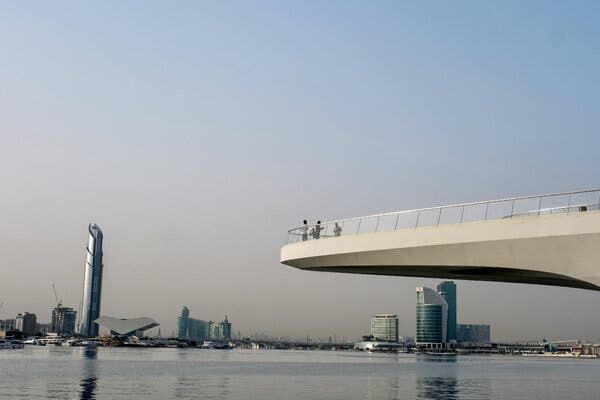
Dubai’s Business Model Under Threat
Dubai’s ambition to become a globalized city has faced a serious challenge. The Persian Gulf conflict has exposed vulnerabilities in Dubai’s economy, which is heavily reliant on trade, tourism, finance, and logistics. Unlike its oil-dependent neighbors, Dubai diversified its economic portfolio to attract global business.
Economic Impact of Recent Conflicts
The city’s reputation as a stable economic hub was shattered on February 28, when Iranian drones and missiles hit Dubai. The attack caused significant damage, particularly at iconic sites like the Burj Al Arab, which remains closed months later. The Jumeirah Al Qasr hotel tries to maintain appearances but faces empty halls.
The conflict disrupted air travel and maritime trade, striking core components of Dubai’s economy. Other Arab countries continue to benefit from oil revenue, but Dubai’s innovation was in offering a stable environment for international business.
Testing Dubai’s Resilience
This war is a severe test of Dubai’s model. Jim Krane, a researcher at Rice University and author of “City of Gold: Dubai and the Dream of Capitalism,” explains that Dubai thrived by being a hub for global talent and commerce. This cosmopolitan nature is both an asset and a vulnerability when troubles arise. Capital and people can quickly leave when stability falters.
“It’s also the big disadvantage when things go wrong,” Mr. Krane said. “Capital can flee, and the people can, too.”
The situation highlights the importance of navigating risks inherent in an economy lacking strong natural resource dependency.
Leave a Reply