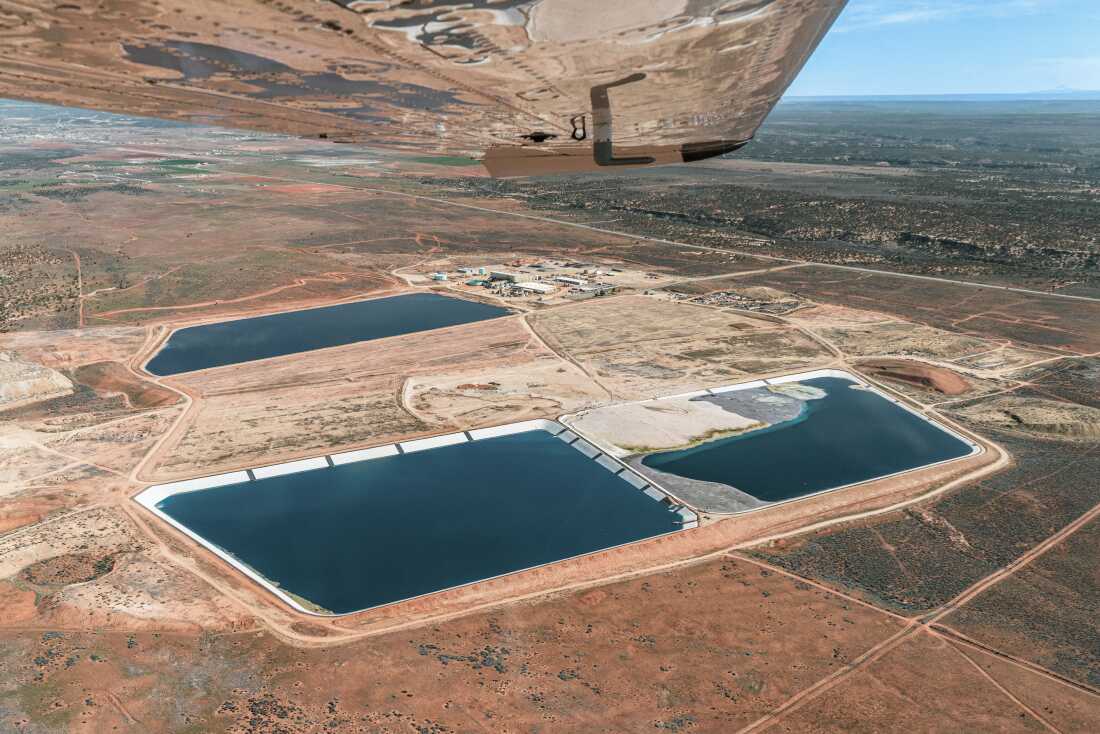
Five tailings cells store radioactive waste at White Mesa Mill, spread over 284 acres in Blanding, Utah. Seen from above on March 22, these cells raise concerns among the locals, especially the resident tribal community.
On a warm April day, Malcolm Lehi traversed a rugged dirt path in his Jeep Wrangler, seeking Entrance Spring, a site with historical ties to his Ute Mountain Ute tribe. This cool, moss-covered spring is near White Mesa Mill, the sole conventional uranium mill in the nation. It produces yellowcake, fueling nuclear power plants.
For years, debates have swirled about whether the mill releases radioactivity into air and water, threatening human health. In the White Mesa Ute Community, about five miles from the mill, fears run deep due to uranium’s harmful history. Many residents rely on bottled water instead of local supplies.
Urgency in Tribal Concerns
Federal actions to revive U.S. uranium production intensify these concerns. A 2024 law mandates an end to Russian uranium imports by 2028, bolstering domestic supply efforts. Under President Trump’s guidance, growing nuclear capacity is a priority, aiming to quadruple by 2050 with mining expedited on federal lands.
The Velvet-Wood uranium mine in Utah notably sped through environmental review in just 11 days, despite local tribal opposition.
White Mesa Mill’s Focal Point
Located near Bears Ears National Monument, White Mesa Mill is central to this uranium surge, highlighting the tension between economic goals and tribal concerns. Truckloads of uranium ore from regional mines, including near the Grand Canyon, journey to this site. The mill also plans waste storage expansion.
Opposition unites tribes like the Ute Mountain Ute, Navajo, and Havasupai, who fear wastewater contamination in drinking sources.
Malcolm Lehi, a former tribal council member, remains determined against the mill’s expansion. Radiation risks have a troubling legacy for tribes in the Colorado Plateau, exacerbated by past governmental neglect.
Historic Distrust
During a spring morning, White Mesa resident Yolanda Badback watched uranium trucks pass her home. She, part of White Mesa Concerned Community, opposes the mill’s operations. The facility, owned by Energy Fuels since 2012, saw business resurgence recently, producing over a million pounds of yellowcake last year, planning to more than double output this year.
The mill also processes radioactive waste from distant countries like Estonia and Japan, anticipating new jobs. More than half of its workforce identifies as Indigenous, with a minority from the Ute Mountain Ute Tribe. Curtis Moore, Energy Fuels’ VP, acknowledges tribal distrust stemming from historical mishandling of uranium development.
Between 1940-1980, uranium mining exposed many, particularly Navajo miners, to cancer-causing radiation without adequate warnings. Abandoned waste sites still pollute areas like the Navajo Nation.
Moore claims procedures have greatly improved; workers now encounter minimal radiation, with no detectable exposure outside the mill. Despite assurances, many residents remain skeptical.
Current Environmental Concerns
White Mesa’s drinking water, drawn from a deep aquifer safeguarded by a rock barrier, is filtered for safety. Yet locals report poor water quality, describing sulfur smells and cloudiness.
Badback and Lehi, expressing distrust, avoid tap water, advocating for the mill’s closure. Badback actively opposes new waste cell plans closer to the community, fearing contamination.
Air and Water Quality Issues
Despite a federal health assessment finding low radiation risks between 2013 and 2019, air quality concerns persist. The EPA cited the mill for failing to control radon emissions properly in 2021, barring it temporarily from receiving certain waste.
The mill rectified the issue per state regulators, but residents report foul odors possibly linked to the mill. Kevin Clow from the Ute Mountain Ute Tribe emphasizes vigilance in monitoring potential pollution around drinking sources, highlighting the Burro Canyon Aquifer.
EPA studies linked radionuclide contamination at local springs to the mill’s operations. Recent tests showed uranium within safe levels but still heightened, stressing the need for continued scrutiny.
Lehi, visiting Entrance Spring, prioritized landscape protection, valuing water as integral to life.
Support for this article was provided by The Water Desk, an independent journalism initiative at the University of Colorado-Boulder. KFF Health News delivers in-depth health issue journalism as part of KFF’s core programs.
Leave a Reply