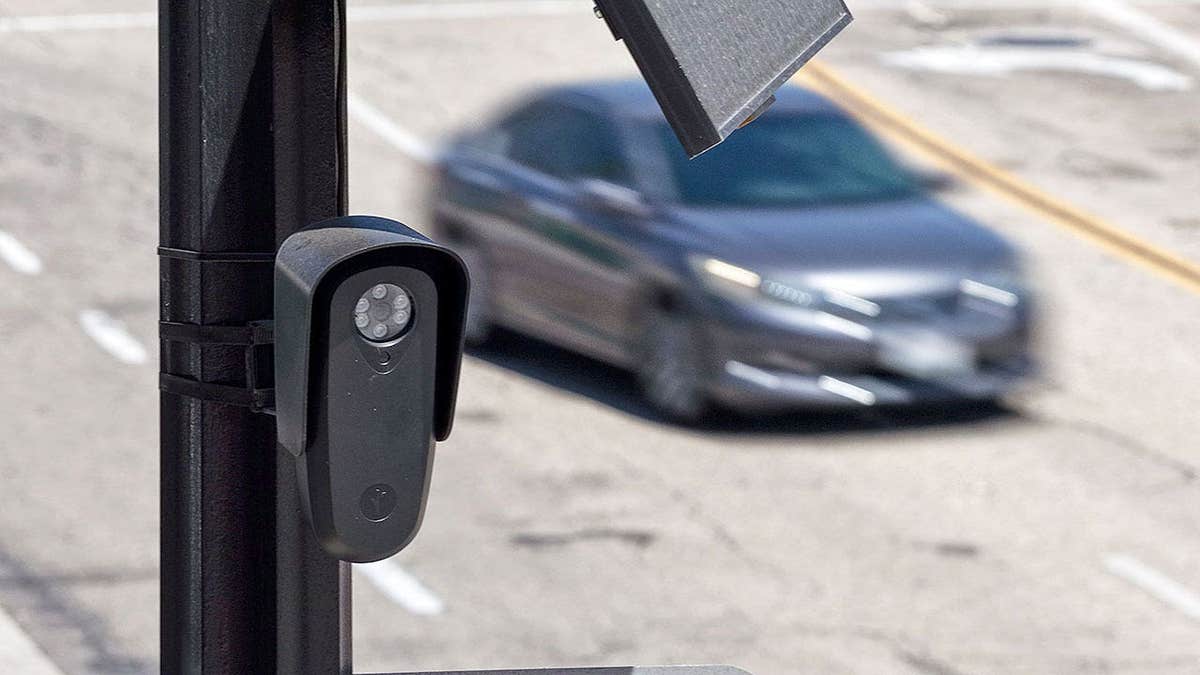
Knox County, Tennessee’s Mayor, Glenn Jacobs, has advocated for a ‘nationwide pause’ in the deployment of Flock surveillance cameras during an appearance on ‘The Sunday Briefing.’ He argues that the technology poses constitutional, privacy, and safety concerns while lacking proper safeguards.
Jacobs highlighted the need for law enforcement to have access to crime-solving tools but expressed concerns that the Flock technology exceeds the functions of conventional license plate readers. He emphasized that it should not be widely deployed until appropriate regulations are established.
‘This is not about depriving [law enforcement] of the tools. It’s about figuring out how these tools can be used in an appropriate manner that is consistent with the Constitution,’ Jacobs stated, referring to reports of misuse in ‘dozens of cases.’
Currently, no comprehensive federal regulations govern Flock cameras, which Jacobs notes have significantly advanced since the laws on license plate readers were established in Tennessee in 2014, with only minimal updates in 2021.
License plate cameras have become widespread across the nation, tracking drivers on a massive scale. Flock Safety, a leading provider of automated license plate readers, has gained popularity across law enforcement, municipalities, and businesses. The American Civil Liberties Union estimates that there are between 80,000 to 100,000 Flock cameras deployed nationwide.
Flock’s marketing materials claim presence in over 6,000 communities, collaborations with more than 1,000 businesses, and partnerships with over 5,000 law enforcement agencies nationwide. This results in billions of vehicle scans each month.
A part of Flock’s statement to Fox News emphasizes that the data collected is automatically deleted after 30 days by default unless an agency sets a different retention period.
The surveillance system’s reliability has become a topic of debate across the country. In West Virginia, lawmakers from the state’s Freedom Caucus plan to ban AI-powered cameras statewide, arguing they infringe upon citizens’ Fourth Amendment rights to privacy.
Leave a Reply