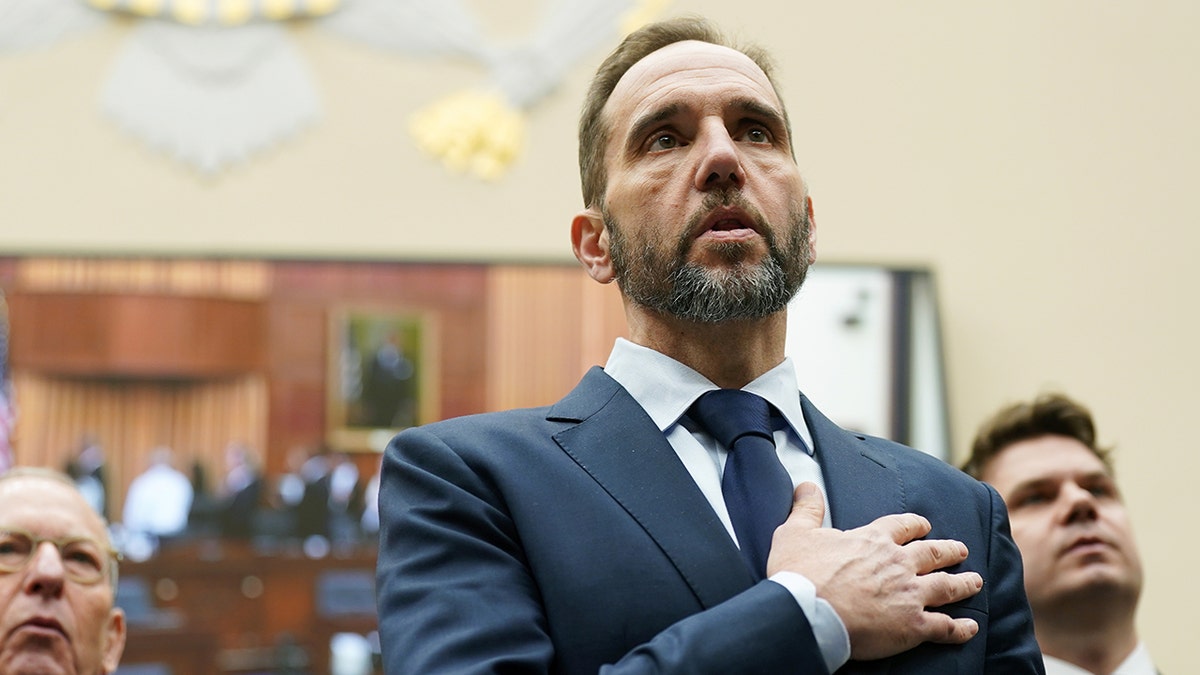
Jack Smith, a former special counsel in the Biden administration, faces potential legal consequences for his previous actions during the investigation of Donald Trump’s presidential campaign. Smith’s handling of two federal indictments against Trump has attracted scrutiny, as accusations of misuse of power have emerged.
As part of the investigatory process, Smith gave testimony to Congress but reportedly failed to disclose vital information. This omission is significant for congressional oversight. Jim Jordan, Chair of the House Judiciary Committee, has referred Smith to the Department of Justice, raising concerns for Smith.
The legal framework, 18 U.S.C. § 1001, clearly states that providing false statements in government proceedings is prohibited. Even partial truths are considered misleading, demanding that witnesses present all relevant information accurately.
After Trump left office, the Department of Justice accessed text messages from 44 members of Congress. This action included messages from House Speaker Kevin McCarthy. The inquiry into the 2020 election involved reviewing communications between Trump and members of Congress.
Smith obtained testimony by asserting he sought toll records via warrants. Toll records show contact information but don’t include conversation details. However, Smith didn’t disclose obtaining communication contents from the National Archives.
Investigations revealed Smith bypassed necessary reviews by a “taint team” to ensure texts weren’t privileged, as protected by the Constitution’s Speech and Debate Clause. Smith’s responses during the deposition generated controversy, as they allegedly mocked the commitment to providing the whole truth.
Congress, led by Senator Chuck Grassley’s efforts, discovered Smith’s improper actions, highlighting significant concerns over his use of the National Archives. These findings are crucial for oversight. Accusations also emerged that retaliatory motives drove the investigation against Smith, aligning with Trump’s criticisms of Smith’s actions.
Some argue that Smith’s prosecution could affect the perceived independence of the Department of Justice. Yet, as part of the Executive Branch, the Justice Department falls under presidential control. Smith, as a citizen, must face accountability for alleged misconduct.
Misdeeds of this nature hold legal implications. Just as law enforcement officers face consequences for unlawful actions, prosecutors like Smith should too. Ensuring accountability reinforces the rule of law, a principle relevant to Smith’s tenure as special counsel.
Chairman Jim Jordan underscores the nature of Smith’s alleged falsehoods in the congressional setting. Smith’s incomplete disclosures during the deposition highlight issues with the legal profession and government operations. Information revealed by Chuck Grassley is critical in these proceedings.
Leave a Reply