Architecture and Public Perception
Some famous buildings provoke strong reactions. To many people, they are considered unattractive. To architects, they are seen as bold expressions of design, engineering, and urban identity. This divide highlights a broader shift in how the U.S. approaches architecture and construction.
The American Institute of Architects (AIA) reports that nearly half of the country’s 125 million buildings are over 50 years old. Recent trends show a growing focus on adapting existing structures. Adaptive reuse increased significantly, with 25,000 apartments created from converted buildings in 2024, marking a 50 percent rise from the previous year.
Reusing buildings can avoid 50 to 75 percent of carbon emissions associated with new construction and reduce embodied carbon from materials and transport. Architects are keen on renewing older structures, emphasizing the importance of refreshing these buildings for longevity and relevance.
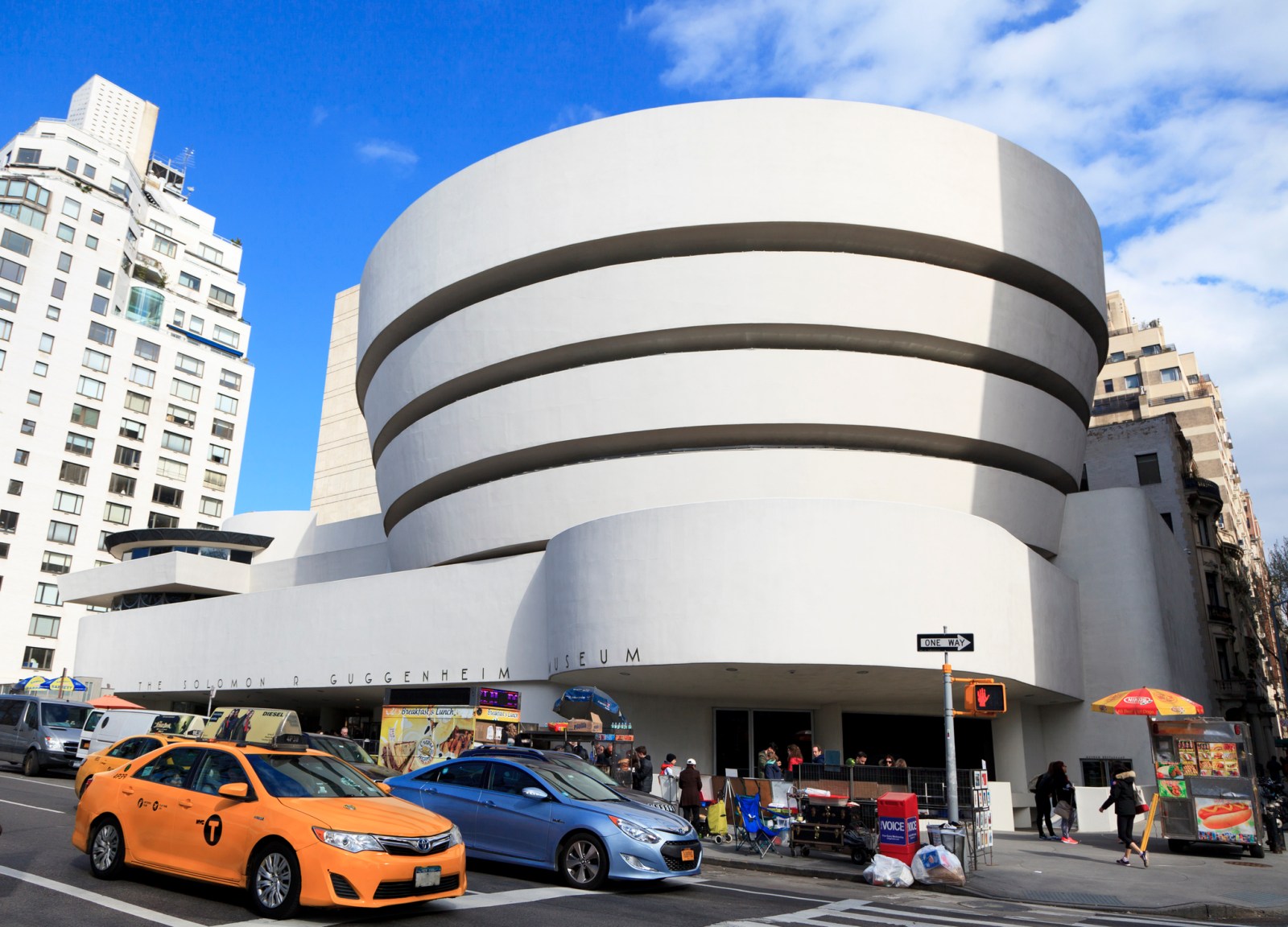
Guggenheim Museum, New York City
Frank Lloyd Wright’s Guggenheim Museum is widely recognized but does not receive universal admiration. Its contrast with Fifth Avenue buildings and unconventional form can be polarizing.
Monika Smith, principal cultural and performing arts design leader at DLR Group, stated that the museum is “controversial and not always appreciated by the public” due to its contrast in architecture and challenging curved walls.
Despite this, Smith praised the museum for reimagining the visitor experience. It replaced traditional gallery layouts with a continuous journey shaped by circulation and natural light, making it both a memorable experience and a sculptural object.
Marin County Civic Center, California
Another design by Frank Lloyd Wright, the Marin County Civic Center in San Rafael, divides opinion as well.
Architect Charles Bloszies described it as “well-known and somewhat polarizing,” appreciating its distinctive design and public function.
Bloszies highlights its significance as quintessential Frank Lloyd Wright Prairie School architecture, fitting the northern California hills context surprisingly well.
Boston City Hall, Massachusetts
Boston City Hall is a building loved by architects but often disliked by the public.
Miles Smith from Graphisoft called it a “fantastic brutalist structure” with a rich history, his favorite building worldwide.
Marc Gordon from Spacesmith noted the divide reflects attitudes toward brutalism. The style is generally disliked due to its stark concrete forms, but architects value its honest material expression and simplistic geometric form.
Norfolk Scope Arena, Virginia
The Norfolk Scope Arena is criticized by locals yet celebrated by architects.
Mel Price from Work Program Architects described it as disliked by many in Norfolk, but an iconic landmark defining the city skyline.
Thom White, also from Work Program Architects, praised its engineering significance as the world’s largest reinforced thin-shell concrete dome, arguing against its demolition.
Woodhull Hospital, New York City
In Brooklyn, Woodhull Hospital is another example of contested architecture.
Marc Gordon stated the building is “generally reviled” by the public but highlighted its size and bold design expression.
Gordon appreciates its industrial aesthetic and structural expressionism, framing it as a misunderstood work of design.
For architecture-related stories, contact via [email protected] for a chance to be featured.
Leave a Reply