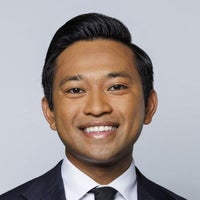
At a recent campaign event outside Detroit, Republican Senator Ted Cruz criticized Democratic Senate candidate Abdul El-Sayed, falsely associating him with the Muslim Brotherhood. El-Sayed has repeatedly dismissed these claims.
“My nickname for the guy is the jihadist leprechaun,” Cruz stated regarding El-Sayed. Cruz raised concerns that El-Sayed might gain top-level security clearance as a U.S. Senator if elected, potentially joining the Senate Intelligence Committee.
Accusations linking El-Sayed with the Muslim Brotherhood have been central to Republican nominee Mike Rogers’ closing strategy in the Senate race anticipated to be highly competitive in Michigan.
In January, the Trump administration designated sections of the Muslim Brotherhood as a terrorist organization. El-Sayed countered these allegations in a Fox News interview, saying, “I have never been a member of the Muslim Brotherhood, I never will be.” His campaign condemned these assertions as a “bigoted anti-Muslim smear campaign” intended to shift focus from economic concerns.
El-Sayed further emphasized his disavowal of the Muslim Brotherhood during a recent town hall meeting. When informed by CBS News about Cruz’s remarks, El-Sayed’s campaign spokesperson, Cole Wozniak, noted, “Ted Cruz is a deeply unpopular politician who has long supported policies detrimental to Michigan families, including voting against healthcare for many residents.” Wozniak accused Cruz of attempting to divert attention from rising costs blamed on Trump’s policies.
These GOP claims stem from old online posts by El-Sayed’s half-sister, Fatten Elkomy, alleging their birthmother’s involvement with the Muslim Brotherhood in Egypt during the 1970s. El-Sayed, born in the U.S., stated that his parents divorced when he was young and he was raised by his stepmother. He also mentioned not discussing his birthmother’s past activities as they occurred decades before the group’s terrorist designation in the U.S.
Cruz also highlighted El-Sayed’s presidency of the Muslim Students’ Association at the University of Michigan and his support for protests against Egyptian leader Mubarak in a 2011 op-ed.
Rogers and Cruz raised concerns over El-Sayed signing a letter supporting then-President Mohamed Morsi in 2012. As a congressman, Rogers acknowledged the need to interact with some moderate members of the Muslim Brotherhood but stressed vigilance.
The Muslim Brotherhood remains banned across several Middle Eastern countries such as Egypt, Saudi Arabia, and the UAE. Rogers continued to critique El-Sayed’s family ties, despite the group’s proscription occurring long after those claims.
El-Sayed, emphasizing his loyalty to the U.S., stated, “Judge me by my actions and my work, but do not assume that because I might pray differently, I’m not committed to the Constitution.” Cruz still questions El-Sayed’s alleged ties to the Muslim Brotherhood, focusing on ideology rather than religious practices.
Anti-Muslim narratives have intensified against El-Sayed as Election Day approaches, including derogatory remarks from President Trump labeling the Democratic candidate as a “jihadist Muslim Brotherhood member.” Cruz speculated about El-Sayed’s progressive supporter Alexandria Ocasio-Cortez possibly running for president in 2028.
At the campaign event, Mike Rogers reiterated the significance of the Michigan Senate race, asserting it as the “most important race in the country.” Rogers urged voters to be vigilant about El-Sayed’s declared ties, stating, “When you can’t tell the truth about things that matter on life and death, I just don’t think you have any business being in the United States Senate.”
The Michigan Senate race remains pivotal, having oscillated between Democratic and Republican affiliations over recent years, making it a closely watched contest. CBS News Battleground Tracker marks the race as a toss-up.
Leave a Reply