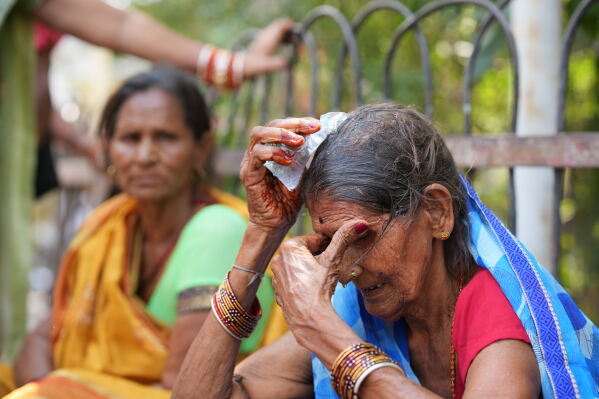
In Banda, India, relentless heat persists day and night. Electricity outages force residents to cope without even basic fans. Relief comes from makeshift solutions like being hosed down or sleeping outside. Banda often records some of India’s highest temperatures. Global warming, largely due to the burning of fossil fuels, intensifies heat waves. Uttar Pradesh, the state where Banda is located, faces significant heat vulnerability. In 2023, a severe heat wave claimed at least 119 lives across the state.
In May 2026, temperatures in Banda hit 48.2 degrees Celsius (118.8 Fahrenheit) on multiple occasions. The town was the hottest place on Earth seven times this year, mostly in April, as noted by climatologist Maximiliano Herrera. Although temperatures have slightly decreased, humidity from seasonal rains still makes the heat oppressive.
Morning: Challenging Jobs at the Market
In the early hours, market workers like Munni Devi and her four sons start their labor when the temperature already reaches 30 degrees Celsius (86 Fahrenheit). The Banda vegetable market is bustling as workers unload and transfer produce. Devi, 70, notes that the heat intensity grows each year. This year has been particularly grueling. Despite the harsh conditions, Devi and her sons cannot afford to miss work.
“Everyone feels the heat, but because of our circumstances, we have to bear it,” Devi explains.
Laborers continue their tasks amidst the escalating heat. Devi’s family endures unreliable electricity, leaving them with little respite. Her grandchildren find some relief through daily water hose showers.
Afternoon: Protecting Birds Amid Heat
As Banda grows hotter in the afternoon, many seek shelter indoors. However, some vegetable sellers and rickshaw drivers remain outside. Meanwhile, 70-year-old Shobharam Kashyap constructs wooden birdhouses in his workshop. Kashyap and others have set up over 15,000 birdhouses to shield birds from extreme heat. Painted primarily in green, Kashyap’s birdhouses dot Banda, accompanied by clay water bowls to assist the birds.
“Our culture has long encouraged feeding birds,” Kashyap says, highlighting a tradition where temple-goers offer rice for birds.
Evening: Rising Heat-Related Illness
At Banda’s hospital, more patients arrive as heat peaks. Patients suffer from heat-related illnesses such as dehydration, diarrhea, vomiting, and abdominal pain. Dr. Abhishek Pranayami, the hospital’s head doctor, observes a yearly increase in admissions due to summer heat. Treatment ranges from a few days to longer depending on severity, intensifying the pressure on hospital staff.
“Pressure is quite high on us and the staff,” Dr. Pranayami comments regarding the influx of patients.
Night: Seeking Comfort Outdoors
Even after dark, Banda remains sweltering. Young boys playing cricket chill their water bottles with cloth wraps. The town’s railway station becomes a refuge for families seeking respite from stifling homes. With night offering some breeze, dozens gather at the station platforms for sleep. Some residents use bags as pillows, and others lie on blankets outside the station’s entrance, embracing any chance for rest.
For families with young children, railway stations provide some relief amidst hot nights. The climate change-driven shifts in temperature expose more people to dangerous heat conditions. Nighttime temperatures, especially, hinder recovery from the day’s heat. Local authorities have implemented measures like cooling centers and oral rehydration kit distribution to address the crisis.
“What is happening here is a global phenomenon,” states Amit Aasery, Banda’s district magistrate, acknowledging the broader effects of climate change.
Leave a Reply