Outside the courthouse where the Dred Scott case was argued in 1847, former Rep. Cori Bush framed her political departure as a moment to reverse. She addressed the crowd, urging them to return her to Congress. The supporters echoed ‘send her back.’ Known for her progressive stance, Bush started as a Black Lives Matter organizer in Ferguson. After serving two terms, she lost a primary to Wesley Bell, a moderate prosecutor.
The contest between Bush and Bell stands as a significant test of Democratic political shifts, showcasing divisions on U.S.-Israel relations and socialist ideals. Both candidates have their roots in the civil rights movements following Michael Brown’s death in 2014. Despite Bush losing to Bell previously by a narrow margin, she attributes her defeat to external spending influences. Her criticisms of many party stances, particularly regarding Gaza, appear to resonate more widely now.
Bush told a gathering of pro-Palestinian activists, Black Lives Matter organizers, and democratic socialists that it’s not just her, but her backers they fear. Her campaign rally demonstrated strong grassroots support, contrasting with Bell’s alignment with senior political figures like former Speaker Nancy Pelosi. Bell criticized Bush as being self-focused and claimed his dedication to St. Louis residents as his foremost priority.
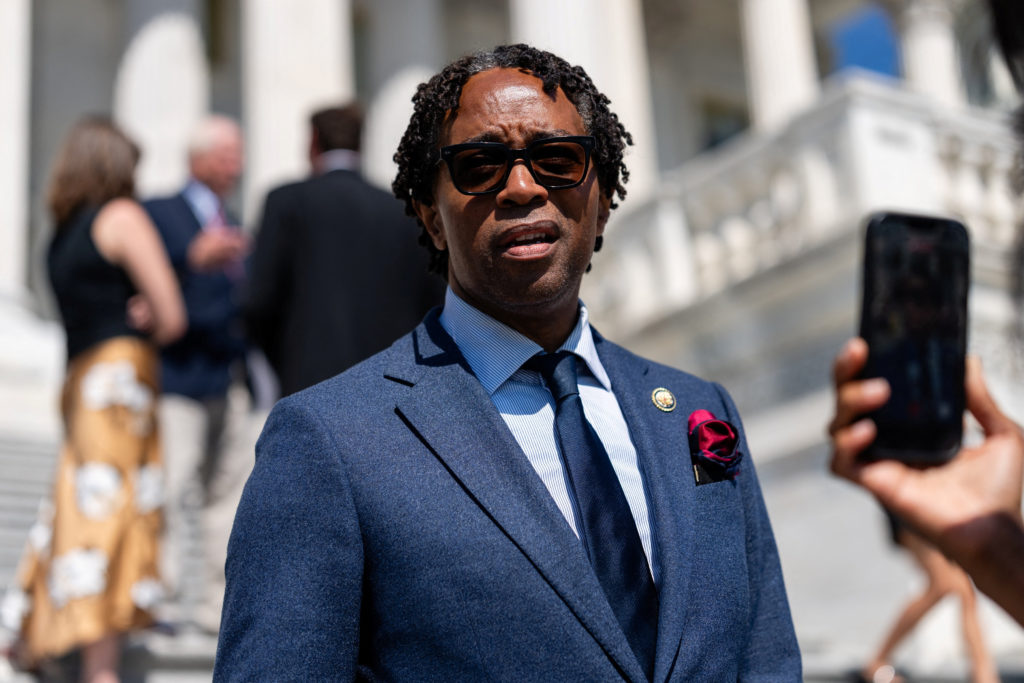
U.S. Rep. Wesley Bell emphasized his practical approach, arguing it benefits the people of St. Louis over Bush’s campaign.
Early voting for the August 4 primary has started, with both candidates exchanging sharp criticisms. Bush has pointed to Bell’s legal controversies and his handling of discrimination claims, while Bell highlights a prior investigation into Bush’s campaign expenses.
The role of the American Israel Public Affairs Committee has intensified focus on the district. Their spending against Bush mirrors previous financial interventions. Some, like former Rep. Jamaal Bowman, see Bush as a strong opponent to such influences.
There are concerns about rising hostility towards Israel being conflated with antisemitism. Bush has been joined by Jewish faith leaders in criticizing Israeli policies, although there have been controversial remarks at her events.
AIPAC has committed significant resources against Bush, emphasizing her perceived ineffectiveness. Conversely, Bell has argued for continued military alliances, citing past lessons from Iraq and Afghanistan.
The upcoming primary reflects local concerns, from managing disaster relief funds to discomfort over financial influence in politics. Residents like Allison Johnson express varied concerns in choosing between Bush and Bell.
Historically, both Bush and Bell emerged from the aftermath of Ferguson’s unrest. Their backgrounds have significantly influenced their political paths. Bell, a former city councilman and prosecutor, enacted police reforms. Bush, coming from a pastoral and activist background, carried her outsider persona into Congress.
According to other local figures, such as Ella Jones, the first Black mayor of Ferguson, and activist DeRay McKesson, both candidates have distinct commitments to the community, each with their own strengths in addressing local and broader issues.
Leave a Reply