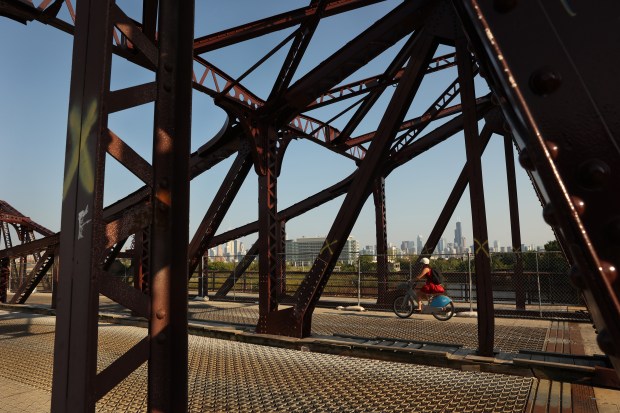
The Cortland Street Bridge has been closed to vehicles for a year. Its closure has led to increased traffic and longer commutes described by residents as a significant problem. This 124-year-old bridge is a protected city landmark, considered the oldest model of a trunnion bascule bridge, a distinctive feature of Chicago’s architecture. The Chicago Department of Transportation (CDOT) had initially closed the bridge for an estimated 18- to 24-month rehabilitation.
Recently, two aldermen expressed frustration, aiming to revoke the bridge’s landmark status to expedite replacing it. CDOT emphasized that even if the landmark status were removed, state or federal laws still demand historical reviews for any planned work.
The bridge, originally marked for reopening in 2027, requires more extensive work due to its deteriorated condition. Alderman Brian Hopkins criticized CDOT’s handling, asserting their responsibility to ensure efficient transportation. An ordinance to rescind the landmark status is in consideration.
Alder Persons Brian Hopkins and Scott Waguespack have received numerous complaints regarding the delay. With two other bridges on Lake Street and Chicago Avenue also shut, criticism mounts against CDOT’s management of simultaneous closures. An ordinance now mandates CDOT to notify the City Council of bridge closures expected to last beyond a month.
Preservationists argue that the Cortland Street Bridge is more than infrastructure, with its historical value being central to Chicago’s identity. As the bascule bridge was a significant innovation attributed to Chicago, landmarks like this play a key role in reflecting the city’s historical importance in transportation.
Ward Miller from Preservation Chicago warns that removing the landmark status could weaken Chicago’s Landmarks Ordinance, risking the integrity of renowned buildings. While CDOT acknowledges the need for significant repairs due to unforeseen deterioration, replacing or rehabilitating the bridge involves lengthy reviews.
Despite the bridge’s age, which complicates quick repairs, discussions continue on how to address this infrastructural challenge without completely losing historical elements. While simultaneous closures burden residents, CDOT continues efforts for efficient resolutions, albeit constrained by structural complexities inherent in older infrastructure.
Ultimately, the closure impacts pedestrian and cyclist routes more than vehicle paths, offering potential alternatives. Suggestions include retaining the bridge for non-vehicular traffic while constructing a new vehicle bridge, although CDOT deems this approach currently impractical due to time and negotiation needs.
Local residents, like Emily Marzonie of Lincoln Park, aspire for a solution balancing functional improvements and historical preservation. The emphasis remains on retaining elements that define Chicago while addressing modern infrastructural needs.
Leave a Reply