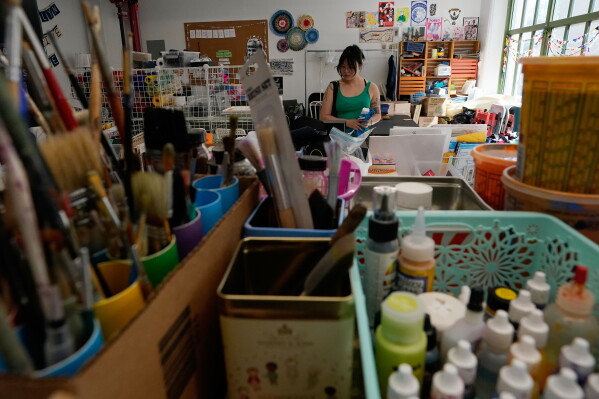
Charlene Catalano sought green-and-white yarn for her winter scarf. She bypassed big-box retailers and opted for Brooklyn Creative Reuse. There, she found gently used crochet kits, hooks, and labels for only $6.
Catalano observed, “Art is costly now, but this has everything I need.” Brooklyn Creative Reuse is one of many centers in the U.S. and beyond dedicated to reducing waste by selling donated art supplies at steep discounts.
These centers operate like thrift stores for art supplies, allowing crafters to purchase small amounts of material rather than large quantities. This helps neighbors engage in creative projects. Art supplies often exceed the needs of household crafts, ending up in landfills where they release harmful substances. Creative reuse centers save thousands of pounds of materials from landfills each month.
Reducing waste is crucial. You find options in reuse centers that you won’t source on your own,noted Julian Silverman, a materials scientist at New York’s Fashion Institute of Technology.
Secondhand Art Supplies Save Money and Resources
Art is an expensive hobby. Buying secondhand keeps costs low, with reuse centers pricing supplies at $3 per pound. Some items are priced individually. By reusing materials, energy and water consumption in production and shipping is minimized. For instance, 13 gallons of water are used to create one gallon of paint.
Most art supplies come with excessive packaging, such as a marker in plastic and cardboard. Light-sensitive materials like paint require extra packaging. In Atlanta, Scraplanta Creative Reuse gathers and sells about 7,000 pounds of supplies monthly to various community members.
We value even a half bottle of paint or glue if it serves someone’s project,shared Jonelle Dawkins, executive director of Scraplanta.
In landfills, synthetic paintbrush bristles and handles take centuries or longer to degrade, releasing harmful plastics and metals. Zoie Diana, an environmental scientist, pointed out that while art paints contribute to pollution, they are not the main culprits.
Sustainable Art Starts at Home
Practice sustainable art by purchasing only necessary items and donating rather than discarding extras. Properly cleaning paintbrushes prevents microplastics from entering water sources.
Crafters should consider drop-off programs for recycling paint. Repurposing household items is another way to create art. Silverman suggests making colorful inks from natural ingredients like onion skins and beets or recycling old makeup into paints.
You don’t need to spend to explore materials,Silverman said.
Artist and teacher Rosina Morelli found inspiration at Brooklyn Creative Reuse to donate unused art supplies to others who will utilize them.
The Associated Press receives support for its Health and Science Department coverage from foundations like the Howard Hughes Medical Institute and the Robert Wood Johnson Foundation. The Associated Press is responsible for its content and maintains transparency with its philanthropic partnerships, listed on AP.org.
Leave a Reply