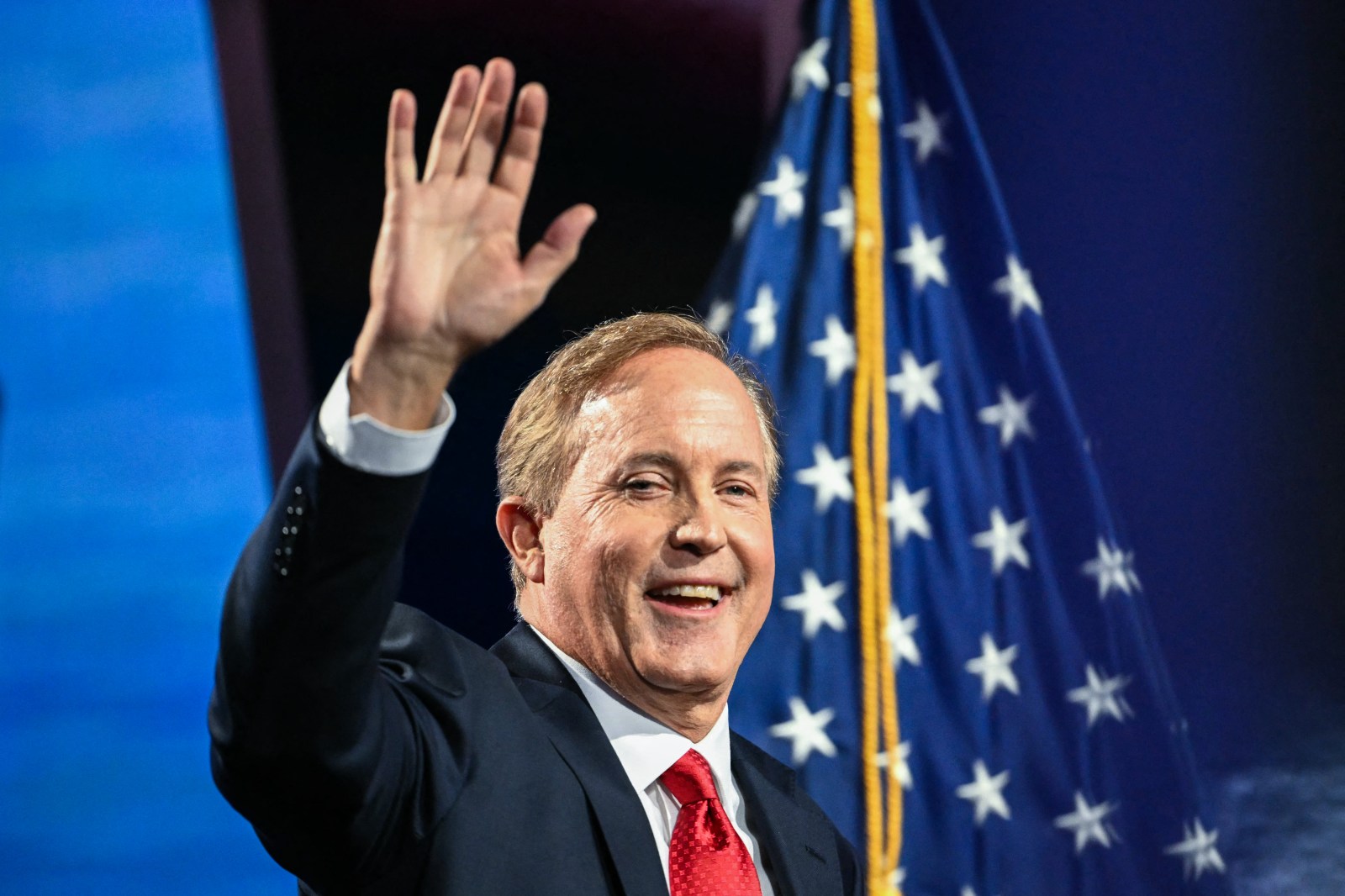
Throughout his political career, Texas Attorney General Ken Paxton has avoided participating in debates with his opponents. This strategy continues as Paxton has not yet agreed to debate his Democratic rival, James Talarico, in the upcoming U.S. Senate race. With Election Day approaching, pressures mount in this closely contested race. Recent polls reveal Talarico slightly ahead or in a tie with the Republican nominee embroiled in scandals. This has sparked concerns that Democrats might secure a Senate seat in Texas, a state that has not seen a Democratic senator since 1988.
Many Republican candidates in Texas, including those vying for statewide offices, are avoiding debates this cycle. President Donald Trump’s declining approval ratings due to ongoing issues like the Iran war and rising gas prices have posed risks for Republicans nationally, as shown in recent polls.
Talarico, who serves as a state lawmaker from Austin, has called for debates with Paxton for several months. He urged for three televised debates with Paxton, noting that despite claims from Paxton’s team of willingness, Paxton often evades when questioned by reporters. Last month, Talarico also invited Paxton to debate on Fox News. Although Paxton’s campaign initially expressed agreement to participate, objections to moderators have stalled formal announcements.
Historically, Paxton has not debated Democratic opponents during his campaigns for Texas attorney general in 2014, 2018, and 2022. This Senate race represents his most high-profile campaign. This time, calls for him to debate even come from Trump and other Republicans, ramping up speculation about his next steps. Newsweek has reached out to both campaigns for responses.
Talarico stopped campaign activities due to flu, allowing Paxton the angle to question his absence during rally events, with Trump’s three visits to Texas underscoring the surprising contest in this reliably Republican state.
During a flight back to Washington, Trump used his Truth Social platform to challenge Talarico to debate Paxton, asserting Paxton’s readiness. Talarico quickly accepted, pointing the decision back at Paxton on X, formerly known as Twitter.
Paxton has yet to publicly address the debate demand, yet continues to taunt Talarico’s absence. Republican strategist Karl Rove indicated that sidestepping the debate could harm Paxton’s Senate aspirations. At an appearance at The Economic Club of Chicago, Rove shared, “If he doesn’t debate, I think he loses.”
Could Paxton Agree to Debate Talarico?
Cal Jillson, a political science professor at Southern Methodist University, noted skepticism about Paxton agreeing to debate. “Remarkably, many Republican incumbents in Texas are refusing to engage in debates despite dwindling poll leads,” Jillson observed. He categorized Paxton as a “weak candidate and poor debater,” suggesting his reliance on substantial national Republican support to sway outcomes.
Grant Davis Reeher, a political science scholar at Syracuse University, acknowledged potential harm facing Paxton should he ignore debate calls from both Trump and Rove. “Candidates typically lose favor by avoiding debates,” explained Reeher. This avoidance might suggest a reluctance to defend positions and could appear as an attempt to conceal vulnerabilities.
Costas Panagopoulos, a political science professor at Northeastern University, echoed this sentiment, linking refusal with an inability to confront opponents equally. “Voters may question his candidacy suitability for the U.S. Senate, where debating is crucial,” Panagopoulos shared. Talarico would likely leverage this stance to portray Paxton as lacking conviction and transparency.
However, Reeher suggested potential pitfalls should Paxton agree to a debate. Paxton’s historical avoidance suggests discomfort with debate formats, which could place him at a disadvantage. Moreover, a high-profile debate might alter public perception favoring Talarico.
Jillson commented on the symbolic importance of debates, albeit showing limited evidence of voter repercussions against candidates who refuse. “Voter opinions, mostly adverse, regarding Paxton are established and unlikely to shift. The Texas Senate race outcomes will hinge on public sentiment towards Paxton and Talarico rather than debate presence.”
Ken Paxton vs. James Talarico: Recent Polls
Current polls indicate a slight lead for Talarico. According to Decision Desk HQ, Talarico maintains a three-point advantage as of Friday. In RealClearPolling’s average forecasts, Talarico holds a 2.8-point lead. A YouGov poll of 3,625 likely voters from late September to early October positioned Talarico with a six-point lead, noting a 3 percent margin of error.
A UMass Lowell/YouGov poll recently tied the candidates with 45 percent support each, with 7 percent undecided. Conducted among 850 likely voters, it reported a 4.5 percent margin of error. Another Guidant Polling & Strategy survey highlighted a narrow lead for Talarico at 47 percent against Paxton’s 44 percent.
Additional surveys by The New York Times/Siena College and Fox News also underscore Talarico’s slight lead, indicating a competitive environment as Election Day nears.
Leave a Reply