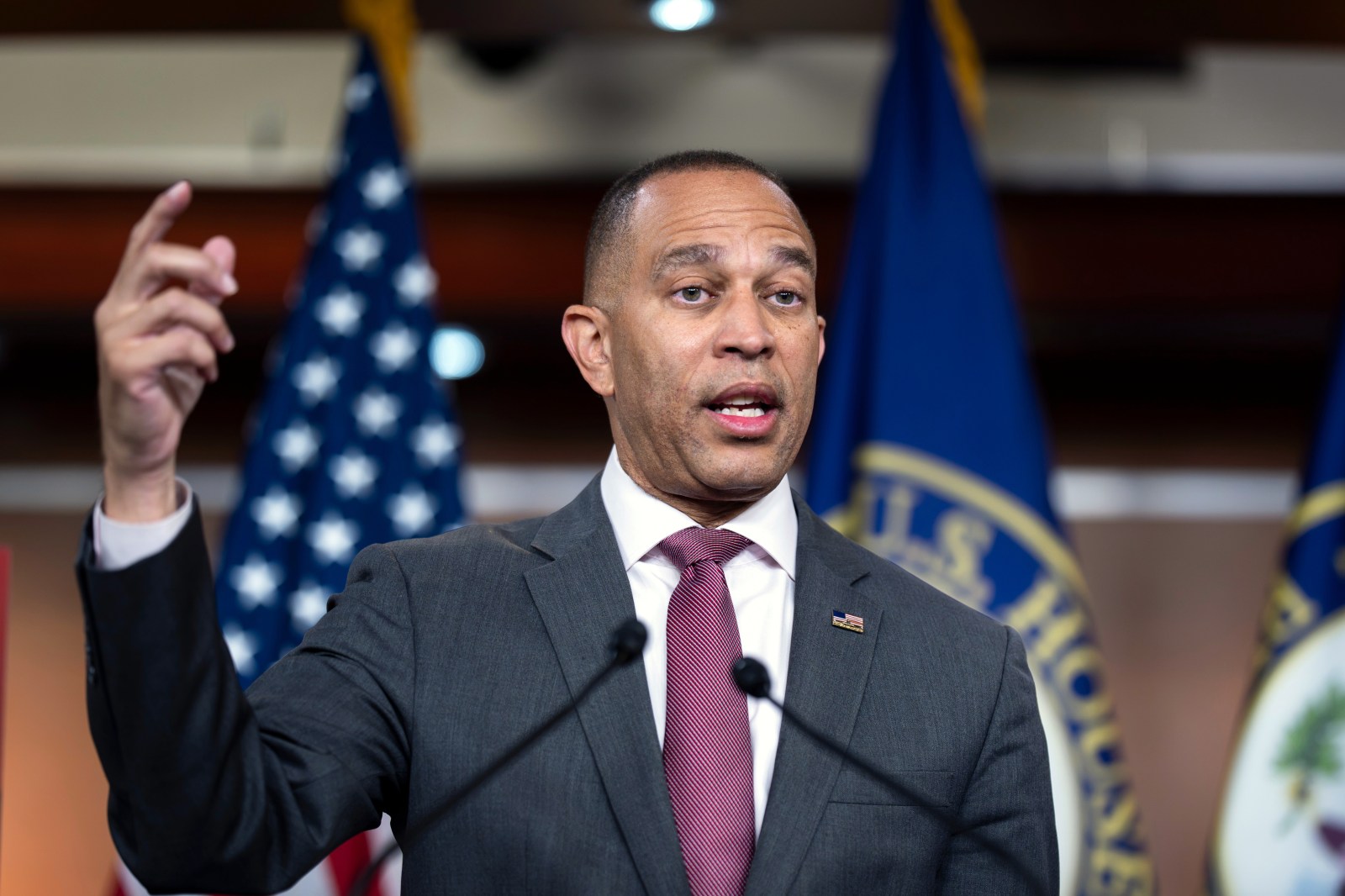
House Minority Leader Hakeem Jeffries has stirred discussion in the Democratic Party by stating that he does not back Medicare for All legislation at present. Though once a co-sponsor, Jeffries has shifted stance over time.
During an interview on NBC’s Meet the Press, Jeffries explained, “I haven’t co-sponsored the Medicare for All legislation that has been introduced over the last several years. I do think we need to figure out how to fix our broken healthcare system and then build something better once we repair the damage that has been done.”
Polling indicates many Americans favor enhancing government involvement in health coverage. A significant number express belief that the government should ensure access to health insurance, with support for a single-payer system increasing over the past decade.
Significance of Jeffries’ Comments
Jeffries’ remarks shed light on a divide within the Democratic Party regarding strategies to implement universal health coverage. Progressive figures like Senator Bernie Sanders and Representative Ro Khanna advocate for Medicare for All as a key priority. In contrast, moderates such as Jeffries emphasize reducing costs and reinforcing existing initiatives like the Affordable Care Act.
Americans, meanwhile, face rising healthcare premiums and debt. A survey by The Century Foundation found that 53% of voters have reduced care or incurred debt due to healthcare costs.
Responses and Perspectives
When NBC’s Kristen Welker questioned him on Medicare for All, Jeffries responded that he does not endorse the legislation currently. He emphasized addressing the “broken healthcare system” and ensuring affordability. This represents a shift from his earlier legislative co-sponsorships in 2019 and 2021.
Alex Beene, a financial literacy instructor at the University of Tennessee, noted, “Democrats have seen dividing lines drawn between moderate and progressive wings of the party.” Progressive wins raise concerns among some Democrats that such proposals might alienate voters in future elections.
Understanding Medicare for All
Medicare for All refers to a single-payer healthcare system offering government-funded insurance to all Americans. Recent proposals, notably by Sanders, generally include:
- Coverage for all U.S. residents
- Replacement of most private insurance plans
- Elimination of most premiums, deductibles, and co-pays
- Expanded benefits, including dental, vision, and hearing care
Financing would rely on new taxes and federal spending. While such a system might lower health spending and enhance access, critics argue it necessitates substantial federal spending and potential tax hikes.
Public Opinion and Political Calculations
Data for Progress polling in November 2025 found 65% support for Medicare for All when framed as national health insurance replacing private coverage. Among Democrats, the support was 78%, with notable backing from independents and nearly half of Republicans.
Pew Research Center data indicates that 66% of Americans feel the government must ensure health coverage. Support for specific systems varies, with some preferring a mixed model over a government-run approach.
Michael Ryan, finance expert, warned, “Democrats have to be careful not to confuse caution about the Medicare for All label with satisfaction with the current healthcare system.”
Current System Challenges
Several factors fuel Medicare for All’s popularity, such as high costs and coverage issues. A KFF report noted that almost half of adults struggle with healthcare costs, with many delaying care or medication due to expenses.
One Gallup study found that a significant number of workers remain in undesirable jobs fearing loss of employer-sponsored insurance. Over half faced challenges in paying for medical needs.
Some experts, like Kevin Thompson of 9i Capital Group, argue a shift to Medicare for All could enhance disposable income. But concerns about funding and replacing the private insurance system persist among moderates and Republicans.
Future of Healthcare Legislation
Despite Jeffries’ statements, progressives will probably continue advocating for Medicare for All, particularly as costs surge. Meanwhile, moderates may promote strengthening the Affordable Care Act.
Alex Beene remarked, “Despite unlikely sweeping overhauls soon, there might be efforts to integrate elements providing financial relief.”
Leave a Reply