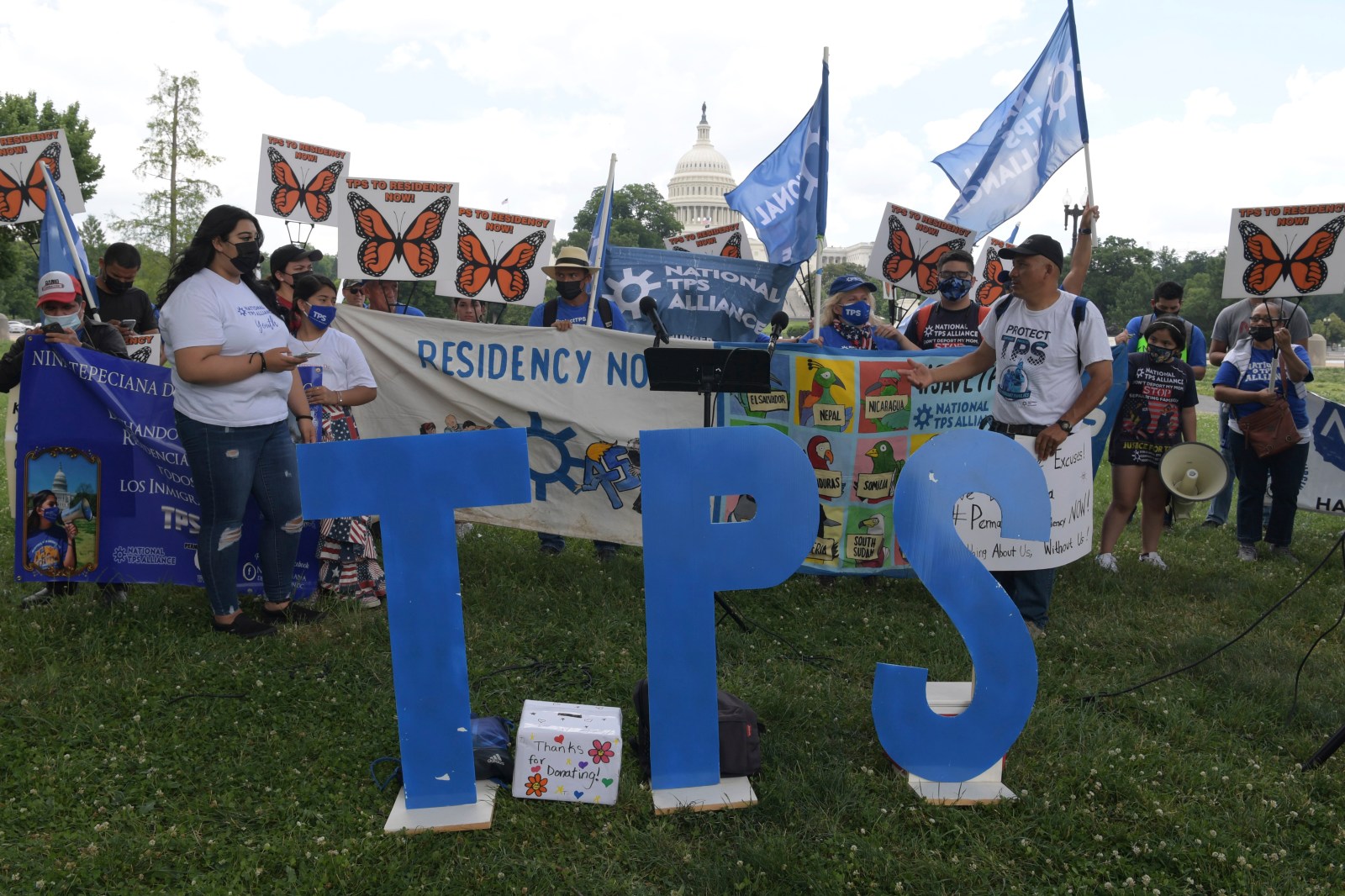
The Trump administration’s Department of Homeland Security (DHS) secretary has faced accusations from inside his own party regarding “backdoor amnesty.” This follows a Supreme Court decision allowing the administration to terminate Temporary Protected Status (TPS) for approximately 350,000 Haitians and 6,000 Syrians. The Supreme Court’s 6-3 ruling, announced on June 25, stated that the courts cannot review a decision by the Homeland Security secretary to end a TPS designation. Justice Samuel Alito penned the majority opinion, while Justice Elena Kagan, dissenting with the progressive justices Sonia Sotomayor and Ketanji Brown Jackson, expressed concern that TPS holders may quickly face deportation.
Two days after the ruling, DHS Secretary Markwayne Mullin addressed the situation in a CNN interview, unexpectedly arousing dissent among immigration hardliners from his party. Mullin, who was confirmed by the Senate in March following the removal of previous DHS chief Kristi Noem, was asked by host Jake Tapper about the future of the Haitian TPS holders. Mullin indicated that these individuals have options: they may apply for a temporary visa, seek permanent residency, or accept a plane ticket and around $2,100 to assist in resettlement efforts in their native country. He emphasized that TPS “is NOT permanent status.”
“Backdoor amnesty” is not a formal legal term, but it critiques a temporary program’s potential to effectively become permanent, bypassing congressional approval for an actual amnesty law. Currently, temporary humanitarian statuses, which persist or facilitate transitions to more durable solutions, are seen by critics as resembling amnesty without the formal legislative process.
The Right Takes Aim At Their Own
Mullin’s comments sparked immediate backlash from the political right. Critics argued that he should have stressed the upcoming illegal status of TPS holders instead of suggesting pathways to permanent residency. Fox News host Laura Ingraham and conservative commentator Nick Sortor voiced their opinions on social media, with Sortor arguing against allowing TPS holders to apply for further visas or residency, claiming they had ample time for this.
By Sunday evening, Mullin sought clarification on social media, reiterating the temporary nature of TPS and accusing Democrats of attempting to transform the program into “a de facto amnesty.” He stated that individuals without legal status face two choices: taking a $2,600 stipend and a flight home for self-deportation or being removed. Notably, the stipend had increased by $500 since his interview, an adjustment DHS has not publicly explained.
The phrase “backdoor amnesty” predates Mullin’s critics and the recent ruling. Representative Brandon Gill of Texas previously centered a House Oversight task force hearing around the term, accusing the Biden administration of misusing TPS to admit over a million individuals, thus inflating enrollment. Representative Andrew Clyde mirrored this sentiment in April with legislation designed to repeal TPS. Following the June 25 ruling, even the White House embraced the term, crediting the decision with halting a program alleged to have been manipulated by Biden as backdoor amnesty.
Debate Over the Future of TPS
Critics have now redirected their language towards Mullin. Some analysts argue that his comments are not indicative of anything new. Mark Krikorian, Center for Immigration Studies executive director, noted that TPS holders who qualify can retain their status by completing the requisite paperwork. They have historically been able to apply for other statuses while their TPS designation is active, although approval remains uncertain.
DHS has argued that its stipend and flight offer could potentially reduce deportation costs by nearly 70%, referencing the $17,121 average cost for arresting, detaining, and deporting a single migrant. However, this explanation has not completely quelled the debate, as the critical point for the right is whether offering self-deportation assistance alongside potential for permanent status undermines the administration’s immigration policy.
Geoff Pipoly, an attorney, highlighted that few TPS holders are positioned to acquire permanent status and noted the improbability of successful asylum applications due to recent administrative changes. He refuted claims that individuals could take the stipend and return later, citing legal barriers. Pipoly also noted skepticism about the cash offer, indicating the availability of such compensation remains unverified.
Work authorizations for Haitian and Syrian TPS recipients were scheduled to expire on July 10, regardless of how the political discourse over Mullin’s statements unfolds.
Leave a Reply