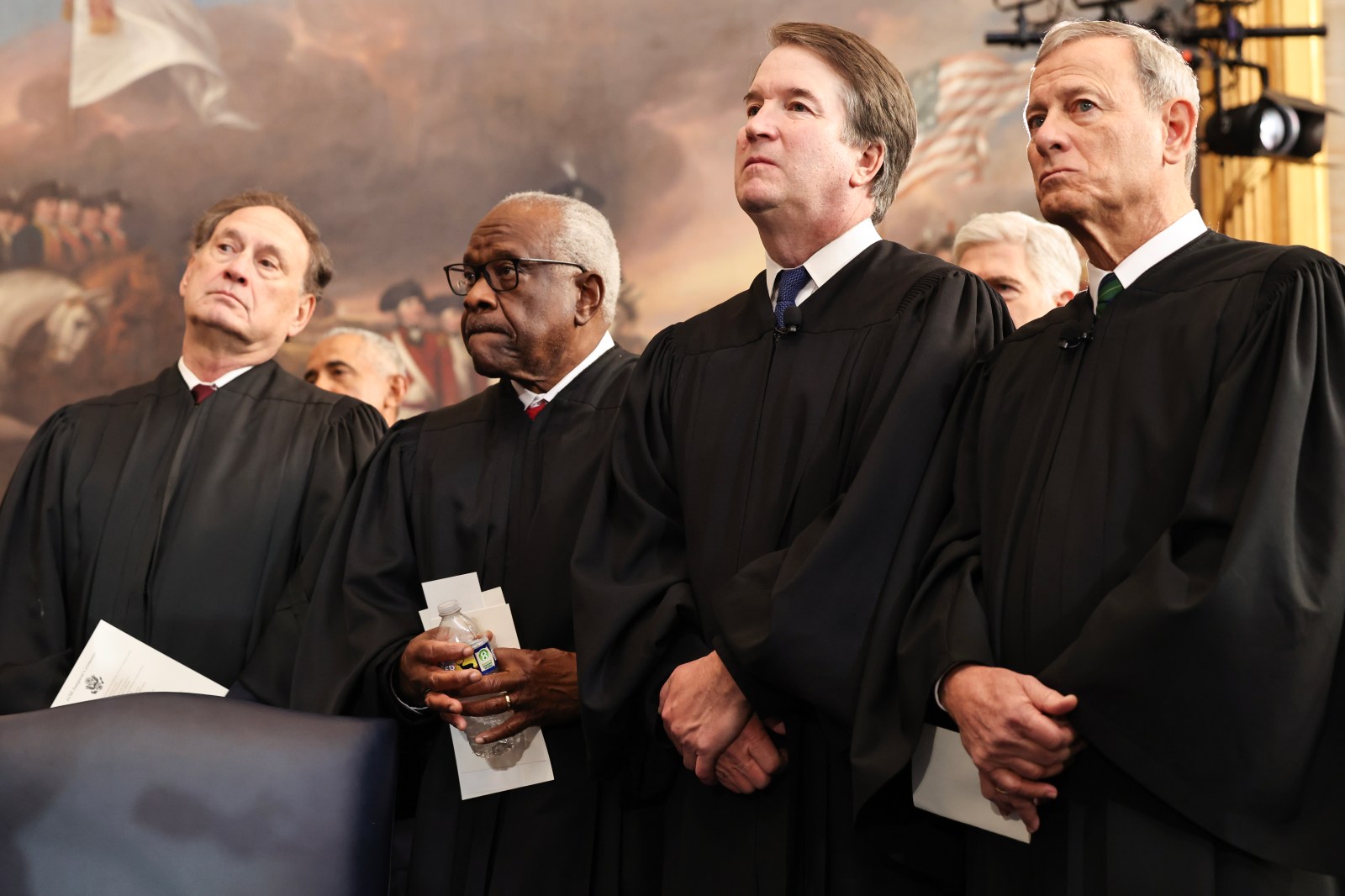
Public confidence in the Supreme Court is at record lows. This has led Democratic lawmakers to intensify efforts to reform the U.S. judicial branch’s apex, despite facing significant obstacles. Various Democratic proposals are in circulation, including constitutional amendments and legislation aimed at replacing lifetime appointments with 18-year terms.
While supporters argue that such changes would modernize the Court and restore trust, critics warn they may compromise judicial independence. Despite growing support from Democrats, the hurdles remain formidable. Republicans control Congress and constitutional amendments are notoriously difficult to pass. Legal scholars also express doubts about whether Congress has the authority to impose term limits solely through legislation.
Growing Momentum Among Democrats
Despite these challenges, momentum for the reform continues to build among Democrats in Congress. Representative Ro Khanna from California, a strong advocate for Supreme Court changes, pointed to a 2024 Fox News poll showing that 78 percent of voters support 18-year term limits for Supreme Court justices. Khanna introduced legislation last year to give the public what they want. He told Newsweek, “We should bring my bill to the floor for a vote. This Court has lost all moral authority.”
Reasons for Pursuing Reform
The Democratic push comes after the Court shifted more significantly to a 6-3 conservative lean. President Donald Trump appointed Justices Neil Gorsuch, Brett Kavanaugh, and Amy Coney Barrett during his term, solidifying the conservative majority. This shift has resulted in substantial rulings on abortion rights, guns, and federal authority.
The Court’s decisions have become highly visible in election-year politics and some justices have faced ethics controversies.
Public Support for Term Limits
Although Democratic efforts face long odds, public polling shows broad bipartisan support for term limits. Lawmakers continue pushing legislation and constitutional amendments, gaining additional co-sponsors following recent Supreme Court rulings.
Beyond Khanna’s bill, other proposals have attracted interest, aiming to leverage public polls about the Court to advance reforms that could reduce judicial appointment battles. Republicans, however, strongly oppose these reform initiatives.
“Imposing term limits would be a naked abuse of power,” said Utah Republican Senator Mike Lee. He argues it’s a greater threat to constitutional government than any norms-breaking.
Chief Justice John Roberts supports life tenure, saying it safeguards judicial independence and has served the country effectively for over 230 years.
Inside the Term Limit Push
Democratic Representative John Olszewski from Maryland proposed a resolution for a constitutional amendment to establish 18-year term limits. Jaime Lennon, Olszewski’s communications director, highlighted bipartisan support for reform. “Americans overwhelmingly support term limits for Supreme Court justices,” Lennon stated, advocating for both legislative and constitutional approaches.
Potential Changes Under Term Limit Proposals
Representative Hank Johnson reintroduced legislation for 18-year terms of active service. After active terms, justices would serve as federal judges in senior status, filling in if necessary. Johnson’s bill now has 74 cosponsors.
Johnson ensures immediate impact on sitting justices, contrasting Khanna’s proposal, which exempts current justices from reforms. The legislative push aims to address the Supreme Court’s legitimacy crisis.
Two-Year Appointment Intervals
Johnson supports Khanna’s bill, which introduces two-year appointment intervals. This ensures each president has predictable opportunities to nominate justices. However, Johnson’s bill would impact current justices immediately.
“Five of the six conservative justices were appointed by presidents who lost the popular vote,” said Andy Phelan, Johnson’s district communications director.
Declining Confidence and Major Decisions
Supreme Court approval declined after Trump’s appointments cemented the 6-3 conservative majority. Critics argue the transformation appears partisan, while supporters maintain faithful Constitution interpretation.
Recent rulings overturned significant precedents, reshaping American law and politics. Notable decisions include the 2022 ruling that ended Roe v. Wade’s constitutional abortion right. The Court also expanded presidential immunity and curtailed federal agency powers.
The visibility and significance of these rulings have heightened perceptions of ideological divisions.
Public Opinions on Supreme Court and Term Limits
Polls show significant support for term limits among Americans. A Marquette Law School poll revealed 61 percent believe the court favors Trump’s positions “almost always” or “most of the time.”
An NBC News survey indicated Supreme Court confidence hit a 22 percent low. The Fox News poll showed 78 percent of Americans favor 18-year term limits, and 45 percent view the court as “too conservative.”
Challenges and Future Outlook
Bipartisan support exists, but Democrats push for term limits independently. Republican leaders show little interest in pursuing reform. In a Republican-controlled Congress, reform advancement remains unlikely.
Constitutional challenges loom even if Democrats gain control of Congress. A constitutional amendment requires support from both chambers and state ratification, posing a formidable challenge.
The issue could gain prominence in the Democratic judiciary agenda. While Supreme Court term limits are a long shot, they are becoming more mainstream, with support extending beyond Democratic voters.
Leave a Reply