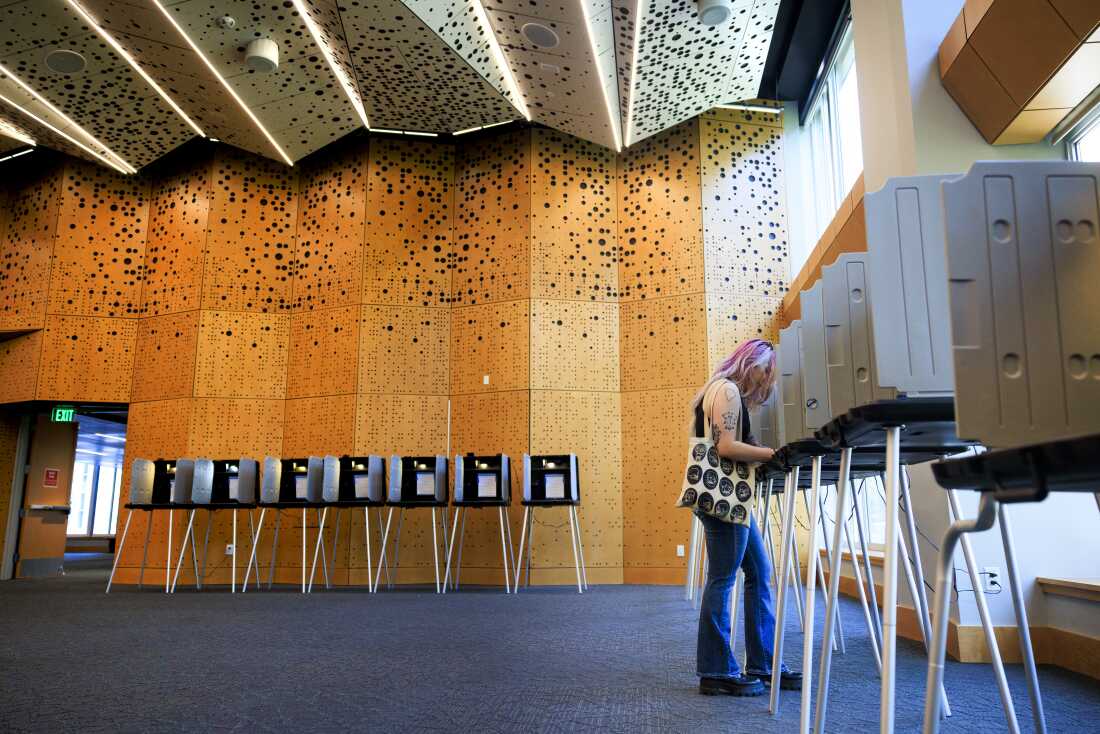
A voter casts her ballot during Colorado’s primary election at Denver’s Central Library on June 30. The image captures a pivotal moment in the political landscape.
Democratic candidates on the campaign trail maintain a consistent focus. They target Republicans on economic issues like high prices and financial pressures on working families. This approach aims to regain congressional power by emphasizing affordability.
Some party members, however, suggest broadening the message to include democracy. This is especially relevant as President Trump criticizes the integrity of elections without evidence. Jane Kleeb, Democratic National Committee vice chair, believes discussing U.S. election integrity following Trump’s recent claims is crucial. Trump’s allegations suggested Democrats, without basis, engaged in electoral cheating.
A recent California study advises against emphasizing democracy when appealing to working-class voters. Activists worry this focus diverts attention from pressing voter concerns such as housing, groceries, gas, and healthcare costs.
“It would be wise for Democrats to concentrate on Trump’s economic mismanagement,” Lindsay Owens, Groundwork Action CEO, stated. “This positions them strongly in the midterms.”
Recent polls indicate more voters trust Democrats over Republicans regarding economic matters. This shift results from policies by Trump and Republicans perceived to exacerbate inflation and increase household costs.
Strategic Focus on Cost of Living
Owens stressed that Democrats must highlight their stance on cost of living and affordability during the election. Amanda Litman, co-founder of Run for Something, agrees that Democrats can address gerrymandering, campaign finance, and voting rights once in office. Adjusting campaign strategies now could be ineffective.
Litman argues that linking complex issues like gerrymandering to housing affordability is challenging. She suggests focusing on economic issues first for electoral success. However, Kleeb rejects the notion that voters only focus on one issue.
Kleeb emphasizes learning from the 2024 elections, where some strategists deemed democracy a “loser issue.” Despite not dominating exit poll discussions, it was fundamental to voter motivation.
Interconnecting Democracy and Economy
The democracy issue has posed challenges due to its lack of clarity, according to Nathan Johnson, a Texas Democratic candidate. While voter suppression exists, he argues it hasn’t drawn significant public attention. Traditional economic concerns outweigh it in voter priorities.
Johnson suggests connecting democratic values with economic outcomes. Pennsylvania state representative Malcolm Kenyatta shares this view. He hears voter frustration over systemic corruption and believes these topics are linked with economic issues.
By framing economic challenges as products of institutional exploitation, Democrats can address both domains.
Litman cautions that while some voters might resonate with this message, others, particularly younger demographics, may distrust democratic systems. Melissa Toufanian, Navigator Research managing director, notes election fraud narratives have varied impacts.
Her firm’s research on Democratic-leaning, infrequent voters shows such discussions can either motivate voters or, in certain demographics, deter turnout.
Leave a Reply