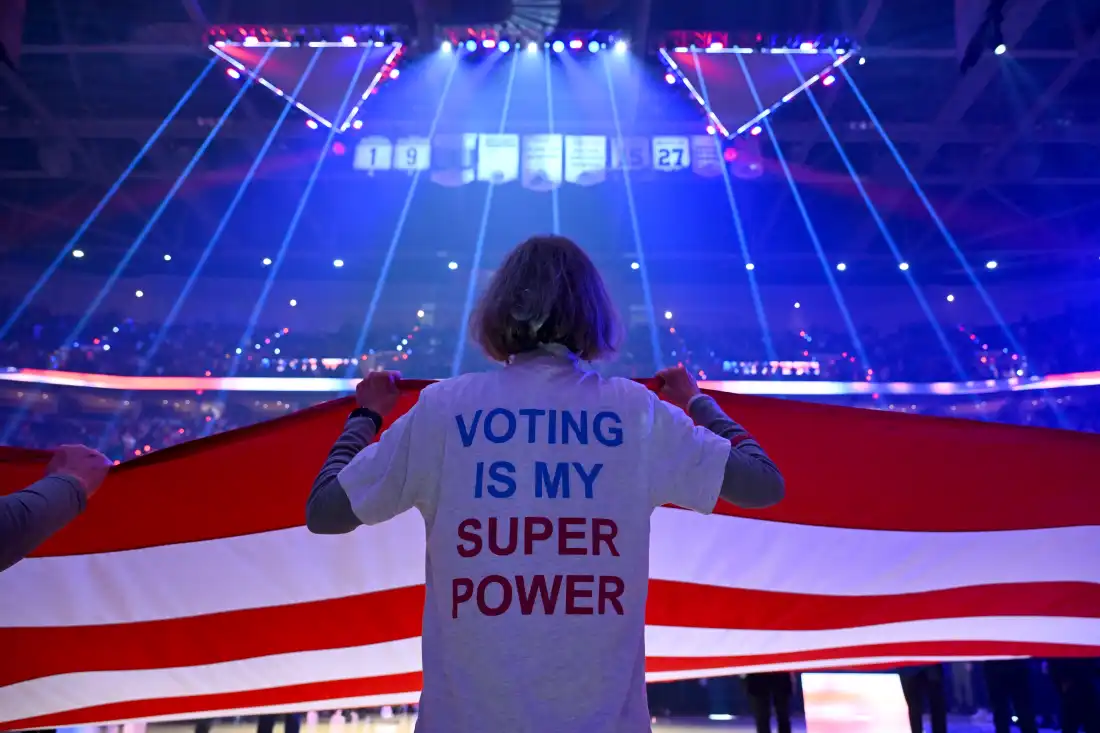
In the lead-up to the midterm elections, Democrats maintain key advantages, with data suggesting they are likely to gain control of the U.S. House. However, there are indications that their success could be limited, as per a new NPR/PBS News/Marist poll. This poll reveals the issues motivating voters from different political backgrounds.
The Economy’s Impact on Voters
Economic concerns, especially the cost of living, remain prominent. A third of people report financial hardships in the past year. Additionally, 40% say their personal finances have declined. Shun Maurice, a 47-year-old from Arizona, notes high food and gas prices as major concerns, regardless of political affiliation.
Key Issues Divide Voter Groups
Protecting democracy resonates with Democrats and independents, whereas immigration is a primary worry for MAGA supporters. The poll, conducted with 1,289 registered voters, carries a margin of error: +/- 3.7 percentage points for registered voters, and +/- 3.8 points for likely voters.
President Trump’s Approval and Polling Dynamics
Only 38% of registered voters approve of President Trump, with 61% disapproving. Among likely voters, approval rises slightly to 40%. While 53% of both registered and likely voters strongly disapprove of Trump’s performance, his favorability remains low, at 37% among likely voters.
Democrats’ Lead in Congressional Preferences
Democrats display a strong advantage in the generic congressional ballot, leading by 10 points among registered voters and 8 points among likely voters. Historically, such leads have resulted in Democratic success, with notable gains in previous years like 2018 and 2006.
Structural Challenges and Voter Confidence
Post-2020 Census redistricting has given Republicans a slight edge in congressional maps, causing some Democrat apprehension. Even so, among independents, more believe in Democratic victories. A significant portion, 55% of likely voters, prioritize candidates with new ideas aiming for change.
Trump’s Influence and Party Dynamics
While Trump isn’t on the ballot, his presence looms large. Voters are divided in their responses to Democratic shifts towards socialism, as noted by Matthew Schroder, an independent in North Carolina.
Voter Enthusiasm Trends
Democratic likely voters show more enthusiasm about voting (71% vs. 61% among Republicans). Caution arises as core Democratic groups, like younger voters, show less enthusiasm compared to Republican groups. Enthusiasm is vital in driving turnout, particularly among voters who were motivated during the Trump presidency.
Election Fairness and Acceptance
Three-quarters of likely voters trust in fair elections, including majorities across party lines, but Republicans are more skeptical. Acceptance of election results is largely supported, yet Republicans and MAGA supporters show more reluctance.
Social and Policy Issues
- Personal finances have worsened for many, with younger generations facing greater insecurity.
- Public concerns about AI infrastructure are high, with 60% believing new data centers have negative impacts.
- Immigration remains contentious, with most supporting legal pathways but two-thirds of Republicans advocate for departure.
- Government efficiency is questioned by a majority, highlighting partisan divides.
- Gun control vs. rights causes a near-even split, with independents divided on the issue.
- Equality is favored by 70%, though Republicans are split on societal structuring.
The NPR/PBS News/Marist Poll involved a multi-mode approach conducted from October 19-20, with registered voters’ margin of error at +/- 3.7 points and likely voters at +/- 3.8 points.
Leave a Reply