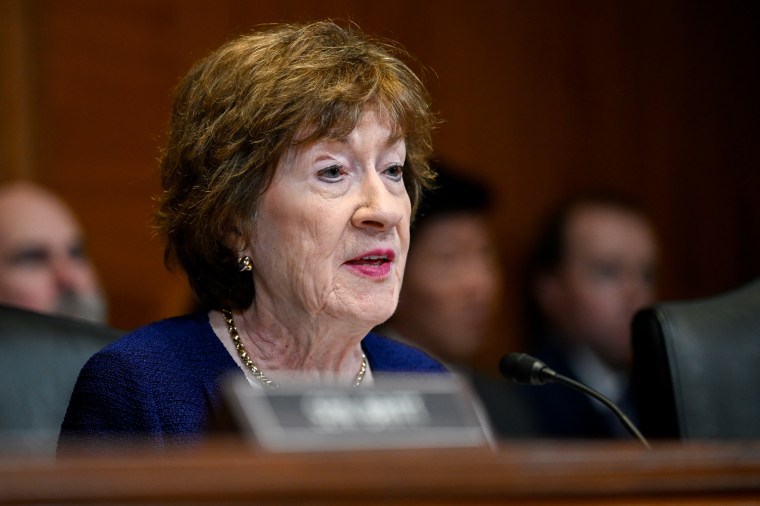
Amid escalating conflicts, economic strains, and Medicaid reductions, Democrats in Maine are rallying around an eight-year-old issue in the Senate race: the confirmation of Brett Kavanaugh to the Supreme Court. Longtime Republican Senator Susan Collins of Maine played a key role in confirming Kavanaugh in 2018. She described Roe v. Wade as ‘settled law,’ a statement later proven inaccurate. In 2022, Kavanaugh cast a crucial vote to overturn this landmark case, which led to widespread abortion bans in several states.
Many Mainers, like Arie Mobley, feel Collins’ backing for Kavanaugh was unforgivable. At a rally for Democratic challenger Graham Platner, Mobley mentioned how Collins’ radio comments suggested she would not confirm Kavanaugh. Janice Low, another rally attendee, shared similar sentiments. She felt Collins’ actions were a betrayal after her initial stance.
The issue is gaining traction again due to Senate control implications. Platner’s allies are revisiting Collins’ vote, especially after the 2022 decision on abortion. They point out the potential for Collins to influence more Supreme Court nominations if Republicans regain the Senate majority.
Platner criticized Collins for her role in Kavanaugh’s confirmation during his primary victory speech. He called her decision a betrayal of her promise to protect Roe v. Wade. “If you are so bipartisan,” Platner argued, “why were you the deciding vote to place Brett Kavanaugh on the Supreme Court?”
Collins remains a central focus for Democrats seeking to reclaim the Senate by 2026. She faces criticism for her past and potential future influence on Supreme Court justices. Collins defended her vote, stating she consulted extensively and felt her decision was right, despite Kavanaugh’s ruling. She noted her bipartisan record, having supported nominees from both parties.
Maine stands out as a unique battleground. Despite electing Republican senators, the state strongly supports reproductive rights. Senate Majority PAC plans to target Collins with abortion-related ads during the election. They aim to emphasize her ‘anti-choice record,’ the first such campaign since Roe v. Wade was overturned.
Recent polls indicate attacking Collins on abortion, framing her as responsible for Kavanaugh’s appointment, is effective among Democrats. A Collins campaign spokesperson dismissed these attacks, arguing that Mainers have bigger issues to consider in this election cycle.
Platner faces his own challenges involving past allegations. An ex-girlfriend accused him of threatening behavior, a claim he denies. Critics point out that his accuser was a vocal supporter of Kavanaugh. Her past advocacy adds a layer of complexity to the current allegations.
Democratic strategists believe Kavanaugh’s influence in the judiciary will remain a significant issue. Collins’ past votes for Supreme Court justices will be central in the campaign, as will discussions around war and peace.
In 2020, Collins won re-election after Kavanaugh’s confirmation. However, Kavanaugh later voted against Roe v. Wade, prompting Collins to express disappointment. She felt misled by him during their discussion before her vote.
Collins faced scrutiny for her pivotal vote, casting doubt on Ford’s allegations against Kavanaugh in 2018. Fairness and the presumption of innocence during judicial evaluations have been central to Collins’ stance.
Collins questioned Platner’s past behavior, labeling accusations against him as ‘extremely troubling.’ She insists he must provide the public with clear answers. Collins has denied any connection to Platner’s accuser, reaffirming that she had never encountered or heard of her before recent allegations surfaced.
Leave a Reply