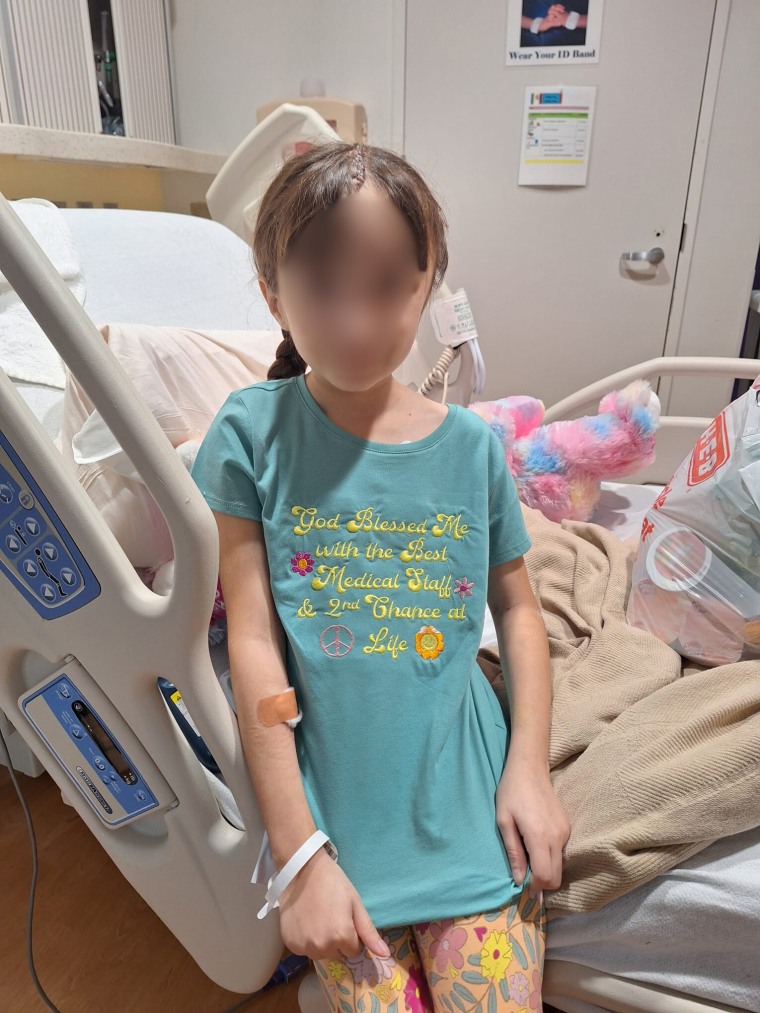
A mother, recently deported from the United States, learned that her request to return for her daughter’s medical treatment was denied. This decision, coming after a ten-month wait, was disheartening. Speaking from Mexico, she described the experience as frustrating and difficult.
Her daughter, now 12, had been undergoing crucial treatment for a rare brain tumor in the U.S. before deportation. The deportation of both parents interrupted the lifesaving treatments. The girl’s health has since deteriorated significantly in Mexico, lacking the medical attention she needs. Her condition worsened last month with a seizure that led to a fall and bruising. An MRI and tests showed abnormalities in her brain.
The girl’s U.S.-based doctors noted her brain is not regenerating. This regeneration is crucial for restoring neurological functions like motor skills and speech and preventing new tumors. The mother stated, “Instead of improving, my daughter’s health is regressing.”
Due to muscle spasms in her partly paralyzed right arm, her daughter experiences intense pain disrupting her sleep. The girl also faces dizziness and frequent headaches, adding terror to her already challenging condition.
The family received three denial letters for humanitarian parole for the mother, father, and one noncitizen sibling. The U.S. Citizenship and Immigration Services mentioned that ICE handles parole decisions for previously deported individuals. ICE did not provide a comment on the situation.
Challenges in Seeking Medical Care
The mother explained the difficulty finding a medical provider in Mexico to take her daughter’s case, as they lack comprehensive insights into her medical history. Further complicating matters, her daughter’s condition prevents her from flying.
Medical records indicate her brain tumor is linked to an unnamed novel condition. Specialized doctors in the U.S. are studying her case to tailor treatment. This expertise is not easily accessible where the family currently resides.
Additionally, the girl’s lack of access to therapy means she has lost previously regained skills, including writing, speaking, and memory improvements. “At this point, her mental capacity is practically that of a 7- or 8-year-old child,” the mother revealed.
The responsibility for her daughter’s care has fallen on the mother, who previously worked as a rehab technician and nursing assistant. She acknowledged her training as helpful but insufficient without resources such as medical equipment, educators, or nearby hospitals.
The mother stated her daughter would be devastated if separated from her. Their bond has become more critical with the absence of her intensive medical team.
Family Efforts and Legal Advocacy
Her eldest son, 19, remains in the U.S. He juggles multiple jobs to send his sister anti-seizure medication. He recently attended the State of the Union address as a guest of a U.S. Representative.
Despite their denied applications, the family is working with the Texas Civil Rights Project to explore future options. Reapplying is possible but costly, with each application exceeding $1,000. They are currently seeking Congressional support to strengthen their case.
Background and Immigration Challenges
This family, without a criminal record, initially passed through immigration checkpoints by presenting birth certificates and hospital referral letters. In their last attempt, they were taken to a holding facility and sent to Mexico instead.
Humanitarian parole, considered one of their last options, sees increased denial rates. According to recent data, there was a sharp rise in denials during President Donald Trump’s administration compared to the previous year. With nearly 14,500 applications rejected, many face prolonged waiting times.
In the meantime, the girl has celebrated two birthdays since being in Mexico. The mother expressed mixed emotions over these milestones, relieved by her daughter’s survival yet stressed by dwindling chances for adequate care.
The Texas Civil Rights Project President noted the ongoing struggle to return to the U.S., emphasizing the child’s need for her family and medical care previously accessible in America.
Leave a Reply