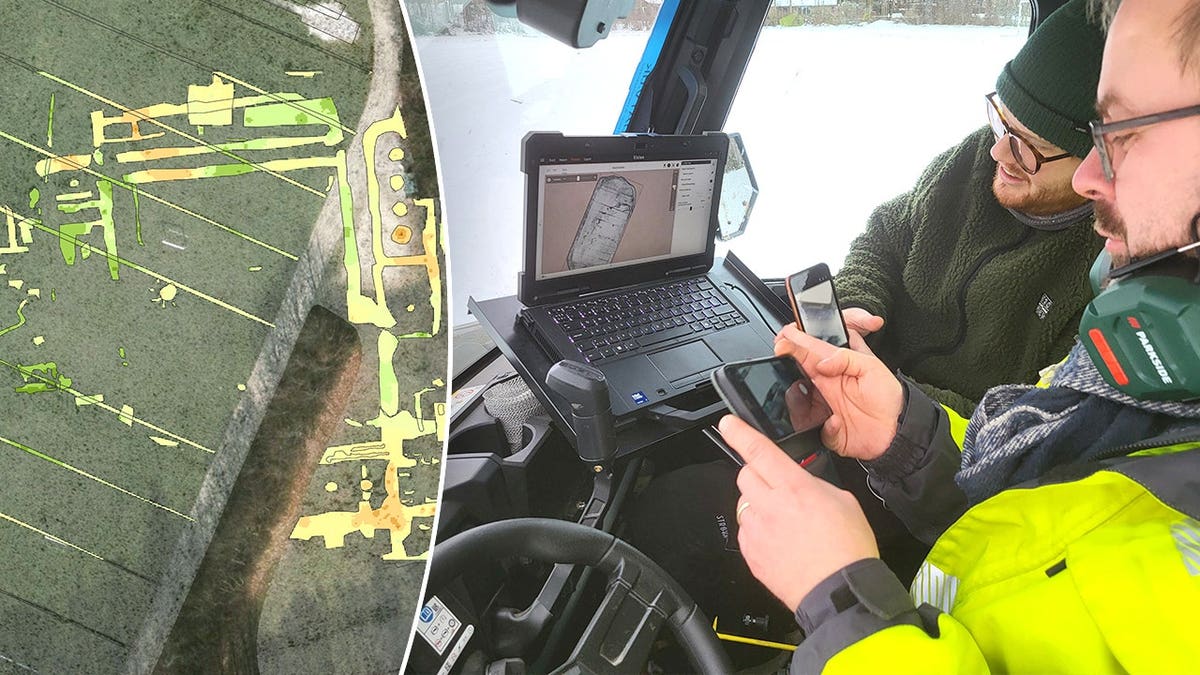
Researchers recently discovered a long-lost medieval convent in a surprising location in Denmark: under a soccer field. This rare find in Roskilde was announced by ROMU, a Danish museum organization. The convent, known as St. Clare’s Convent, dates back to the 13th century and was identified through a ground-penetrating radar survey before the construction of an underground parking facility.
The survey revealed a well-preserved convent complex approximately one meter below ground level, with traces of buildings, including rooms, columns, cloisters, and a church in the southern wing.
The eastern wing of the convent is particularly well-preserved, featuring clearly defined rooms and vault pillars. St. Clare’s was one of five monastic sites in medieval Roskilde. Unlike the other locations, it was not protected as an ancient monument since it was presumed lost. Researchers are collaborating with the local municipality for trial excavations at the proposed parking site.
Jesper Langkilde, an archaeologist and museum curator at ROMU, expressed surprise at the discovery. He noted the convent’s large size, roughly 230 feet by 230 feet, and its survival despite being demolished in the 16th century. Historical records indicate that about 500,000 bricks were sold after its demolition, though the convent likely contained twice that number. The radar detects the lowest portions of the walls and foundations, which were made with large boulders.
Archaeologists anticipate finding numerous artifacts, particularly items from daily medieval life. Expected discoveries include pottery shards, animal bones, religious objects like pendant crosses, rosary beads, and items related to writing and books. The convents were centers of literacy, housing libraries and book production facilities, potentially yielding book fittings and writing utensils.
Preserved organic remains could provide insights into the nuns’ diets and the plants grown in the convent gardens. Langkilde also mentioned the potential discovery of burials at the site, which might reveal information about the nuns and others buried there. The convent’s international connections are of interest, as its first nuns reportedly came from Strasbourg.
This significant discovery enhances the understanding of monasteries in Roskilde and is a major advancement in medieval monastery research. The find highlights the role these sites played in the development of Roskilde as an important and wealthy town in medieval Denmark. Langkilde emphasized how geophysical surveys, under the right conditions, can contribute extensive archaeological knowledge without excavation.
Leave a Reply