The Democratic National Committee (DNC) faces a crucial period as it approaches the final 100 days before the midterm elections, with financial challenges looming. The committee’s debts exceed its cash reserves by over $2 million, a situation that has led to a reevaluation of its support strategy for House candidates in important swing districts.
Recent Federal Election Commission filings show the DNC ended June with $16.3 million in cash against $18.5 million in debts. This financial imbalance leaves the DNC with $2.2 million more in liabilities than its available funds. In contrast, the Republican National Committee (RNC) reported a much more stable financial situation, holding $128.5 million cash with no debt.
The New York Times reported that the DNC has requested vendors to postpone payment submissions until after the elections. Additionally, congressional leaders were informed that traditional financial transfers to the House and Senate campaign committees will not occur as usual.
The DNC has invested around $840,000 in Democratic organizations across five non-voting U.S. territories over the past year, as noted by The New York Times.
Veteran DNC member Donna Brazile has expressed concerns over the current situation, emphasizing that DNC Chairman Ken Martin requires substantial support to navigate these challenges.
The financial disparity extends to resources allocated to House races. The National Republican Congressional Committee holds $92.7 million compared to the Democratic Congressional Campaign Committee’s $79 million.
A Supreme Court ruling that allows unlimited coordinated spending between parties and candidates has heightened the importance of committee reserves in competitive districts. The Associated Press suggests control of the House could depend on fewer than 20 races.
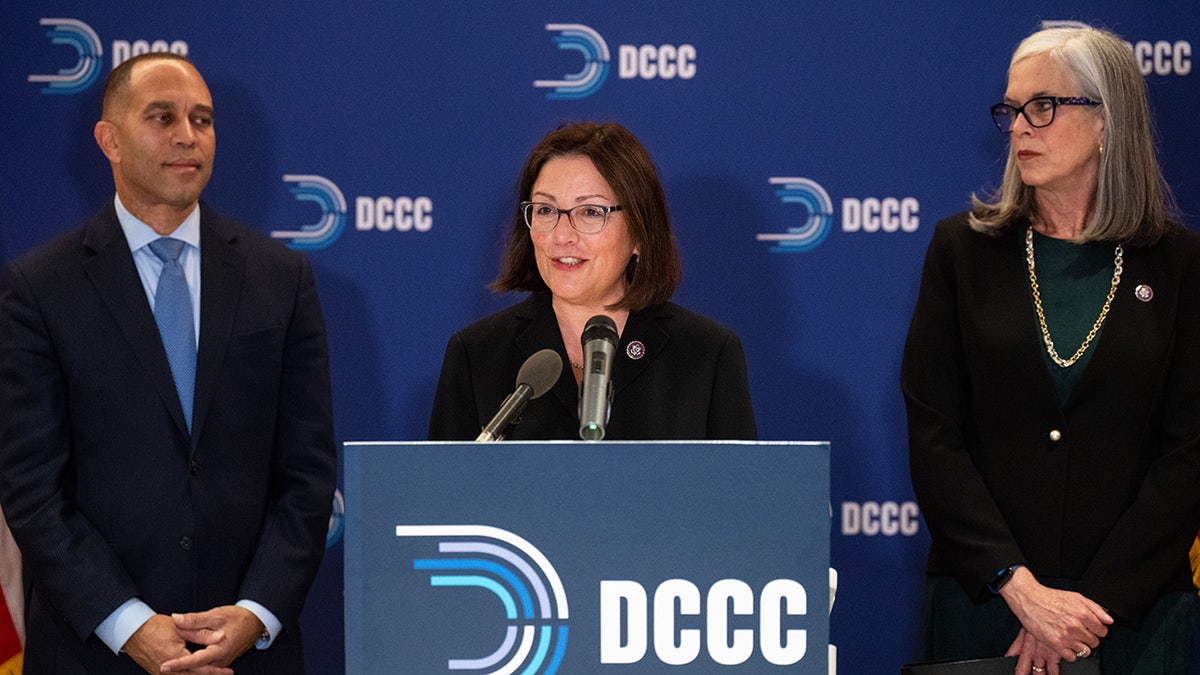
Despite the financial gap, Democratic Congressional Campaign Committee Chair Suzan DelBene highlights the strong second-quarter fundraising efforts and the robust performance of Democratic candidates. She believes these efforts demonstrate the Democrats’ preparedness for the upcoming elections.
In response to claims of financial distress, DNC Executive Director Roger Lau clarifies that ongoing vendor discussions are standard negotiations, not indicative of financial instability.
The upcoming midterm elections are challenging for the party of the incumbent president. Democrats, led by President Joe Biden, have managed to exceed expectations in previous elections, retaining control of the Senate in 2022, while Republicans currently hold the majority in the House and Senate. The 2026 midterms will play a decisive role in shaping President Donald Trump’s legislative agenda for the remainder of his term.
Despite reported infighting and concerns, the DNC insists its territorial spending aligns with a long-term program designed to strengthen local party structures. The program provides financial and technological resources across states under the DNC’s strategy.
Financial scrutiny intensified recently as reports surfaced about the DNC using its Washington headquarters as collateral for a $15 million credit line. A DNC official stated that such measures are not new, with similar actions taken in previous election cycles.
Leave a Reply