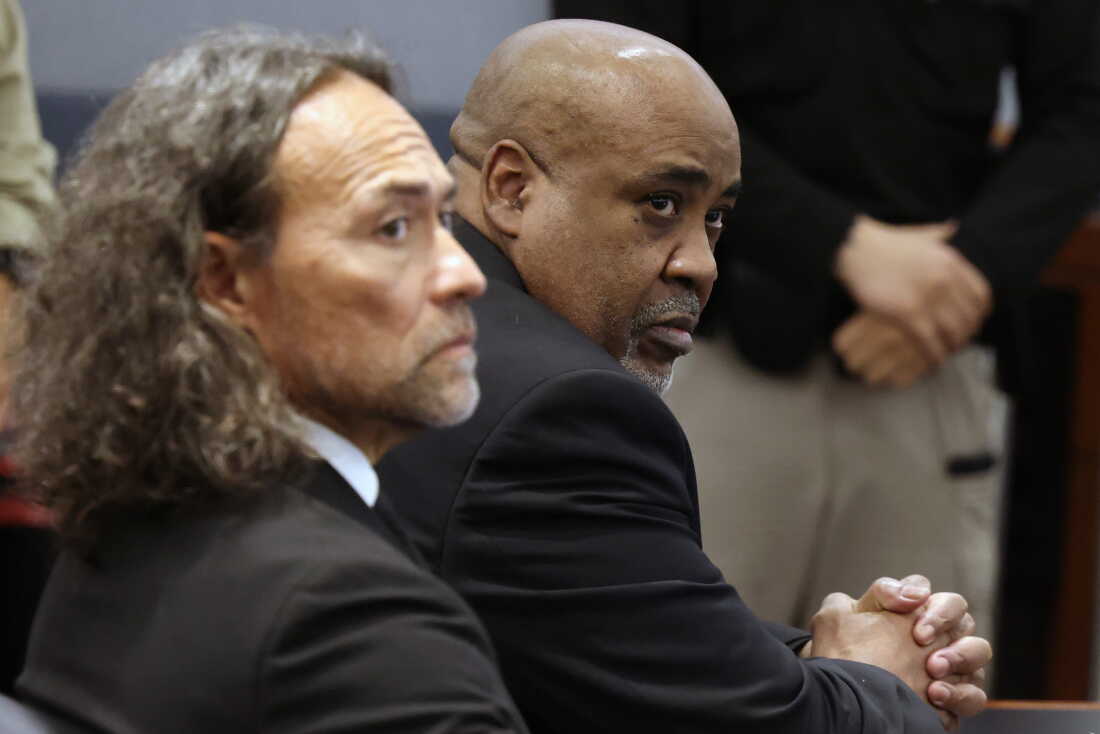
On Monday, Aug. 31, 2026, a jury found Duane “Keffe D” Davis guilty of orchestrating the 1996 murder of rap legend Tupac Shakur. The trial, held at the Clark County District Court Regional Justice Center in Las Vegas, concluded with Davis convicted of first-degree murder with a deadly weapon. He now faces a potential life sentence.
Trial and Conviction
The jury, after less than three hours of deliberation, reached a verdict following a weekslong trial. Prosecutors argued that Davis orchestrated the murder after a personal vendetta. Chief Deputy District Attorney Binu Palal claimed Davis acquired a gun intending to retaliate against Shakur and Death Row Records co-founder Marion “Suge” Knight. Davis had been involved in an altercation earlier that night with his nephew.
Though Davis did not personally fire the weapon, evidence showed he directed the attack. Prosecution emphasized Davis’s positioning inside the white Cadillac from which the fatal shots were fired. Davis’s authority as a gang leader reportedly compelled the younger men, including his nephew, to follow his orders.
Defense Argument
Defense attorney Michael Sanft challenged the accusation, questioning the lack of direct evidence and arguing that Davis’s public statements and co-authored book exaggerated events. Sanft noted that investigators found no physical evidence directly linking Davis to the planning or execution of the crime and underscored the absence of corroborating phone records.
In closing arguments, Sanft highlighted the lack of conclusive proof, questioning the reliability of Davis’s own statements and suggesting they were fabricated for attention.
Prosecution’s Rebuttal
Prosecutor Marc DiGiacomo directed attention to Davis’s memorabilia, including a scrapbook with articles about Shakur. He cited these personal records as evidence of Davis’s connection to the crime.
Palal further supported the narrative by presenting excerpts from Davis’s 2019 memoir, “Compton Street Legend,” reinforcing the consistency of the central account despite disclaimers in the book.
Background and Context
The case has mesmerized both hip-hop fans and crime experts for decades. Tupac Shakur was shot in Las Vegas on Sept. 7, 1996, when a white Cadillac pulled up beside him at a red light. Marion “Suge” Knight, who was also present, survived his wounds. Davis, when making public statements, admitted to being in the vehicle and passing the weapon in retaliation for an earlier incident involving his nephew.
The trial referenced the longstanding feud between Los Angeles gang factions—Mob Piru with Death Row Records and Southside Compton Crips with Sean “Diddy” Combs’ Bad Boy Records. This rivalry provided the context for Shakur’s death, which was followed by the murder of Bad Boy’s Notorious B.I.G. six months later, a case still unresolved.
Leave a Reply