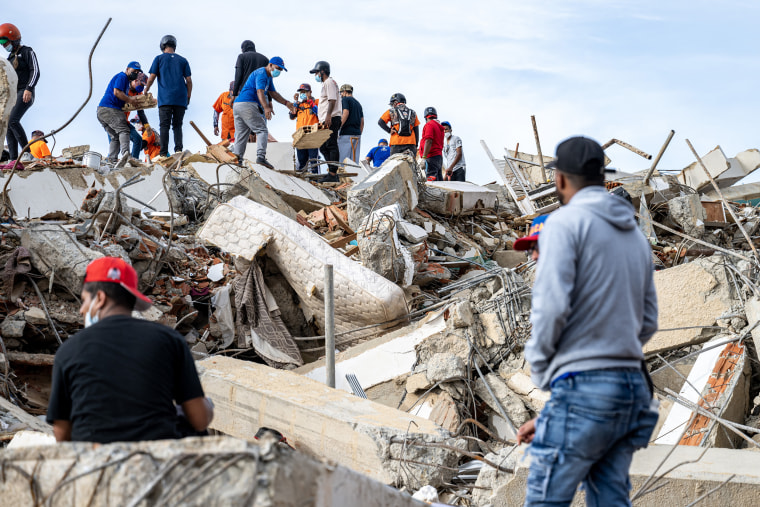
Recently, South America experienced another earthquake, leading to families turning to social media for help finding missing relatives in destroyed buildings. The response to the 7.4-magnitude quake in Colombia and the earlier tremors in Venezuela illustrates major differences between the two countries.
Contrasting Responses
In Venezuela, acting President Delcy Rodríguez delayed almost four hours before addressing the nation after the quake. In Colombia, President Abelardo de la Espriella quickly established an emergency command post within an hour.
Venezuelan civilians searched through rubble manually for weeks, while in Colombia, rescue teams used cranes and excavators promptly. Venezuela relied heavily on international rescue teams, while Colombia requested only humanitarian supplies, primarily declining foreign aid.
“The differences between an authoritarian regime and a democratic system can be seen clearly in the institutions and their capacity to respond to an emergency,” said Ronal Rodríguez, a Venezuela specialist at Colombia’s Rosario University.
Colombia: A New Leadership in Action
President de la Espriella, a former criminal defense lawyer without political experience, assumed office in Cali shortly before the earthquake. He quickly took charge of relief efforts despite facing a difficult transition from the previous presidency of Gustavo Petro.
De la Espriella’s administration successfully coordinated with disaster management teams. Within 36 hours, he visited affected areas, showcasing the resilience and functionality of Colombia’s institutions.
Though Colombia turned down foreign rescue teams, his decision caused controversy. The Chinese ambassador voiced concerns regarding the coordination of international assistance. Yet the government worked with disrupted communication and infrastructure to address reports from affected areas.
Venezuela: Struggles with Governance
Acting President Rodríguez struggled to assert authority during the disaster response. Early reports from the government greatly underestimated casualties, neglecting to include severely impacted regions like La Guaira.
Rodríguez did not visit affected areas immediately, leading to discrepancies in reported casualties and the number of missing persons. Political repression and lack of transparency deepened public distrust of Venezuela’s response.
Although Venezuela faced more severe conditions with the quakes striking densely populated areas at night, many Venezuelans noted Colombia’s more effective response through organized rescue operations and resources.
Media coverage in Colombia provided regular updates, showing leaders and officials actively responding in affected areas. Some, like Juan Mogollon from Orlando, Florida, followed news to stay informed about trapped family members in Cali. The organized and prepared response of Colombia gave hope, contrasting Venezuela’s struggles.
Leave a Reply