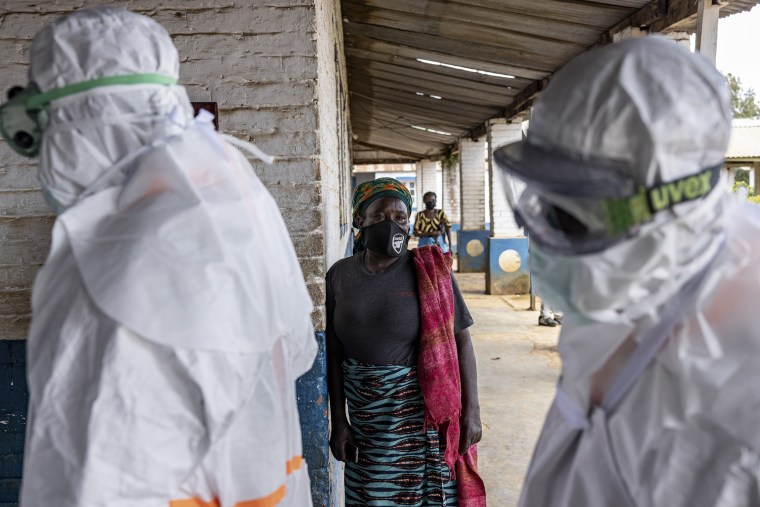
Healthcare Workers Face Misinformation
Rose Tchwenko, Congo country director for Mercy Corps, noted that the Ebola outbreak in the Democratic Republic of the Congo often first presents itself in healthcare workers. One such case involved a worker whose family opted for home-based care instead of hospital treatment. Traditional beliefs, including notions of witchcraft, influenced their decisions. With the man succumbing to Ebola, the virus potentially spread through traditional burial practices.
Tchwenko emphasized that false beliefs about Ebola persist, with cultural practices contributing to virus transmission. Her organization focuses on community engagement to counteract misconceptions.
Protests and Spread of Misinformation
In the town of Rwampara, protesters set hospital facilities ablaze after officials restricted burial rituals. The post-mortem infectious nature of Ebola necessitates careful handling of the deceased. Misinformation and tensions pose significant challenges as the outbreak remains uncontained.
Health workers face numerous obstacles, with WHO reporting 750 cases and 177 deaths. Ky Luu, president of International Medical Corps, commented that this outbreak has the potential to be the worst yet. With late detection and difficulties in identifying rare virus strains, the situation is dire.
Testing and Diagnosis Hurdles
Alan Gonzalez, of Doctors Without Borders, stated that initial tests failed to recognize the Bundibugyo strain, although they identified the Zaire strain. Tests require shipment to Kinshasa, causing delays. Suspected cases are isolated while awaiting results.
Lack of Vaccine and Therapeutics
Unlike other strains, Bundibugyo lacks an authorized vaccine. As explained by Luu, ring vaccination mitigates the risk of transmission in Zaire strain outbreaks, but this tool is absent now.
Contact tracing, isolation, and infection control are paramount in the absence of vaccines, Gonzalez remarked. The 2014-2016 West Africa outbreak remains a benchmark, with over 28,000 cases and 11,000 deaths.
Infrastructure Challenges
Space for isolating patients is a critical issue, particularly in Bunia. Overcrowding forced a surgical center conversion into an isolation facility, reflecting urgent need.
International Aid Efforts
The U.S. State Department pledged $23 million for response efforts. Funds support rapid response teams and facility construction by International Medical Corps. Speedy setup of treatment centers and supply sourcing is crucial.
Greg Ramm, Save the Children’s director in Congo, highlighted insufficient disinfectant and protective equipment. Humanitarian aid reductions aggravate resource shortages.
Conflict Zone Complications
Rebel groups and government control create logistical challenges. Access and surveillance in conflict zones are difficult. Luu emphasized the challenges posed by remote, densely populated areas amidst ongoing conflicts.
Leave a Reply