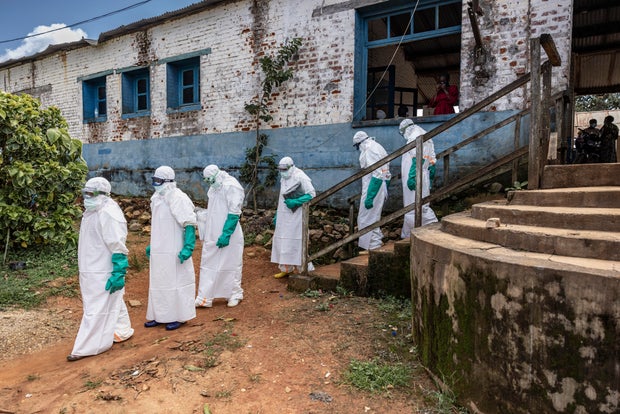
The ongoing Ebola outbreak has resulted in at least 220 suspected deaths, as reported by the World Health Organization (WHO). Delays in detecting cases have caused health workers to struggle to contain the virus. Ugandan health authorities recently reported two new Ebola cases, totaling seven infections in the country. These cases are connected to the outbreak in the Democratic Republic of the Congo, where suspected cases have surpassed 900.
The outbreak likely began either days or weeks before Congolese authorities officially declared it on May 15. A 59-year-old Congolese man was admitted to a hospital in Kampala, Uganda, on May 11 and died three days later before his illness was identified as Ebola. Subsequently, two other Congolese nationals in Uganda tested positive for the virus. Ugandan authorities confirmed the first local cases: a driver and a healthcare worker exposed to the Congolese patient. Two more Ugandan health workers later tested positive.
The outbreak’s epicenter is Ituri province in eastern Congo, where confirmed cases have exceeded 100. The situation has been complicated by fear, distrust, and violence in the region, impacting response efforts. WHO has declared the outbreak a public health emergency of international concern. The Bundibugyo strain of the Ebola virus, responsible for this outbreak, lacks an approved vaccine or treatment. However, scientists from the University of Oxford are developing a vaccine that might enter clinical trials soon.
“Angry young men stormed a hospital treating Ebola patients in eastern Congo, forcing evacuations amid gunfire,” reported Dr. Richard Lokudu, medical director of Mongbwalu General Hospital.
Gunfire erupted as assailants demanded the release of two bodies of their relatives from the hospital. This was the third attack in a week on healthcare facilities, highlighting the dangerous conditions under which medical workers operate. Bodies of Ebola victims are highly infectious, posing further risks during burials. Congolese authorities now manage these burials to prevent virus spread, which sometimes leads to protests from families. The government has banned public gatherings of more than 50 people in northeastern Congo.
On Saturday, residents of Mongbwalu attacked a tent for suspected Ebola cases managed by Doctors Without Borders. During this attack, 18 suspected Ebola patients left the facility and remain unaccounted for. Additionally, a treatment center in Rwampara was burned down after families were denied access to a deceased relative’s body, suspected of Ebola.
WHO has increased the risk level for Congo, but the global spread risk remains low. Previously, the Congolese Ministry of Communication reported a discrepancy in the number of suspected deaths, with totals varying between reports. The International Federation of Red Cross and Red Crescent Societies announced that three volunteers died in Mongbwalu, suspected to have contracted the virus while handling bodies during a humanitarian mission unrelated to Ebola. If confirmed, this would indicate the outbreak started earlier than thought.
Leave a Reply