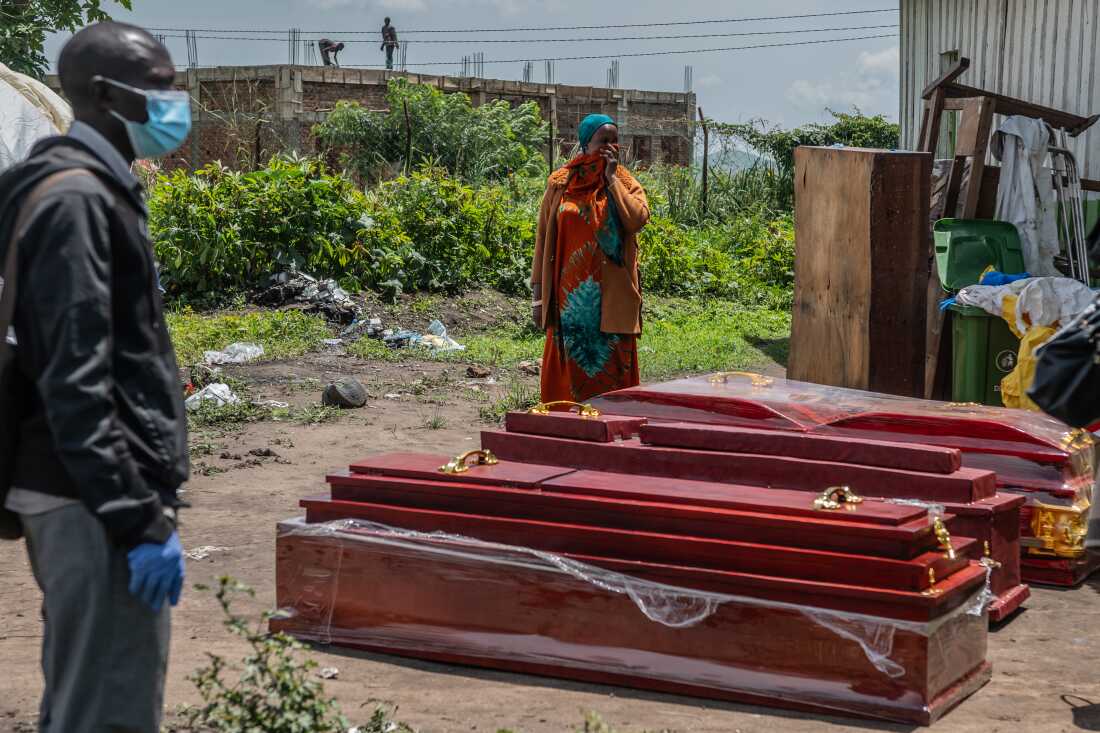
Anxious healthcare workers in eastern Congo report facing significant challenges in responding to a rapidly escalating Ebola outbreak of a rare virus type. The affected region, already destabilized by numerous armed groups, continues to suffer from security threats. This complicates efforts to manage the health crisis.
Militant attacks have added to local hardships. Leaders noted a recent assault by militants linked to the Islamic State group that resulted in the deaths of at least 17 people in Alima village, Ituri province, currently a focal point of the outbreak. The World Health Organization (WHO) has identified a low global threat level but acknowledges the ongoing difficulty in locating ‘patient zero.’
“It’s truly sad and painful because we’ve already been through a security crisis, and now Ebola is here too,” said Justin Ndasi, a Bunia resident.
The first death was reported in Bunia last week, prompting the airlift of health supplies. However, residents are finding it difficult to access basic protective equipment. The cost of disinfectants has quadrupled, impacting efforts to curb the spread of the virus.
At a health center in Rwampara, families witness the distressing handling of suspected Ebola victims. Survivors described how the disease progressed from initial symptoms mistaken for other common illnesses. A grieving mother recounted the swift deterioration of her son’s health.
“He told me his heart was hurting,” shared Botwine Swanze. “Then he started crying because of the pain… Then he started bleeding and vomiting a lot.”
Public Health Emergency
WHO has declared the outbreak a public health emergency, emphasizing its rapid spread. WHO officials fear the pandemic may extend over two months due to the rare Bundibugyo variant of the Ebola virus, which lingered undetected initially.
Authorities report 51 confirmed cases in Congo’s Ituri and North Kivu provinces and two additional cases in Uganda. With 139 suspected deaths and nearly 600 potential cases, the WHO Director-General highlighted the disparity between reported and actual numbers. Analysts from the London-based MRC Centre for Global Infectious Disease Analysis suggest that cases could exceed 1,000.
This represents Congo’s 17th Ebola outbreak. Despite experience with past outbreaks, most involved more common Ebola strains, complicating current responses. Experts note that any potential vaccine targeting the Bundibugyo variant may take several months to develop.
Local and International Responses
Efforts to contain the outbreak are further strained by eastern Congo’s precarious security conditions, displacement issues, and a disintegrating healthcare system. Reduced foreign aid has exacerbated these challenges.
The U.S. government has pledged funding to establish emergency clinics, although vaccine deployment remains months away. In affected areas such as Bunia, personal protective measures are inconsistent. Overcrowding in hospitals has left many without necessary isolation facilities.
Healthcare workers in Mongbwalu express concern over inadequate support and resources. With no public handwashing stations and mixed wards at local hospitals, the situation is critical.
Dr. Richard Lokudu, the medical director at Mongbwalu General Hospital, expressed concerns over inadequate staff training. He warned of potential overwhelm should cases increase.
International Concerns
An American who contracted Ebola in Congo has been transferred to Germany for treatment. As investigations continue, European and U.S. health authorities work together to manage exposed individuals and curb cross-border transmission.
The response strategy prioritizes rapid mobilization but remains grounded in coordination among international health agencies. Conditions and decisions on the ground drive these efforts to control the outbreak efficiently.
Leave a Reply