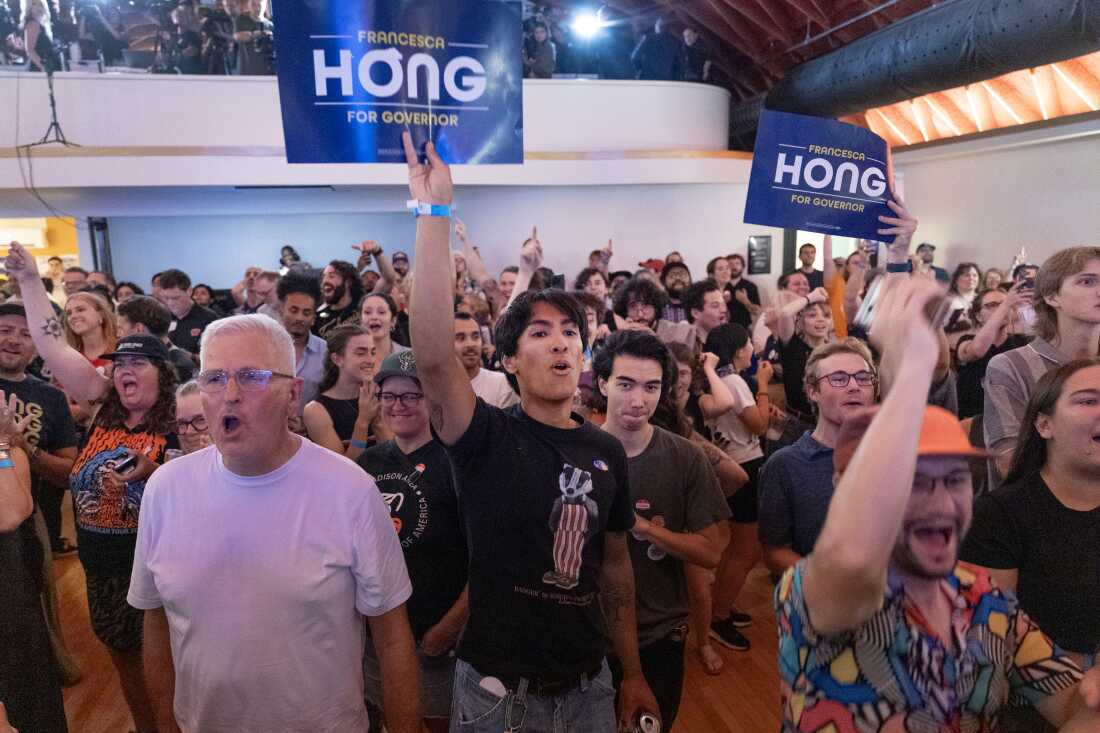
At a recent election night event in Madison, supporters of Francesca Hong, a Democratic gubernatorial candidate in Wisconsin, gathered to hear the results. Despite her self-described democratic socialist stance, Hong narrowly lost the primary. The atmosphere reflected a broader trend among some swing voters who are not quick to dismiss socialist candidates.
In an NPR-observed online focus group, 10 out of 12 Nevada voters expressed no automatic aversion toward politicians identifying with left-wing ideologies. These voters supported Joe Biden in 2020 and switched to Donald Trump in 2024. The group included a mix of independents, Republicans, and Democrats.
Jasmine, a 33-year-old independent, remarked on the importance of understanding candidates fully before making a judgment. Melody, another independent, emphasized a willingness to explore solutions ensuring basic rights and needs are met.
The focus group coincided with the Wisconsin Democratic primary, highlighting a debate within the Democratic Party about how socialist candidates might affect centrist voter support. A Pew Research Center survey showed that about one-third of Democratic voters view socialist leaders positively, while many Americans hold a neutral stance.
Moderated by Rich Thau of Engagious, the focus groups revealed surprising openness to democratic socialism among typically centrist swing voters. Thau noted their readiness to consider socialism as a valid political ideology. Participants expressed distinct views on traditional Democrats and democratic socialists. Marianne, an independent, saw Democrats as more corporate-oriented, whereas democratic socialists focused on community support. Justin echoed this sentiment, noting socialist priorities on redistribution and public benefit.
Freddy, though skeptical of socialism, conceded their intent to redistribute wealth from the affluent for widespread benefit. However, he labeled socialist views as too radical for his preference.
Economic Anxiety as a Factor
The 12 voters were divided on Trump’s job performance, but most reported increased economic anxiety since his presidency began. Seven participants acknowledged higher debt levels than the previous year. Katrina, an independent, struggled to articulate her anxiety but felt no substantial change in her economic situation.
Thau linked this anxiety to an openness to socialism, suggesting that economic distress is encouraging exploration of new political solutions. Marianne noted rising consumer debt due to escalating costs, impacting her ability to meet household needs. Corrina, a Republican, cited increasing home insurance costs as a debt contributor, altering her mortgage payments. Jasmine added the challenge of inflation on everyday expenses.
While the group showed openness to socialism, they distinguished it starkly from communism. Justin stated a deeply ingrained negative perception of communism from past decades.
Trump frequently labels his opponents as ‘communists’ rather than ‘socialists,’ reflecting a strategic rhetorical choice.
Leave a Reply