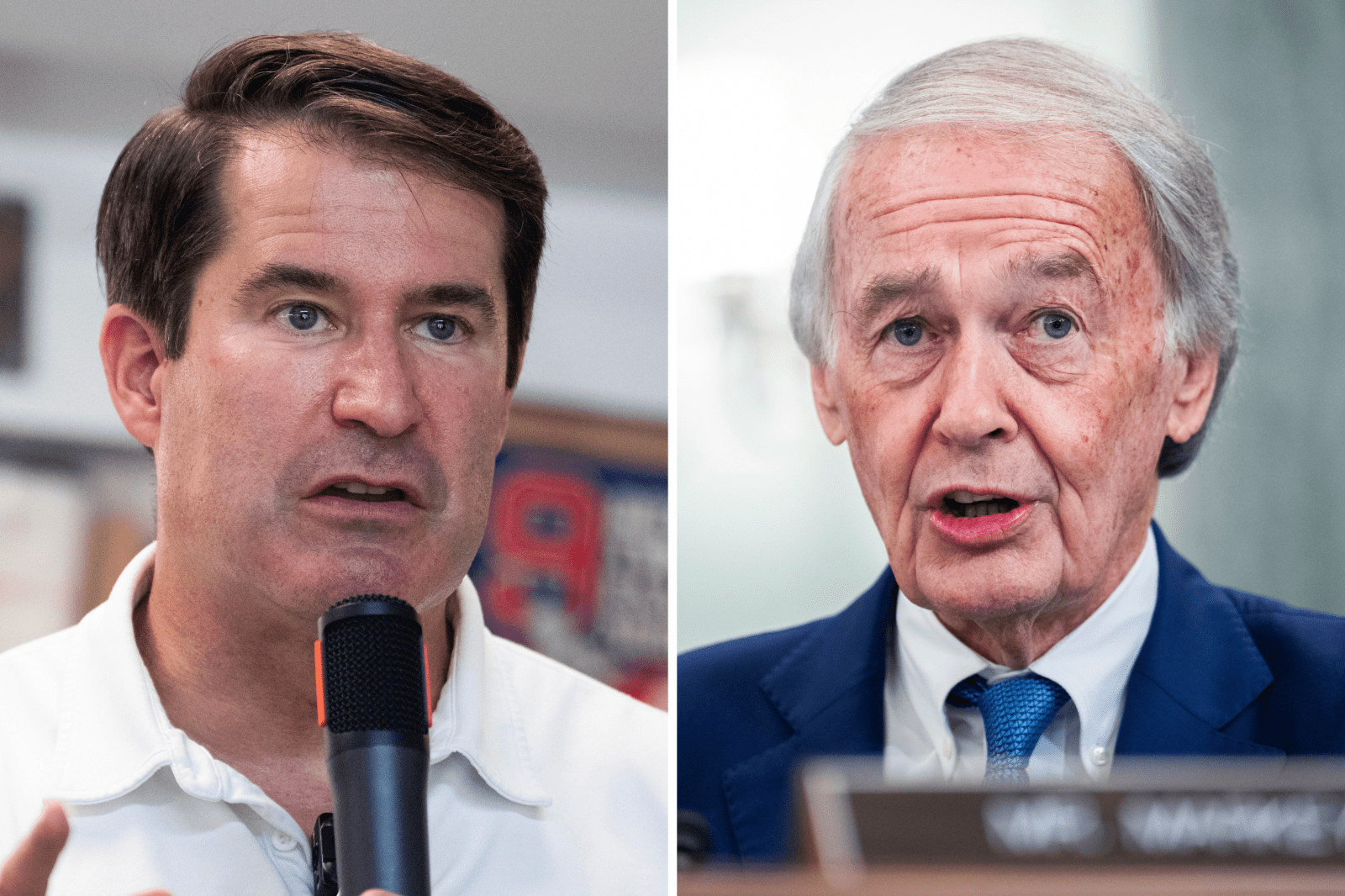
In Massachusetts, a significant race is unfolding in the Democratic Senate primary. Incumbent Senator Ed Markey faces a challenge from Representative Seth Moulton, highlighting generational tensions within the party.
Recently, two polls indicated Markey leading Moulton. This development exemplifies the anti-incumbent wave sweeping through the Democratic primaries. This trend has seen several long-standing Congress members defeated by newer faces.
Markey is 80 years old, while Moulton, at 47, suggests it’s time for younger leadership in Massachusetts. These debates on age have grown more intense following backlash over former President Joe Biden’s decision to run for re-election despite concerns about his age. His withdrawal from the race after a decisive debate against President Trump in June 2024 marked a critical moment that strengthened Trump’s campaign.
While many Democrats call for less experienced leadership, Markey seems to maintain strong support against Moulton. According to recent polls from the University of Massachusetts Amherst and Suffolk University, Markey projects a strong advantage.
Poll Results
The UMass Amherst survey gave Markey a 28-point lead, polling 60% to Moulton’s 32%, conducted from August 5-12, 2026, among 800 registered voters. The Suffolk University poll reflected a closer contest but still favoring Markey by 15 points, with 52% over Moulton’s 38%, plus 10% undecided voters. This survey ran from August 13-16, 2026, with 500 likely voters.
Tatishe Nteta, a political science professor at UMass Amherst, stated that Moulton lacks a convincing argument to replace Markey—only citing Markey’s age and lengthy Congressional tenure as reasons for change do not resonate with voters.
Campaign Dynamics
Moulton’s campaign, led by spokesperson Taylor Hebble, discounts public polls’ reliability by referencing previous inaccuracies in states like Wisconsin and Michigan. Hebble points to Markey’s recent actions, skipping forums and accepting funds from Chuck Schumer, to indicate Markey’s vulnerability.
Markey emphasizes ideological differences, branding himself as more aligned with voters wanting progressive policies. While Markey has a strong progressive identity, Moulton, considered more moderate, faces criticism for his stance on transgender athletes’ rights and lack of support for Medicare for All.
Strategic Approaches
Moulton hopes to capitalize on generational change arguments to mobilize his voter base. Turnout might be pivotal given primary elections’ lower participation rates.
Costas Panagopoulos, a professor at Northeastern University, acknowledges Markey’s institutional presence but notes voters’ reservations about his age. With primary voters often being ideologically extreme in contest settings, Markey’s progressive stances could reinforce his campaign.
Historical Context
Markey’s past challenges indicate a pattern. He overcame Representative Joe Kennedy III in 2020 by nearly ten points, uniting progressive factions and engaging younger Democrats who boosted his social media presence significantly.
Moulton, recognized state-wide, attracted attention with a short-lived presidential run in 2020, but he struggles against more prominent candidates and progressive adversaries.
Upcoming Events
The Massachusetts primary is scheduled for September 1, 2026. John Deaton emerges as the prospective Republican candidate, though expectations minimize general election competitivity due to Democrats’ historical electoral advantage amid President Trump’s declining approval.
With the primary drawing near, both campaigns are poised to maximize engagement and voter turnout in anticipation of election day.
Leave a Reply