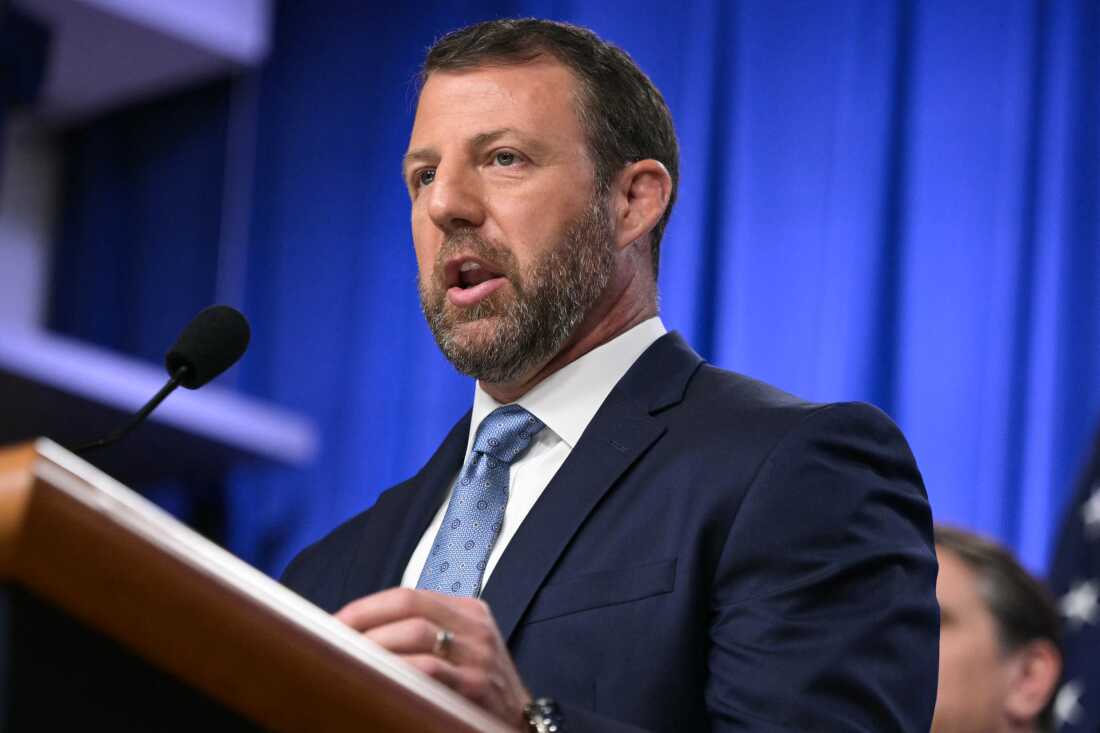
During a recent press conference, former CIA operative Gary Berntsen continued to claim that Venezuela interfered in the 2020 U.S. election. Despite these allegations being debunked and even resulting in a $787 million settlement by Fox News with Dominion, Berntsen has been persistent. He stated that there are numerous technical methods to manipulate elections. However, he feels ignored by the FBI, media, and Congress, except for one individual — Markwayne Mullin, the current Secretary of Homeland Security.
Mullin, who previously opposed certifying the 2020 election results, arranged for Berntsen to discuss these theories with President Trump’s team. His stance has raised concerns among election officials, worried that the Department of Homeland Security (DHS) might undermine elections disliked by Trump. Local election officials, wary of sharing voter data with the federal government, express fears of misuse.
I don’t trust how the administration is using that data,
said Matt Crane, leading Colorado’s professional organization for election officials. These concerns reflect a broader skepticism about DHS’s role in election security.
The Biden administration had provided robust cybersecurity supports through its Cybersecurity and Infrastructure Security Agency (CISA). In contrast, Berntsen’s allies, including current officials, are perceived as promoting misinformation. Criticism centers on a lack of trust and federal funding cuts to initiatives like the Elections Infrastructure Information Sharing and Analysis Center (EI-ISAC), crucial for providing security tools to election jurisdictions.
Paul Lux, a Republican election supervisor in Florida, noted the diminished communication with CISA. “It’s been radio silence,” he said. A spokesperson for CISA maintained that they offer free voluntary services to election officials but declined to detail the extent of service provision recently. The funding cuts have been particularly disruptive, leaving EI-ISAC to adapt by creating a membership model, but participation has dwindled to less than 20% of prior levels.
Despite the challenges, EI-ISAC is determined to maintain its services, even planning a virtual situation room for real-time threat sharing on Election Day. Previously provided by CISA, the room will exclude DHS this year, illustrating the fractured relationship with the federal government. Lux emphasized the cautious outlook towards renewed collaboration: “The relationship has been damaged. Rebuilding trust depends on their dedication to it.”
Leave a Reply