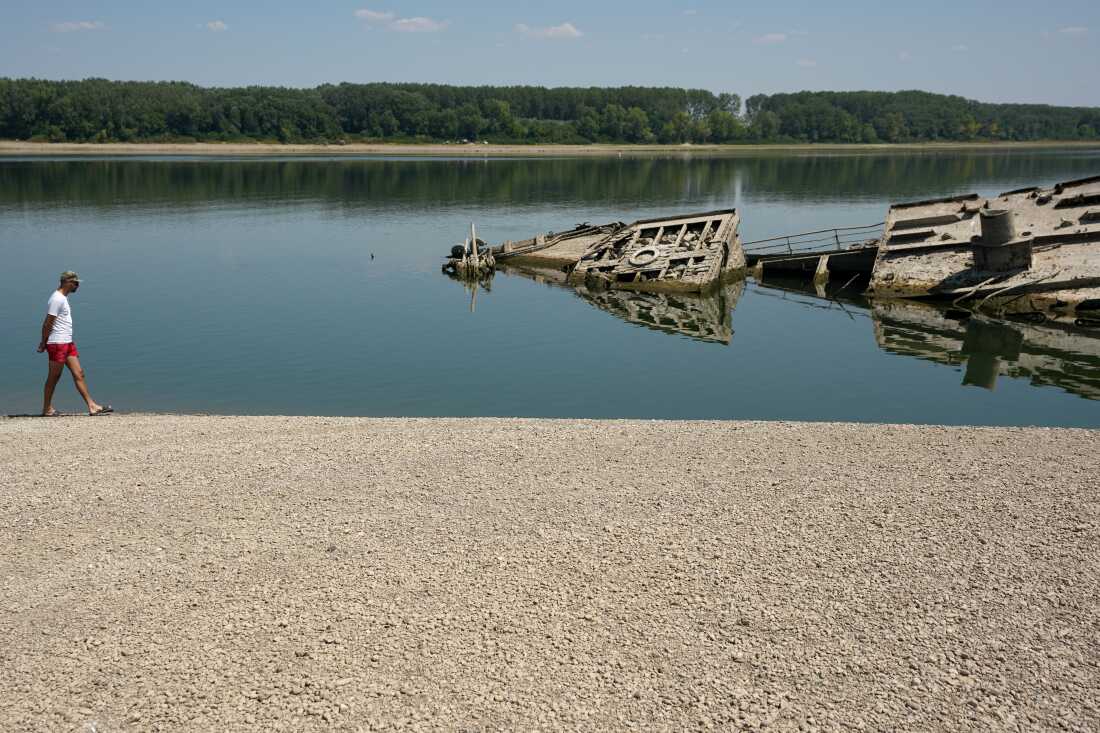
In August 2026, a man navigated a sandbank lined with the wreckage of a German WWII warship along the Danube River. This sight emerged near the Djerdap II dam, a large structure connecting Romania and Serbia. Europe is grappling with an unrelenting heat wave, drawing attention to nuclear power plants and the broader effects of climate change on the continent.
Nuclear Power Under Strain
Hungary’s only nuclear power plant, the Paks Power Plant, came perilously close to shutting down. Prime Minister Péter Magyar reported that, during the night, the Danube’s low water levels almost forced them to halt operations. The plant was saved when water levels stabilized and rose slightly by morning.
The Danube’s low levels threaten cooling systems critical for nuclear energy production. In Romania, a controlled explosion diverted river water to a nuclear plant, as recorded by AFP. This action follows the closure of two reactors in Romania. In Bulgaria, another plant faces potential operational challenges, yet it has maintained its capacity for now. Last week, a cruise ship in Bulgaria had to evacuate passengers when it got stranded due to low water levels near Vidin.
Historical Relics and Environmental Impact
The receding Danube has revealed WWII relics. In Serbia, German warships from 1944 have surfaced, highlighting the severity of the drought’s impact.
Intense Wildfires Sweep Europe
Extended heat has fueled wildfires in Europe, notably in Greece. Firefighters in Western Attica, near Athens, are battling blazes, with 500 personnel and helicopters engaged. The situation remains volatile, as changing conditions challenge control efforts.
In a tragic turn, two helicopter crew members lost their lives while combatting fires. Additional fatalities include two firefighters in Crete and one in southern Greece. Meanwhile, French fires are now mostly controlled. However, near Bordeaux, the Gironde region experienced evacuations, with unexploded WWII munitions discovered amidst the ashes.
Health Risks from Extreme Heat
Record temperatures have triggered health warnings across Europe. Italy’s Health Ministry placed 25 cities on red alert due to heat risks, anticipating the entire nation would face similar alerts. The UK’s Health Security Agency issued alerts for eight regions, emphasizing the potential health dangers for vulnerable populations.
New temperature records were set, notably in the Czech Republic, which recorded its highest-ever overnight temperature at over 82 degrees Fahrenheit.
Leave a Reply