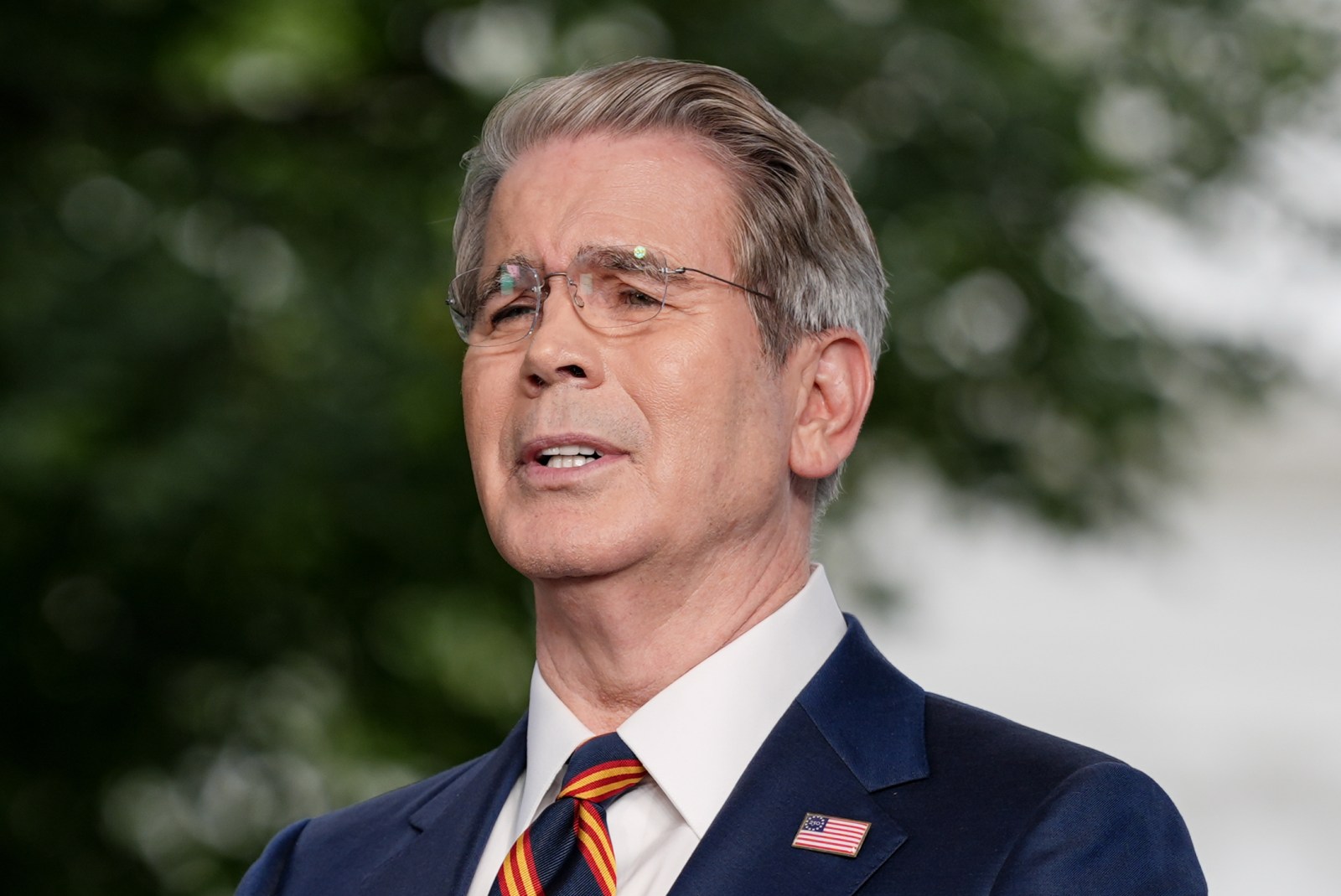
The debate on the state of the U.S. economy continues with differing views on whether lower-income Americans experience growth similar to their wealthier counterparts. President Trump’s Treasury secretary recently dismissed concerns about the widening economic gap, asserting that the notion of a ‘K-shaped’ economy is waning due to the president’s policies.
Speaking to CNBC, Scott Bessent declared, “The K-shaped economy is over.” He referenced wage increases for lower-income workers and the benefits of Trump’s tax reforms. Bessent believes the current economic landscape resembles a ‘C,’ suggesting that lower wage earners are making a comeback similar to previous years.
Understanding the K-Shaped Economy
Many economists have noted a growing division between high and low earners in the U.S., characterized by a ‘K’ shape. The upper line of the ‘K’ illustrates wealth growth among affluent households, while the lower line represents struggles faced by poorer communities with stagnant income and rising costs.
Data from the New York Fed highlights that retail spending growth has primarily benefited high-income households since early 2023. In contrast, low-income families have seen spending decline even as they experience varied wage growth.
Despite lower quartile wage stagnation, there have been periods in 2023 and 2024 where this group experienced notable growth compared to other quartiles.
Alternative Views on the Economic Shape
Bessent’s perspective aligns with some business leaders. Hilton CEO Christopher Nassetta mentioned that occupancy trends led to forecasts of improved performance in lower and mid-tier markets. Nassetta describes this as moving toward a ‘C-shaped economy’ with revenue shifts from luxury to more accessible offerings.
Continued Belief in the K-Shaped Divide
Nevertheless, many experts still emphasize the existence of a K-shaped economy. Former Federal Reserve Chair Jerome Powell acknowledged observing this divide through consumer reporting patterns, with noticeable belt-tightening among low- and moderate-income groups.
Peter Orszag, CEO of Lazard, expressed skepticism over claims of the K-shaped economy’s demise. He stressed the need to consider mixed economic signals, including weak consumer confidence.
Mark Zandi of Moody’s Analytics weighed in, highlighting the disparity in spending between top and bottom earners. He described Federal Reserve data as preserving the K-shaped economy narrative and suggested it is growing more pronounced.
Leave a Reply