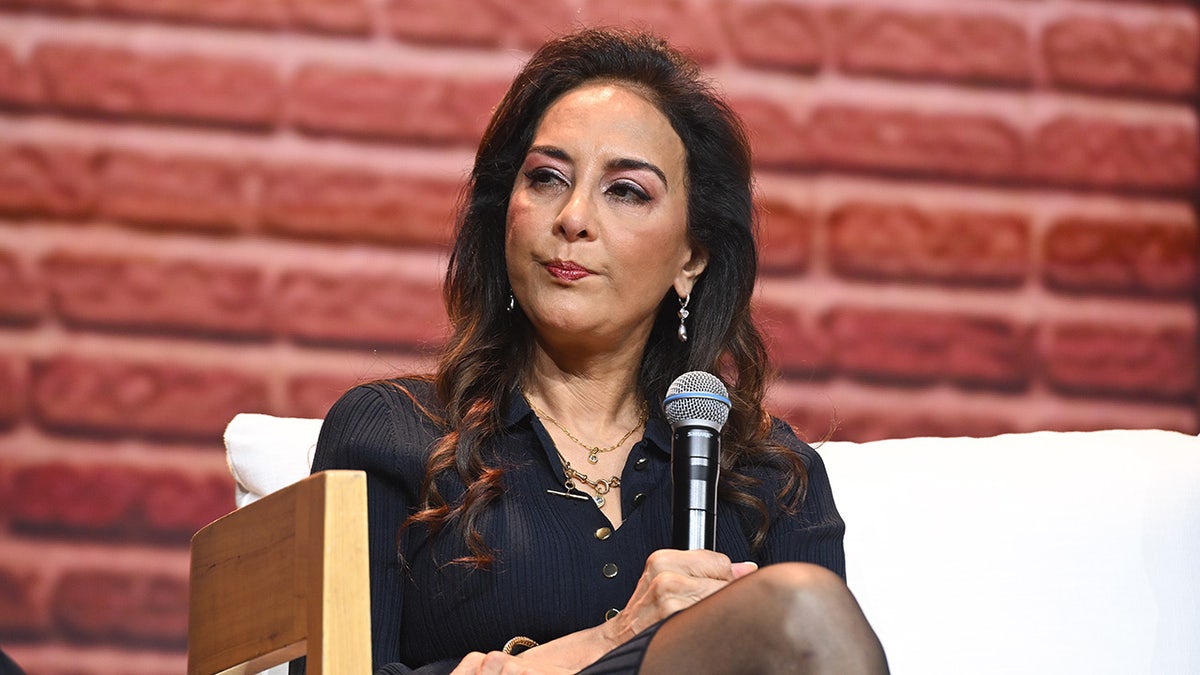
The federal government is seeking to halt reparations programs across the United States. It accuses state and local officials of using these measures as a form of ‘virtue signaling’ and a way to attract voters. Assistant Attorney General Harmeet K. Dhillon from the Department of Justice’s Civil Rights Division expressed that the agency believes all Americans should be judged based on individual merit, aligning with recent Supreme Court precedent. She explained that reparations programs are not compatible with constitutional standards that require strict scrutiny when racial classifications and government benefits intersect.
Dhillon’s remarks came after the Department of Justice joined a class-action lawsuit against the ‘Local Reparations Restorative Housing Program’ in Evanston, Illinois. The DOJ argues that this initiative distributes public benefits based solely on race and ancestry, which is unconstitutional.
“None of the beneficiaries of this are people who themselves personally suffered discrimination traceable to any government action,” Dhillon stated. “We can’t have a system of spoils where those who didn’t discriminate are forced to pay those who didn’t suffer discrimination.”
The DOJ claims the program violates the Equal Protection Clause of the Fourteenth Amendment and the Fair Housing Act. It contends financial assistance is unjustly distributed based on race.
The program, approved in 2019 and launched in 2021, provides eligible Black residents or their descendants with $25,000 grants. These funds support home purchases, mortgage assistance, property repairs, or direct cash payments. Applicants must be Black and have lived in Evanston between 1919 and 1969, a period characterized by systemic housing discrimination and redlining, or be direct descendants of residents from then.
The Evanston program ignited debates on racial reparative justice. While supporters believe it’s a blueprint for addressing generational economic disparities, the federal government argues it isn’t ‘narrowly tailored,’ as it uses race as the only eligibility criteria without requiring proof of individual financial or physical harm.
Litigation began in May 2024 when Judicial Watch filed a class-action lawsuit on behalf of six non-Black descendants of Evanston residents excluded from the program. U.S. District Judge John F. Kness allowed the lawsuit to proceed, and the DOJ opened a civil rights investigation into the city’s practices.
Evanston has distributed over $7 million from the $20 million fund, sourced from a marijuana sales tax. The city’s Reparations Committee recently approved additional funding and issued $25,000 to 44 more residents. After DOJ’s intervention, Evanston released a statement defending the program without detailing the trials.
“The City of Evanston maintains its position on the legality of the Evanston Reparation Program,” it stated.
The federal government’s formal intervention request is pending court approval.
Other cities, including Illinois’s municipalities, are exploring reparations. Dhillon mentioned targeting Asheville, North Carolina’s program and others as potential violations.
The DOJ’s letter to Buncombe County warned of possible investigations if recommendations from the Asheville-Buncombe Community Reparations Commission are approved.
Joshua Q. Nelson, Fox News Digital reporter, specializes in cultural trends, education, and public policy. He joined in 2019, covering reparations, education, and immigration issues extensively. Nelson is an alumnus of Syracuse University’s Maxwell School and holds Wharton Public Policy Certification. Connect with him via email, Twitter, and LinkedIn.
Leave a Reply