Fertility rates in the United States have dropped to near historic lows. A significant factor is the decrease in American women having children in their 20s over the past three decades. Yet, women’s biology and the age when fertility declines remain unchanged. Egg freezing presents itself as a potential solution.
Freezing embryos has been an option for in vitro fertilization (IVF) for many years. However, freezing unfertilized eggs was initially developed for patients facing conditions like cancer that threaten fertility. Approximately 13 years ago, egg freezing became common for non-medical reasons. Since then, its popularity has grown significantly, leading to many eggs being frozen. This trend raises substantial hopes and questions about delaying the ticking of the biological clock.
Egg Freezing Process
Kate Sonderegger arrived at a fertility clinic early one rainy morning in Midtown Manhattan. She was there for a minor surgical procedure to harvest and freeze her eggs. The following day, another patient, Katherine Schneider, received similar treatment at a different center.
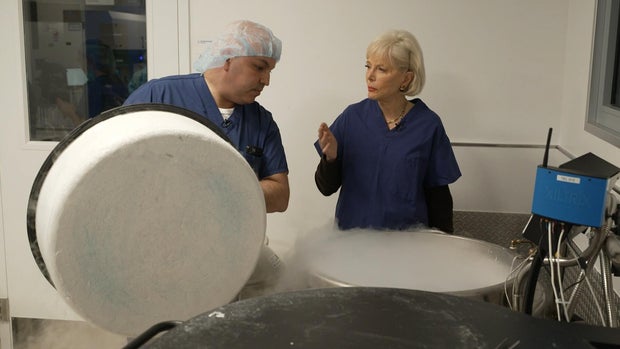
The egg retrieval involves two weeks of self-administered hormone injections. These hormones ripen multiple follicles in the ovaries, which are then extracted using a tiny needle. Embryologists search for these eggs under a microscope. After several hours, they freeze the eggs using liquid nitrogen at negative 320 degrees until needed for future fertilization.
Views on Egg Freezing
Egg freezing is as transformative as the contraceptive pill was in the 1960s and 70s, says Dr. Tomer Singer.
This procedure now allows women to delay having children until their 40s using eggs frozen in their younger years. The option is empowering for many women who wish to focus on their careers and personal life before starting families. Egg freezing provides a safety net against the constraints of the biological clock.
Understanding the Biology
Women do not produce new eggs throughout life. The number and quality of eggs decrease over time. By freezing eggs in their 20s, women preserve them at their best quality, potentially avoiding genetic errors that increase with age. A study indicates a marked increase in chromosomal abnormalities in embryos from women aged 35 to 45.
Consultant Yasmine Higbee, 30, acknowledges the ticking biological clock. Freezing eggs removes pressure from dating and decision-making, as described by Nameetha Jacob, a 38-year-old health care strategist.
Financial and Social Implications
Egg freezing is costly, reaching $12,000 to $15,000 per cycle plus annual storage fees. Thawing and fertilizing eggs later incur additional costs. Companies like Apple and Facebook popularized covering these expenses, and many large corporations now follow suit.
However, critics warn that some firms may offer egg freezing to delay pregnancies, not as an employee benefit. Many women, like Carissa Simek, appreciate employer support for egg freezing as part of job selection.
Risks and Realities
Dr. Lucky Sekhon emphasizes that frozen eggs offer no guarantees. The success of using frozen eggs decreases with age and varies with each step of the process. Despite the uncertainties, egg freezing remains a promising option for many women.
Critiques point out a disparity: most elective egg freezers are affluent and white, indicating economic factors influence access to these technologies.
Changing Dynamics
More women are freezing eggs, with procedures rising from 6,000 in 2014 to nearly 39,000 in 2024. Venture capitalists have taken note, investing in the fertility sector. Some concerns arise about potential commercialization affecting healthcare quality.
Dr. Marcele Cedars of UCSF flags the risk that financial motivations may override patient care with increased investment in fertility clinics.
Future Considerations
While the practice of elective egg freezing offers agency and options, it is crucial for healthcare providers to guide individuals with accurate information about the process and potential outcomes.
In reflecting on their family goals, women like Tina Rampino, who had a second child using previously frozen eggs, express gratitude for the technology.
Dr. Singer envisions an increased role for reproductive technology in family planning, although this view is not universally accepted. Ultimately, decisions around egg freezing should be informed by individual priorities and available resources.
Leave a Reply