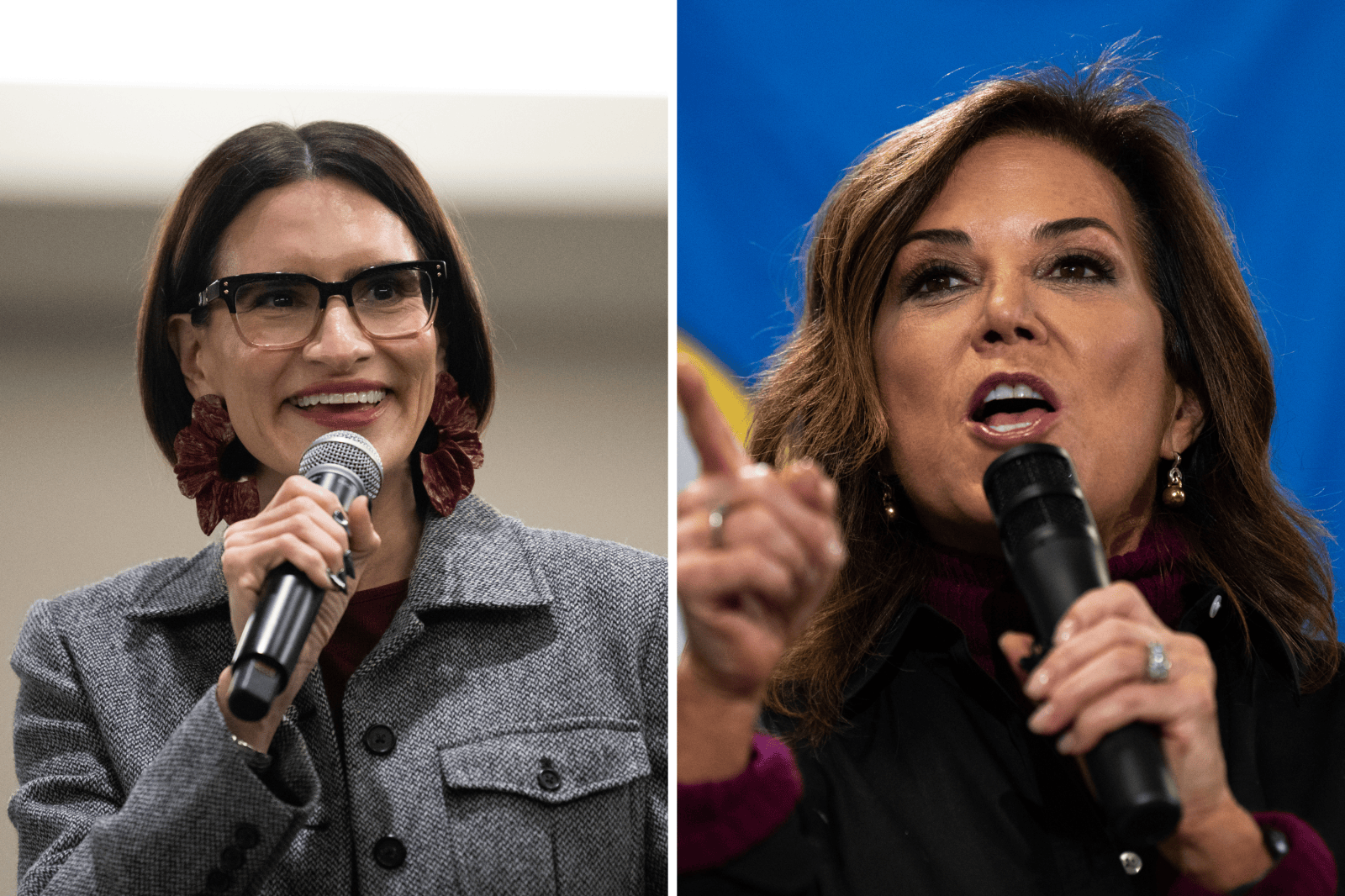
President Donald Trump’s endorsement of Republican Michele Tafoya and the federal raid on Democratic Representative Ilhan Omar’s home affected the outcome of Tafoya’s defeat by Democrat Peggy Flanagan in the race for a Minnesota U.S. Senate seat. This is according to a political science professor who spoke with Newsweek.
Flanagan, who serves as Minnesota’s lieutenant governor under Governor Tim Walz, won the midterm election race with 53.7% of the vote compared to Tafoya’s 43.6%. Her victory came amid a sweep for Democrats who secured numerous U.S. Senate, House, and gubernatorial seats, even in historically Republican strongholds like Texas and Ohio. Notably, she becomes the first Native American woman elected to the U.S. Senate.
Although Minnesota is typically seen as a Democratic stronghold, with the last Republican senator elected in 2002, the GOP saw a significant opportunity to capture the seat. David Schultz, a professor of political science and legal studies at Hamline University, cited voter concerns about corruption as a contributing factor to this potential opening.
Tafoya was gaining ground on Flanagan until the Justice Department searched Omar’s property, Schultz explained, suggesting that the raid mobilized Democratic voters.
Schultz pointed out two key factors behind Tafoya’s defeat: Trump’s endorsement and the October 12 raid by Homeland Security Investigations on Omar’s home in Washington, D.C. Both events occurred shortly before Election Day.
Prior to Trump’s endorsement in mid-October, Tafoya had created some distance between herself and Trump. Schultz noted that Trump’s backing was a misstep for Tafoya, causing harm to her campaign.
Larry Jacobs, a University of Minnesota political science professor, attributed the Democrats’ win to a backlash against Trump and issues blamed on him, such as high living costs. According to Jacobs, these topics sidelined other concerns during the election.
In early October, before Trump’s endorsement and the Omar raid, Tafoya was polling close to Flanagan, within the margin of error. Despite this, Schultz remarked that a GOP victory remained unlikely. The national trend of voting against Republicans influenced the outcome, and undecided voters swayed away from Tafoya. Schultz indicated that the raid on Omar’s property revived negative perceptions of the Trump administration among Minnesota voters.
Responses from Flanagan and Tafoya
After the election, Flanagan expressed her gratitude to voters. “Minnesota, I am so incredibly grateful for each and every person who supported this campaign,” she shared. In the Ojibwe language, she added, “Chi miigwech,” translating to “thank you very much.”
Conversely, Tafoya posted a quote by Wall Street Journal columnist James Freeman on her social media page. The quote discussed reactions to electoral outcomes, advocating for respect of democratic processes and constitutional liberties.
What’s Next?
Before the new Congress convenes on January 3, lawmakers will engage in the 2026 lame-duck session. During this interim period, Republicans will retain control over any current committee positions. This offers them the opportunity to push legislative agendas, negotiate governmental budgets, and confirm appointments, despite losing their upcoming majority.
Regarding Minnesota, Schultz mentioned that Republicans face ongoing challenges in winning federal elections. They need a strategy to appeal to urban and suburban voters in the Minneapolis and St. Paul areas.
Leave a Reply