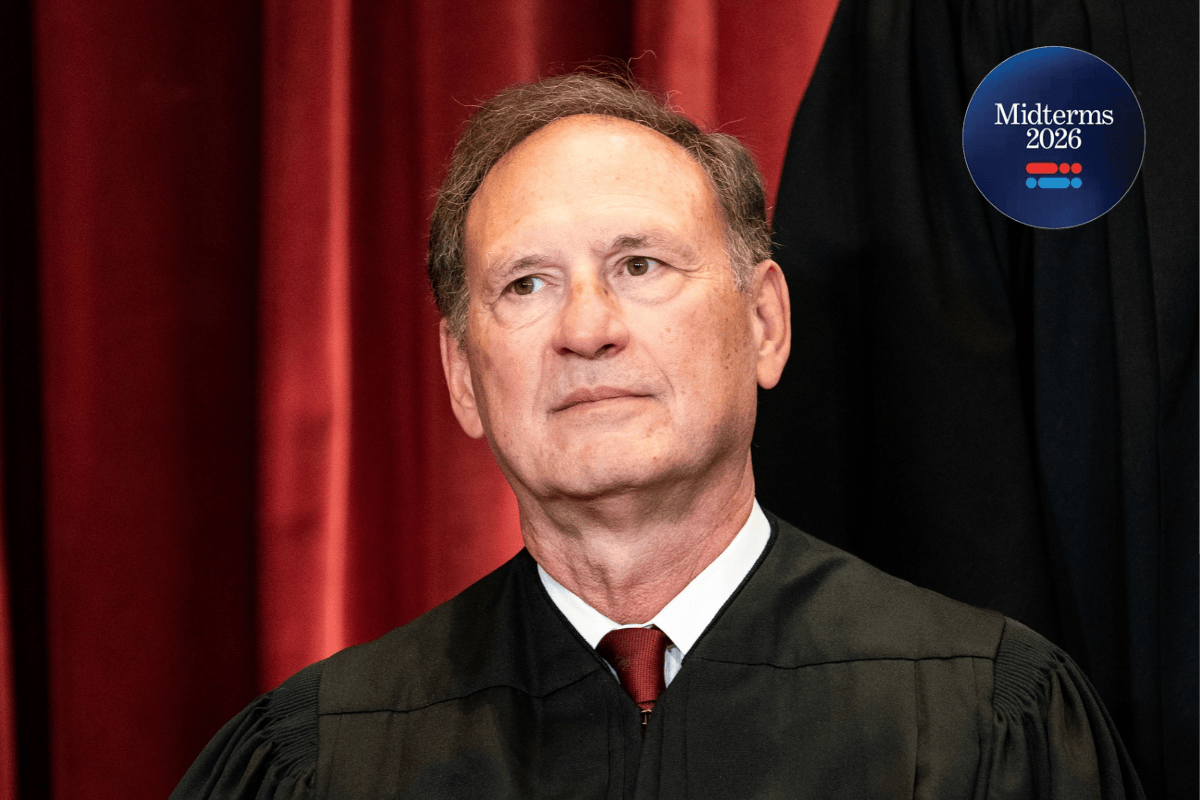
President Donald Trump’s capacity to nominate another Supreme Court justice may have diminished as Democrats have solidified a majority in the Senate. With this majority, they can potentially block any of Trump’s nominees in the latter half of his term, according to legal analysts speaking to Newsweek.
Democrats have gained at least seven Senate seats in Iowa, Kansas, Maine, North Carolina, Ohio, South Carolina, and Texas following the midterms. Contests in Alaska and Mississippi remain unresolved. The impact of a Democratic Senate becomes particularly significant in potentially denying Trump the opportunity to nominate a Supreme Court justice if a vacancy arises in the next couple of years. Any nominee he selects would require Senate confirmation, which Democrats could prevent.
The Shift to Partisan Judicial Confirmations
The process of confirming justices has become increasingly partisan. The 2016 contention over Merrick Garland, who was appointed by former President Barack Obama after Justice Antonin Scalia’s death, changed the landscape of Supreme Court confirmations. Republicans refused to confirm a new justice in an election year, banking on a Republican presidential win. Consequently, Trump appointed Justice Neil Gorsuch in 2017. In 2020, despite Democratic objections referencing the 2016 precedent, Republicans confirmed Justice Amy Coney Barrett following Justice Ruth Bader Ginsburg’s death.
During Trump’s second term, no new justices have been appointed. Some Republicans anticipated that older conservative justices, such as Samuel Alito or Clarence Thomas, might retire pre-midterms, allowing Trump to replace them with younger nominees who could serve for many years, facilitated by the GOP-controlled Senate. However, no such retirement has occurred.
Democrats’ Potential to Block Nominations
Beginning in January, Democrats are expected to hold at least 54 Senate seats, empowering them to block Trump’s nominees. Daniel Urman, a Northeastern University law professor, predicted Democrats would likely reject a Trump appointment, keeping the seat vacant until 2028. This could lead the Court to seek compromises, as witnessed after Scalia’s death.
Urman noted that Trump might try negotiating with Senate Democrats for a moderate candidate, but given his past preferences, this is unlikely.
Governor Ron DeSantis of Florida commented that the Senate’s Democratic control might obstruct Supreme Court confirmations under Trump, unless changes occur swiftly.
Possibility of Alito’s Retirement
Republicans could still confirm a justice, should a retirement occur before year-end, according to Paul Collins, a professor at the University of Massachusetts. While a lame-duck justice retirement is feasible, Collins noted the unprecedented nature of such a move for explicitly political reasons.
Collins indicated Alito or Thomas might consider retiring, given their conservative backgrounds, aware of potential ideological shifts if succeeded by a Democratic appointee. However, Dave Aronberg, former Palm Beach County state attorney, doubted a rapid, politically motivated retirement.
Alito dismissed the speculation regarding his retirement, citing it as part of life tenure expectations.
Impact of a Democratic Senate on the Supreme Court
The Democratic majority in the Senate could prompt consideration of Supreme Court reforms, such as term limits or an ethics code, although Trump might veto such measures. Stephen Wermiel, an American University law professor, acknowledged the challenges of passing reforms without bipartisan support, as Trump retains veto power. Public confidence in the Supreme Court remains low, with only 34 percent approval in a recent Gallup poll.
Contact Newsweek editors on this story: Jason Lemon and Gray R. Thomas.
Leave a Reply