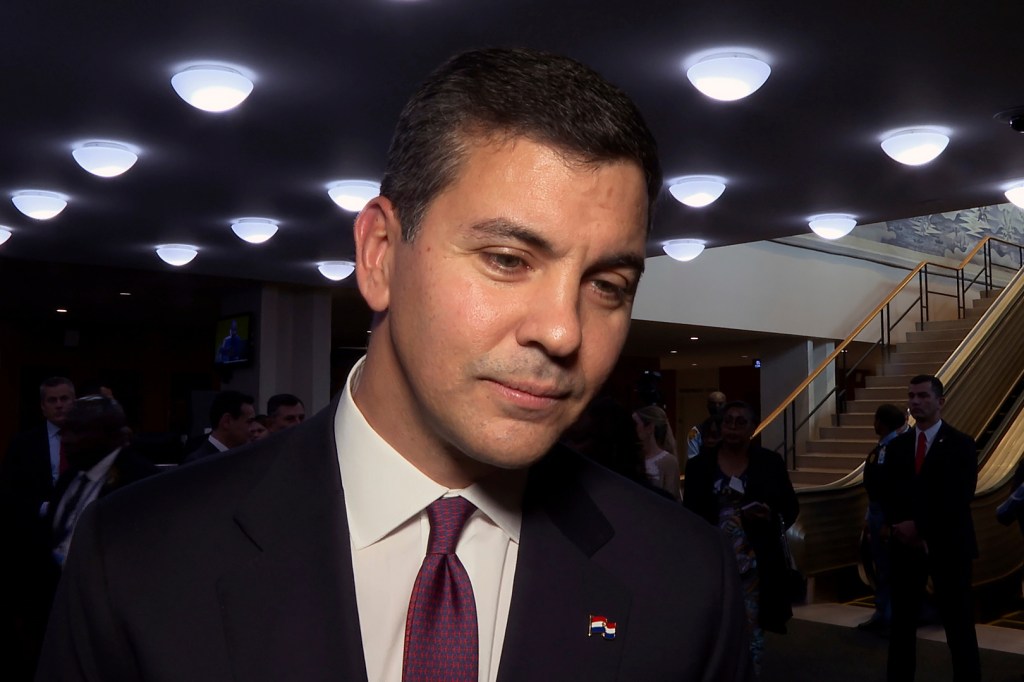
Former Paraguayan President Santiago Peña faced house arrest on Friday. Accusations include breach of trust and influence peddling. This follows his removal from office by the Senate. The removal was linked to the failure of Ueno Bank, which severely affected half of Paraguay’s population of six million people. All 44 senators voted to impeach him for misconduct, making him the second president ousted since the dictatorship of Gen. Alfredo Stroessner ended in 1989.
The decision ended what many viewed as a stable presidency in South America. Crowds gathered outside Congress as the verdict was announced, celebrating Peña’s removal. Demonstrators, including depositors and students, waved national flags and sang, expressing relief from alleged corruption.
Ueno Bank was seized by regulators three days prior, causing significant upheaval. Peña was ordered to stay at his Asunción residence until appearing before prosecutors on Saturday. Charges include misuse of public office for personal benefit, which could lead to a 10-year prison term. Officials also accuse him of directing public funds into Ueno and ignoring risky financial practices. Peña denies these allegations. The police encircled his house as supporters watched overnight, ensuring he remained in custody.
Meanwhile, prosecutors demanded Carlos Carvallo’s arrest. He led Ueno until Peña made him central bank chief. Vice President Pedro Alliana was inaugurated as president on Friday, tasked with addressing the financial fallout and public demands for justice. Alliana is also under investigation concerning the bank scandal.
Before the verdict, Peña wrote a farewell message. He expressed hope for less division and noted the public’s need for resolutions. Senate deliberations coincided with protests demanding access to frozen savings and accountability. Protesters called for Peña to be imprisoned alongside Ueno’s founder, Miguel Vázquez.
Regulators’ seizure of Ueno left many unable to access their funds. The digital bank had gained popularity among the underbanked by offering incentives such as supermarket rebates. Ueno supported over one million Paraguayans in opening bank accounts, including members of the national soccer team. Despite financial turmoil, the central bank insists other financial institutions remain stable, and deposits are insured up to $35,000, covering most customers.
Authorities charged 27 individuals related to Ueno, including its founder, with financial crimes. Luxury assets connected to key figures have been seized. Ueno quickly grew to become one of Paraguay’s major banks, absorbing public deposits worth over $800 million. Its rapid rise involved significant public exposure, such as sponsorship deals and widespread branding.
Impeachment charges highlight Peña’s past financial ties with Ueno. Lawmakers criticized him for his insufficient regulatory actions and inappropriate financial management linked to the bank and its associates. Under Peña’s influence, the central bank lost effectiveness and impartiality, which analysts link to Ueno’s unchecked growth.
Peña’s swift downfall arose from political and financial missteps. His attempt to resign failed as impeachment proceeded, stripping him of immunity. His mentor, former President Horacio Cartes, led his political shift. Cartes, previously penalized by the U.S. Treasury, helped initiate concerns over Ueno’s practices. When the bank fell, Peña’s political influence waned rapidly, sealing his fate. Analysts liken the unfolding events to a dramatic power struggle, as Cartes regained control of the party.
Leave a Reply