France is currently dealing with a significant intelligence oversight following nationwide protests that escalated into riots and looting. The chaos has led President Emmanuel Macron to initiate a security review. Senior officials have admitted that police lost control in numerous cities. Some government officials have offered to resign due to their failure to anticipate the disturbances.
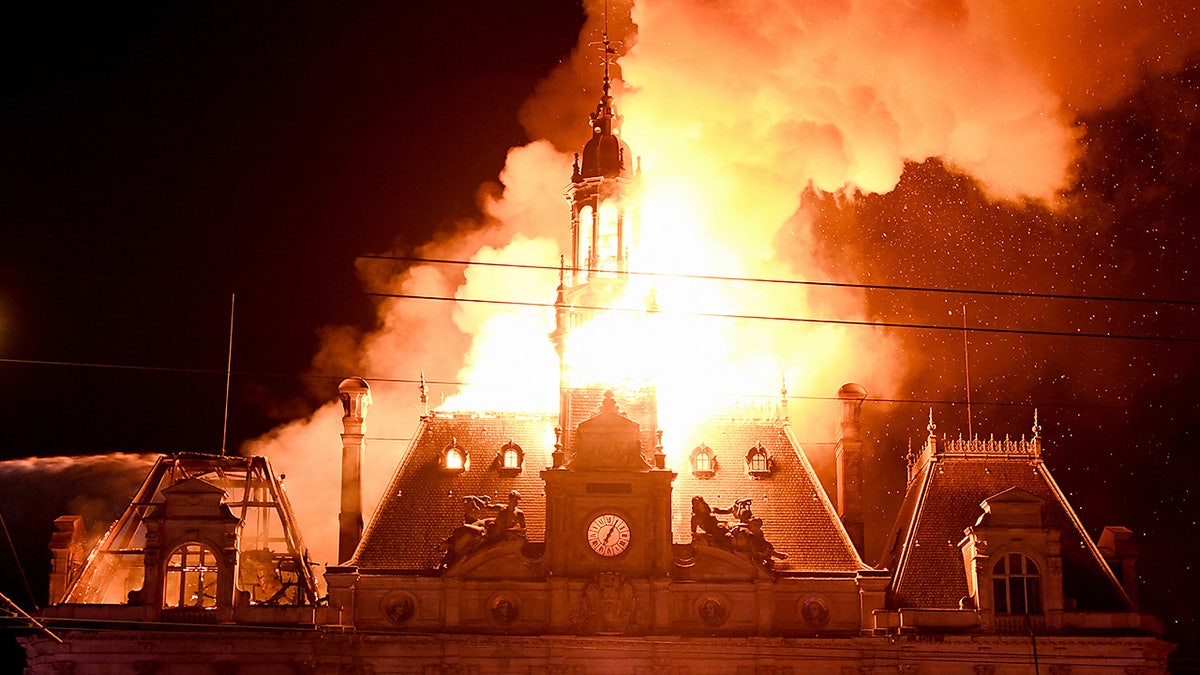
According to France’s Interior Ministry, around 550,000 people participated in 110 marches on Saturday, far more than the estimated 200,000. Event organizers claim the turnout was closer to 800,000. The unrest resulted in burned cars, over 1,500 vandalized or destroyed stores, and public buildings attacked across the nation. In Limoges, rioters set a 19th-century city hall on fire, causing the roof to collapse.
Even by Monday, effects lingered as the Louvre remained closed due to student protests blocking its entrances.
This unrest has led many to question the country’s preparedness and response capabilities.
The protests on October 17, 2026, marked a broader demonstration against living costs, anticipated to last into the presidential election season. An intelligence source had estimated that 200,000 people, including 40,000 in Paris, might participate. Yet, over the weekend, the demonstrations turned into some of the worst street violence seen in recent years.
About 60,000 police, gendarmes, and security personnel were deployed to manage the crowd, yet they were overwhelmed. Nearly 1,000 law enforcement officers and firefighters sustained injuries, approximately 2,400 people were arrested, and an estimated 3,000 businesses suffered damage.
Interior Minister Laurent Nuñez acknowledged that authorities underestimated the number of demonstrators and the violent groups exploiting the chaos. Nuñez offered his resignation, which Macron refused. Instead, Macron demanded a detailed review of the planning and intelligence failures that led to being so unprepared.
Justice Minister Gérald Darmanin admitted failures in tracking the ultra-left’s movements and intelligence processes.
Warnings about the unrest emerged weeks beforehand. In September, high school students protested issues such as teacher shortages and poor school conditions, igniting a nationwide movement. Violence steadily crept into these demonstrations, evolving into riots with the escalation of living costs and declining public services.
By October 1, at a government crisis meeting, intelligence officials noted a shift toward urban violence. However, by mid-October, the situation intensified beyond predictions.
The protests united various groups under a loose unity. While many marched peacefully, smaller groups engaged in looting, arson, and attacks on police.
This unrest has fueled a political debate over immigration, with political figures like Donald Trump and right-wing leaders blaming migration policies. However, French authorities emphasize blaming ultra-left militants and criminal groups.
The escalating situation poses challenges for Macron’s government, particularly as it fuels debates over immigration and public order ahead of the 2027 presidential election. The violence amplifies calls from figures like Marine Le Pen for stricter immigration and policing measures.
The images of chaos highlight vulnerabilities in France’s political landscape, as many voters focus increasingly on issues like immigration, security, and economic stability.
For Macron’s government, there is an immediate need to understand how security services failed to anticipate the scale of the violence despite tracking the protests.
Leave a Reply