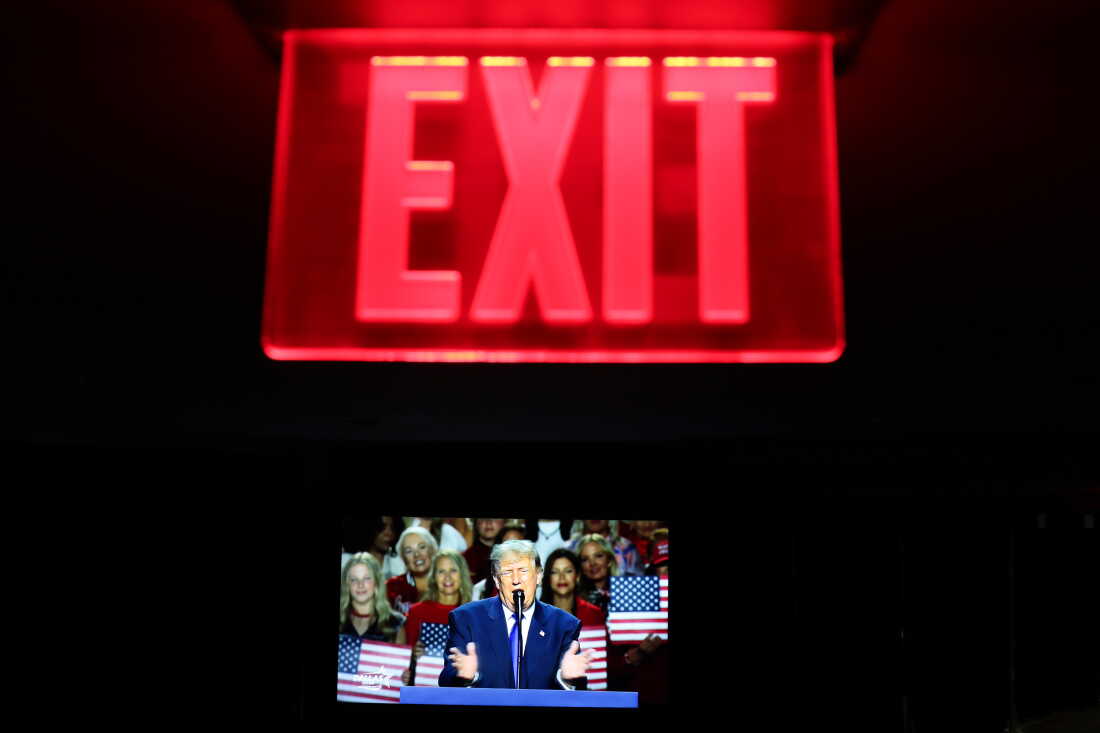
At the 2026 Republican convention in Dallas, President Trump addressed attendees, projecting his influence within the party. Despite Trump’s dominance and insistence on loyalty, dissent is emerging among Republicans. Party figures are openly challenging core aspects of Trump’s agenda.
Several candidates and elected officials have shifted on critical issues like immigration and the U.S. war with Iran. This dissent arises as the GOP grapples with maintaining control of Congress amidst upcoming elections.
Trump is encouraging voters to treat the midterms as a referendum on him, even as his approval ratings lag. The latest NPR/PBS News/Marist poll reveals 45% of registered voters and a majority of independents see their vote as a stand against Trump.
GOP strategist Sarah Longwell notes Trump’s strength historically stems from his voter rapport. While Republicans have resisted opposing Trump, his diminished popularity might prompt lawmakers to resist his influence.
“You are starting to see the very beginnings of people recognizing that Trump just doesn’t have the juice that he once did,” Longwell said.
Significant splits within the GOP have emerged. Utah Sen. John Curtis urged an investigation into Donald Trump Jr. after reports about Russian support for his wedding. Curtis’ actions could signal a shift in perception about Trump’s coalition.
Polls consistently rank cost of living as a major concern, with many Republicans acknowledging its link to the Iran conflict. GOP Senate candidates Ashley Hinson and Mike Rogers advocate for ending the war and providing relief to affected Americans.
Hinson, previously opposed to ending the conflict, stated, “Iowans are being squeezed and shouldn’t have to foot the bill at the pump or the checkout line for the war in Iran.” Rogers also emphasized the economic burden: “Groceries cost too much. We have to bring prices down.”
Although neither directly mentioned Trump, their statements contrast with his consistent defense of the Iran conflict. Impatience over the war is growing in Congress, evident in a resolution supported by seven House Republicans to remove U.S. forces from Iran.
Republicans aiming to differentiate themselves from Trump are doing so due to electoral pressures. GOP strategist Ron Bonjean highlights that by distancing themselves from Trump, these candidates strive to communicate their independence to voters.
This independence is especially crucial for Republicans hoping to reconnect with key voting blocs like Hispanic voters. A New York Times/Siena poll shows a decline in GOP support among Hispanic-majority districts in states like Florida and Texas.
In Florida’s 27th district, Rep. María Elvira Salazar criticized Trump’s immigration policy, cautioning him against overly harsh enforcement. Although Salazar criticized Trump’s stance, she maintains a delicate balance. Her statement emphasized caution, not confrontation.
Ultimately, Salazar noted that while the relationship with Trump remains cordial, she aims to present him a broader perspective on immigration policy, reflecting the sentiments of Hispanic voters.
Leave a Reply