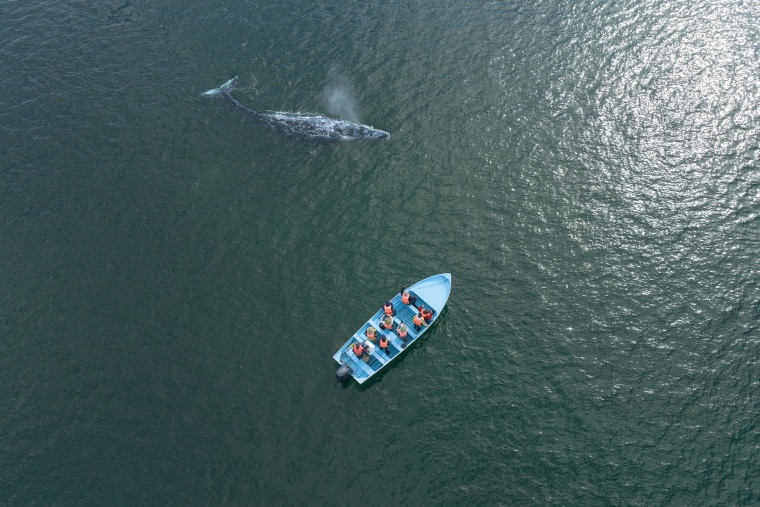
On May 25, 2026, reports emerged of multiple gray whale carcasses along Washington state’s beaches. Since March, 21 whales have washed ashore, according to John Calambokidis, a research biologist. This development is a cause for concern. Gray whales, once celebrated for their conservation success, have seen a sharp decline over the past seven years. Numerous dead whales appeared thin, with some displaying unusual behavior. These issues may stem from poor condition.
Scientists link the decline to global warming, particularly the reduction of sea ice. “We know it’s a food supply issue,” Calambokidis stated. Arctic changes due to climate change have disrupted the whales’ food sources. He and others believe this chain reaction has affected the whales’ primary prey. Whales are sensitive to these shifts, explained Josh Stewart, an assistant professor at Oregon State University.
Gray whales have been stranding on Pacific shores since 2019, prompting NOAA to declare it an “unusual mortality event.” Despite a brief recovery in 2023, the decline persisted. Calambokidis noted, “We thought we were seeing a bit of rebound, but it was so short-lived.” Most Eastern North Pacific gray whales follow a migratory pattern from Arctic feeding grounds to Mexico’s lagoons annually.
The whales rely heavily on Arctic feeding between spring and summer. The complexity of dwindling food availability remains under investigation. Traditionally, algae on sea ice would sustain amphipods after melting into the seafloor. But with earlier ice melting, other species are using these nutrients, reducing whale prey. A bad summer costs whales vital energy for migration.
Presently, the whales are most vulnerable when migrating north after long fasting. Stewart explained that malnourished whales are desperate, seen in unusual migration paths. For instance, one swam up Washington’s Wilapa River and died, likely searching for food. Navigational issues arise from malnourishment.
NOAA estimates indicate a population drop from 27,430 to 12,950 since a decade ago. However, Stewart warned the decline might be overstated due to modeling inaccuracies. Not all gray whales depend solely on the Arctic. Smaller groups, like the Sounders and Pacific Feeding Group, forage in local waters and show resilience to the overall trend.
This suggests alternative strategies might exist for gray whales to adapt long-term, remarked Elliott Hazen, a NOAA research ecologist. Historically, gray whales suffered immensely from commercial whaling but rebounded after protection under the Marine Mammal Protection Act.
Though not facing extinction, Stewart warns that recent gains are at risk, placing the species in a new recovery territory. “We’re significantly lower in abundance than when the species was delisted from the Endangered Species Act,” he stated.
Leave a Reply