Amidst rising discord between U.S. President Donald Trump and Israeli Prime Minister Benjamin Netanyahu, an Israeli strike on Syria could indicate a wider geopolitical change. The targeted site, Abu al-Duhur Air Base in Syria’s Idlib province, hosted a Turkish military delegation earlier. Turkey aimed to renovate this site as part of fostering relations with the government that ousted Bashar al-Assad from Damascus in December 2024.
The Turkish Foreign Ministry strongly condemned the Israeli attack, the latest in a series of disputes between two U.S. allies in the region. Israel defended the strike, citing Syria’s alleged violation of a security agreement by allowing Turkish troops near Aleppo. Turkey dismissed these claims as attempts to justify Israel’s actions against Syrian sovereignty.
The U.S. also criticized Israel’s operation, with Special Envoy Tom Barrack expressing concern over potential escalation. This is not the first time the Trump administration appeared to favor Turkish President Recep Tayyip Erdogan over Netanyahu. The lack of U.S. endorsement for Netanyahu ahead of key elections could have significant implications as both leaders face domestic pressures.
Political Challenges for Trump and Netanyahu
Brian Katulis, a senior fellow at the Middle East Institute, noted President Trump and Prime Minister Netanyahu face political difficulties at home. Trump struggles with low approval ratings, and Netanyahu’s reputation suffered post the October 7, 2023 Hamas attack. Netanyahu’s political strategy focuses on proving his ability to protect Israeli citizens through aggressive military tactics appealing to his right-wing coalition.
Conversely, Trump faces a war-weary public. The U.S. economy suffers due to his foreign policies. Americans desire de-escalation, contrasting with Netanyahu’s strategy. Trump’s approach in the Middle East seeks a balance between alliances with Erdogan and Netanyahu.
Trump acknowledged Erdogan’s role in Assad’s removal and aligned with Damascus’s new government, despite Netanyahu’s opposition. Trump held meetings with Syria’s President Ahmad al-Sharaa, easing sanctions and promoting regional partnerships. The White House criticized Israel’s support of Druze militias against Syria’s attempts to stabilize after years of civil conflict.
The Reinforcement of U.S.-Turkey Relations
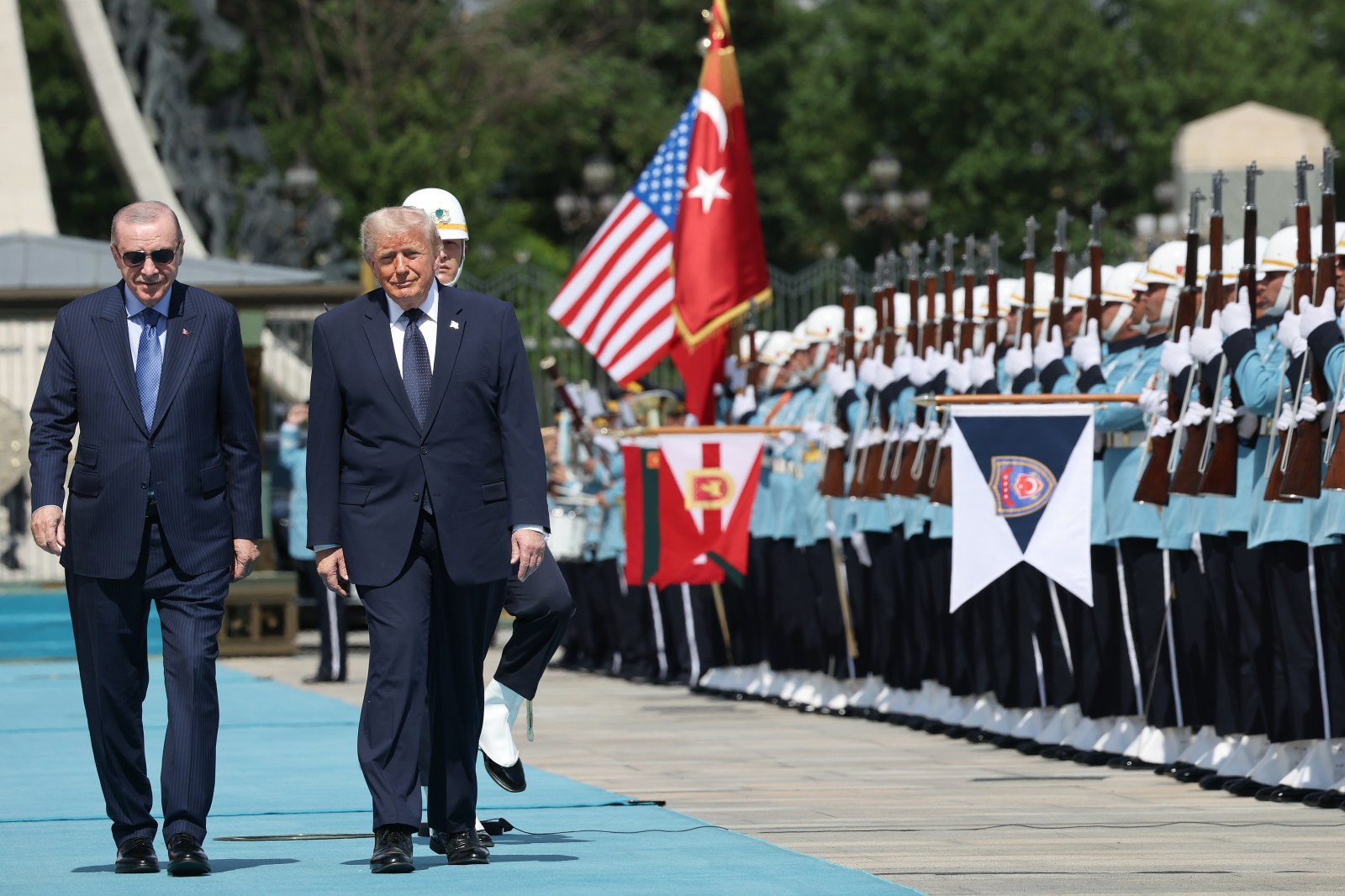
After a recent NATO summit in Ankara, U.S.-Turkey ties were reaffirmed amidst strained European relations. Trump defied Netanyahu by considering lifting restrictions on F-35 jet sales to Turkey, despite its acquisition of Russian military systems. The Trump administration has historically aligned with Israel on some actions, notably against Iran, but current divergent interests remain with Trump and Netanyahu.
Katulis highlighted Trump’s strategy, focusing on regional self-reliance. This encourages countries like Israel and Turkey to independently pursue their interests. However, this increases the risk of regional confrontations turning into larger conflicts.
Changing Defense Alliances
Regional players are exploring new deterrence strategies amidst doubts about U.S. security commitments. A key development is the “Mecca Pact,” a defense agreement zwischen Turkey, Saudi Arabia, and Pakistan. This Sunni alliance forms in opposition to Iran’s largely Shiite coalition and aims to counterbalance Israel’s regional influence.
Ali Burak Daricili from Bursa Technical University noted Turkey’s move as a strategic counter to Israel’s alignments with Greece, Cyprus, and India. He mentioned potential benefits for Syrian security and limiting Iran’s regional influence. Despite Turkey and Israel’s competition, Daricili observed U.S. efforts to prevent clashes, emphasizing the utility of a formal mechanism to manage tensions.
Israel’s current government under Netanyahu shows a tendency towards confrontation, unlike previous administrations. Analysts describe Turkey’s influence as a significant threat to Israel, even more than Iran. Israeli officials have criticized Erdogan’s past support for activist groups challenging the Gaza blockade.
A direct clash between Israel and Turkey could have severe consequences for both nations. Eyal Zisser of Tel Aviv University highlights Trump’s influence over Netanyahu, suggesting that an Israeli attack on Turkey remains unlikely due to mutual interests and U.S. influence.
Leave a Reply