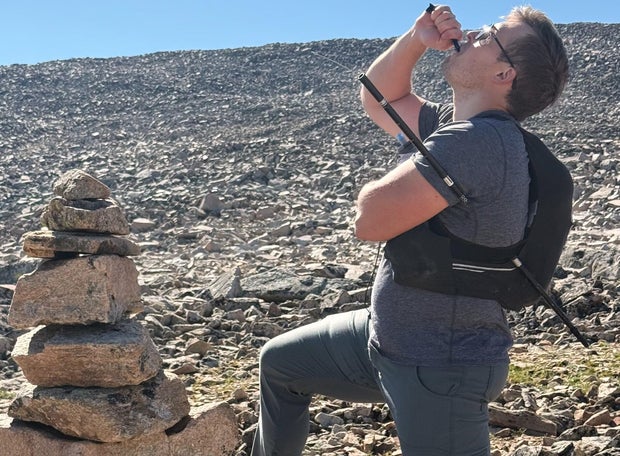
David Cifaldi, a nurse from Billings, Montana, found himself in a precarious situation while hiking with friends on the Froze-to-Death Plateau. As they aimed for Granite Peak, the state’s highest point, Cifaldi slipped, causing a 44-inch trekking pole to impale him.
The pole pierced beneath Cifaldi’s left arm and emerged from his back. Despite the alarming injury, it missed vital organs. Faced with the high cost of a helicopter rescue, Cifaldi decided to rely on his own skills. “We’ve got to get off this mountain,” he declared to his friends, despite their uncertainty.
At 32, Cifaldi worked in wound care and quickly assessed his condition. He noticed minimal pain and blood, and the pole remained stable. The group used a satellite communication device, the Garmin inReach, to contact local authorities and inform them of their plan to descend the plateau without external assistance.
Their journey down was challenging. The group navigated tough terrain, including boulders and snowfields, eventually reaching a trailhead after six hours and covering around 10 miles downward. Jesse Ross, one of Cifaldi’s companions, had parked a vehicle there. “His confidence made it possible,” Ross recalled, respecting Cifaldi’s medical expertise.
Cifaldi’s ambition to conquer Granite Peak was long-held. Standing at 12,800 feet, the mountain poses risks with its volatile weather, including lightning and cold. Many hikers attempt the climb annually, yet not all succeed. In 2019, a 65-year-old climber fell 150 feet to his death near the summit.
Ty Williams, commander of the Stillwater County Search and Rescue team, tracked the group’s progress via satellite. Their first communication was at 9:44 a.m. after the accident, with updates until they neared the trailhead and requested hospital readiness by 1:30 p.m.
“He didn’t want help, and we respected that,” Williams stated. By 3:30 p.m., they were en route to the hospital. Initial treatment required advanced medical care in Billings, at St. Vincent Regional Hospital, where Cifaldi worked. Afterward, doctors removed the pole, and Cifaldi resumed work the following week.
Reflecting on the ordeal, Cifaldi stated, “Ninety-nine times out of a hundred, I’d do the same. Cost played into my decision, but having experienced friends and the ability to contact search and rescue eased the choice.”
Leave a Reply