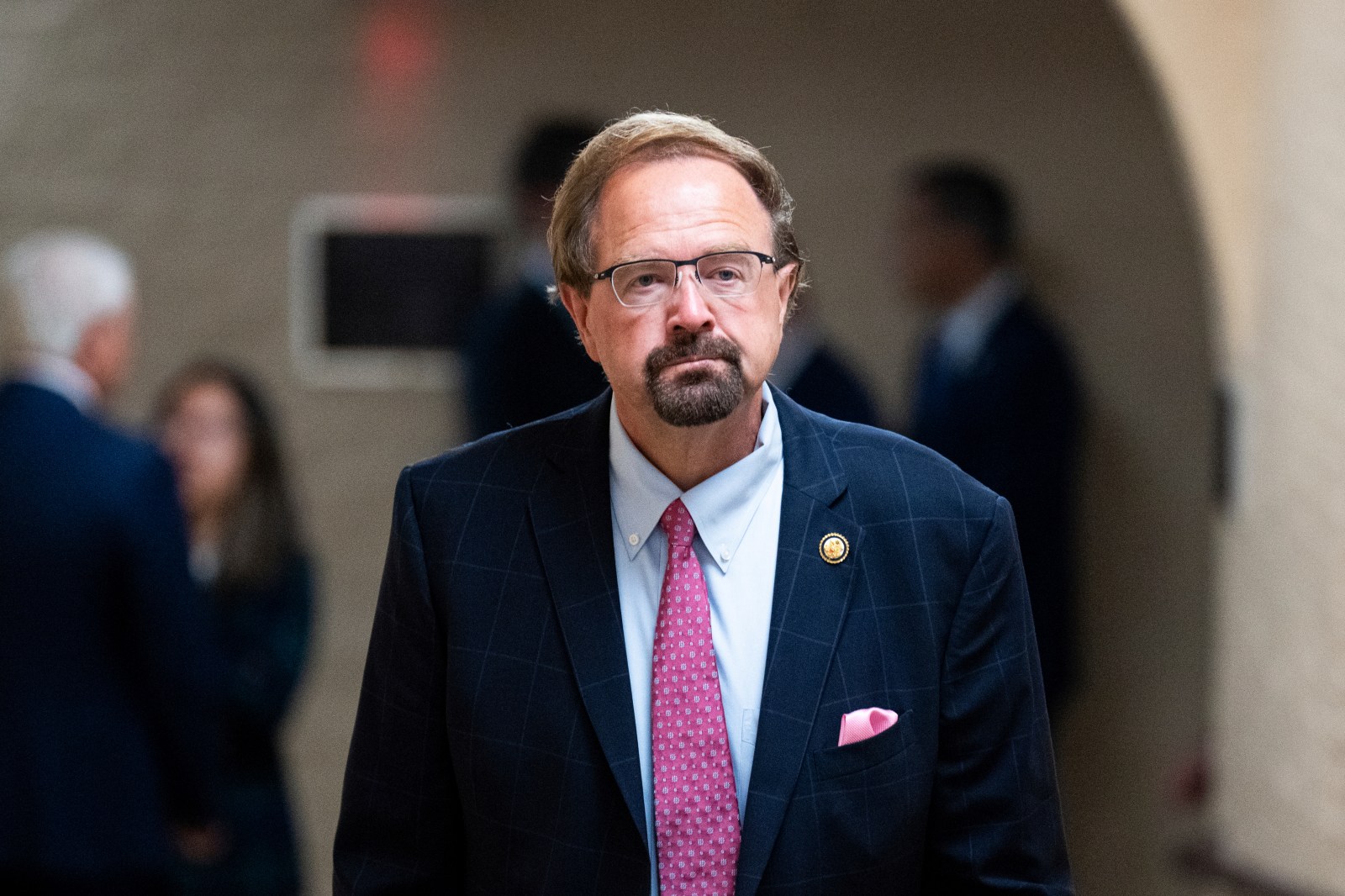
The House Ethics Committee has recommended censuring Representative Chuck Edwards, a Republican from North Carolina, for a pattern of inappropriate behavior toward two female staff members in his office. While censure does not remove a lawmaker from office, it is one of the most serious reprimands and amounts to a formal public condemnation.
In a detailed 25-page report, the bipartisan Ethic Committee concluded that Edwards did not adhere to rules prohibiting sexual harassment and unwanted advances toward House staffers. His conduct blurred professional boundaries, the report found.
The committee’s findings included gifts and attention deemed as falling outside normal workplace standards. Investigators found that Edwards gave the two aides items totaling over $1,000 in value. These included jewelry, designer handbags, firearms, shoes, flowers, a laptop, and a cellphone. He also took the aides on vacations, to perform tickets, and on one-on-one dinners.
Edwards did not explicitly proposition the women or engage in sexual activity, the committee noted. However, his actions would reasonably be seen as romantic or sexual. The report stated that Edwards was either unaware of this perception or dismissive of the impact on the women’s careers and well-being.
Ethics Committee Findings
According to the investigation, a sustained pattern of Edwards’ behavior made the two women uncomfortable. They were in a challenging situation as Edwards was their employer and a U.S. Congress member.
Edwards frequently gave gifts, made remarks about clothing and appearance, expressed affection, and invited staffers on trips and intimate outings beyond the workplace. Although Edwards did not seek a romantic relationship, investigators concluded that he violated the spirit of rules meant to protect congressional employees from harassment.
The committee rejected Edwards’ defense that avoiding physical contact insulated him from misconduct accusations. A reasonable person could interpret his actions as thinly veiled advances, the report stated.
Edwards’ Response to Findings
Edwards challenged the committee’s findings, denying any sexual or romantic intent. He argued through attorneys that the investigation cleared him of serious allegations, as no evidence of sexual activity or propositions was found.
His legal team claimed censure was disproportionate, based on subjective views rather than clear rule violations. Edwards’ attorneys stated the findings indirectly exonerate him due to the absence of direct sexual misconduct evidence.
Heightened Scrutiny on Conduct
The Edwards case arises amid increased scrutiny of lawmakers’ conduct. Recently, controversies led to Representative Eric Swalwell of California and Tony Gonzales of Texas stepping down.
Additionally, Representative Max Miller of Ohio faces pressure related to domestic abuse claims from his ex-wife and former girlfriend. Miller denies allegations and notes no criminal charges were filed.
These cases have intensified debates over accountability and ethical standards in Congress.
The Edwards investigation unfolded amid efforts to improve workplace protections on Capitol Hill. In May, Representatives Kat Cammack of Florida and Teresa Leger Fernández of New Mexico were appointed to lead a bipartisan initiative addressing sexual misconduct and improving work culture.
The Ethics Committee acknowledged Edwards’ cooperation in the investigation. Still, he has not fully recognized or taken responsibility for the impact of his actions on the two staff members.
Next Steps
The Ethics Committee can recommend but not enforce discipline. Censure requires a full House vote.
As lawmakers are in their districts for the August recess, a vote is unlikely soon.
If adopted, Edwards would stand in the chamber while the censure resolution is read aloud, marking a public rebuke of his conduct. This vote will determine whether Edwards joins a small number of lawmakers formally censured historically.
Leave a Reply