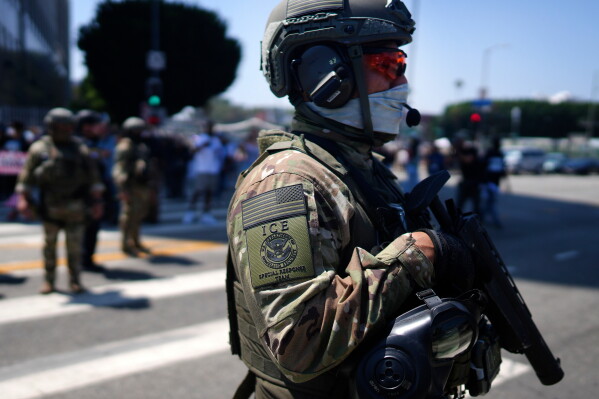
U.S. Immigration and Customs Enforcement (ICE) announced plans for all officers and agents to wear body cameras by the end of August. This expansion may create a significant visual record of immigration enforcement, although public access to footage remains uncertain. ICE’s policy allows agency leaders to delay or withhold footage, particularly after incidents involving serious injury or death in custody.
Acting Director David J. Venturella defended the policy, emphasizing the need to protect investigations and privacy. He stated this aligns with federal law and practices at other agencies. His remarks followed an Associated Press report highlighting ICE’s provision for fast-tracking footage release in the agency’s best interest after major incidents. Venturella argued the report misrepresented this policy.
The AP clarified that their focus was on ICE’s handling of footage post-critical encounters, not a blanket policy on footage release. They reached out to ICE for comments before reporting, receiving partial responses that omitted reference to the “best interests” provision. ICE faces increased scrutiny following two fatal shootings by officers in July, neither of which was recorded on body cameras.
Despite these controversies, Venturella asserted ICE’s commitment to transparency and confirmed the agency’s aim to equip officers with body cameras soon. The report quoted Christopher Schneider, a sociology professor, who highlighted that selective footage releases are common but rarely so explicitly stated in policy.
ICE’s sister agency, Customs and Border Protection, has not yet released footage of a fatal shooting in January, citing ongoing investigations. The commissioner assured lawmakers that footage would be public “when it’s appropriate.” These developments highlight ongoing debates about transparency and accountability in federal law enforcement agencies.
Leave a Reply