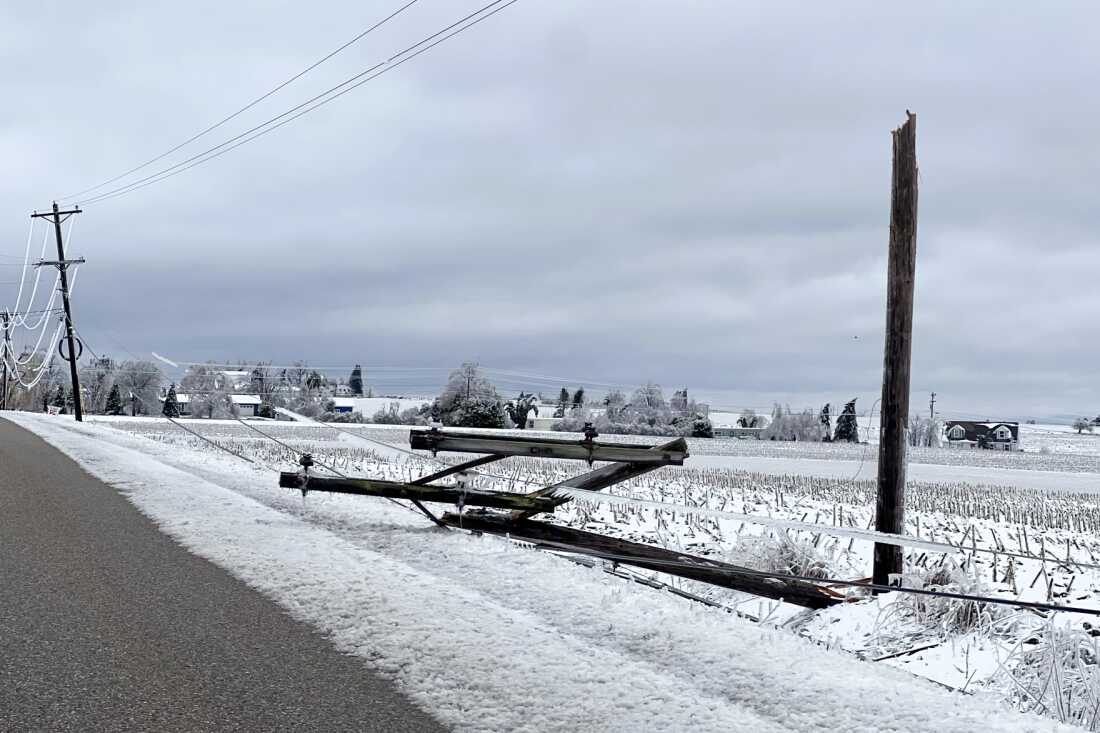
In March 2025, northern Michigan experienced a destructive ice storm, leading to fallen trees and power lines. This natural disaster caused extensive damage and power outages across the region. Research indicates that as the climate warms, the region may face more freezing rain events and potentially more damaging ice storms.
The ice storm revealed vulnerabilities in the power grid that were unprepared for these kinds of extreme weather events. Traditional power lines, often above ground, suffer damage due to trees collapsing during such storms. Burying power lines underground can significantly enhance reliability.
Data from the U.S. Department of Energy shows that only about 20% of U.S. power lines are underground. In response, some utilities in northern Michigan aim to change this approach following the March 2025 ice storm. The storm cut power for weeks, and residents like Lewiston’s Wanda Whiting faced critical situations due to the outages. In her case, navigating dark roads to get her husband to a hospital was a harrowing experience.
Michigan already ranks among states with the longest power outages. As climate patterns shift, longer and more frequent outages may become the norm. Richard B. Rood, a climate change adaptation expert, emphasizes the need to plan for a different future and adapt the power grid accordingly.
The state’s largest electric cooperative plans to bury all new power lines. Despite the reliability benefits, this initiative faces financial challenges. Undergrounding power lines is more expensive. It can cost $400,000 per mile in some areas, and estimates for urban locations hit $2-3 million per mile, as reported by the Michigan Public Service Commission.
Utilities can find options when incorporating new construction. Collaborating with other infrastructure projects like water or gas lines allows for easier integration of underground power lines. Tony Chartrand of Traverse City Light & Power states that it comes down to balancing costs and benefits.
Undergrounding brings potential challenges. Repairs may require digging, making it more labor-intensive. While burying all existing lines is costly, focusing on future projects may provide a practical compromise.
Nationwide, extreme weather induces longer and more frequent outages. Utilities must evaluate costs and communicate the benefits effectively to customers. Andrew Phillips of the Electric Power Research Institute notes utilities are trying to modernize the grid while considering financial limitations.
Tao Sun, Stanford University postdoctoral scholar, highlights the importance for utilities to plan proactively to avoid passing steep costs onto consumers. Learnings from major disasters emphasize timely action in transforming power infrastructure.
In California, similar challenges have led to massive undergrounding projects due to wildfire threats. One year after the Michigan ice storm, some residents continue rebuilding and question the adequacy of current power systems.
If it means going underground, then by God, go underground!– Resident Wanda Whiting
Leave a Reply