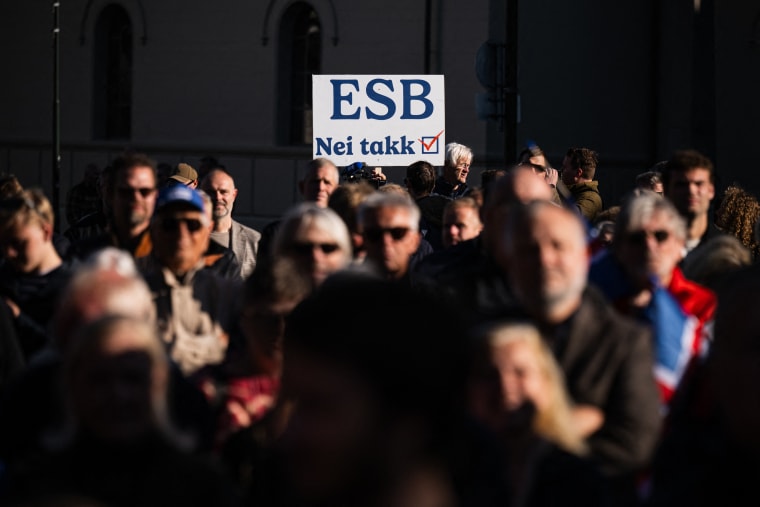
Reykjavik, Iceland — Iceland’s citizens participated in a critical vote on Saturday to decide whether to restart membership discussions with the European Union. The nation faces division on the referendum, which has centered on issues like living costs, security, sovereignty, and managing fishing waters.
The outcome remains uncertain as opinions are evenly divided. A Gallup poll released on Friday indicated a narrow opposition to resuming EU talks—a shift from earlier surveys showing slight support for reopening negotiations.
Advocates for the ‘Yes’ initiative believe joining the EU might alleviate high interest rates and enhance security amid global challenges like the war in Ukraine and U.S. President Donald Trump’s comments regarding Greenland.
On the other hand, those opposing EU membership emphasize the risk it poses to Iceland’s sovereignty and control over fishing waters. Former President Ólafur Ragnar Grímsson, known for opposing EU membership, remarked on social media about the significance of the vote.
A ‘Yes’ result will pave the way for dialogue with Brussels, yet Iceland would need a second referendum years later to ultimately decide on joining the EU.
The EU, which encompasses 27 member nations, stands as one of the world’s largest trading bodies. While countries like Norway and Switzerland also remain outside the EU, Iceland’s decision carries weight as Britain previously exited the union through its own referendum in 2016.
Old Questions, New Urgency
Iceland’s initial attempt to join the EU started in 2009 during a major financial crisis impacting its economy severely. However, talks concluded in 2013 when a Eurosceptic administration ceased negotiations. Recent geopolitical disturbances have heightened the relevance of this longstanding debate.
Foreign Minister Thorgerdur Katrin Gunnarsdottir, a ‘Yes’ proponent, conveyed to Reuters that the vote essentially poses a straightforward query: can Iceland afford to remain isolated amidst global instability?
She expressed concerns regarding the international order that has previously ensured Iceland’s security and prosperity, adding that small nations must deliberate their position and allies.
High Inflation
Within Iceland, the discourse leans more towards interest rates, fishing rights, and living costs rather than security. Iceland is grappling with high inflation and interest rates that have elevated mortgage expenses. Proponents of a ‘Yes’ vote suggest EU membership—and possibly adopting the euro—may offer economic relief. Iceland’s central bank rate stands at 8.00%, contrasting with the European Central Bank’s 2.25% rate.
Vilhjalmur Hilmarsson, Viska’s chief economist, believes EU accession could stimulate a healthier economy, though not resolve Iceland’s systemic issues completely.
Opposition leader Guðrún Hafsteinsdóttir, spearheading the ‘No’ campaign, insists that the economic arguments are exaggerated. She stated Icelandic politicians should address these issues instead of relying on Brussels.
Fishing a Sticking Point
EU regulations dictate fishing quotas based on historical patterns among other factors. Some officials propose Iceland could maintain its waters since EU countries have not fished there for decades.
Nonetheless, opponents remain skeptical. Guðrún Hafsteinsdóttir voiced concerns that any initial flexibility would not endure.
A foreign ministry report estimates accession talks might commence by late 2026 and continue for 18 to 24 months, contingent on positive vote results. Additionally, Iceland faces a general election by November 2028, contributing to political uncertainties amidst negotiations.
Polls across the nation of approximately 400,000 citizens are set to close at 6 p.m. ET.
Leave a Reply