PARIS – Iga Świątek has experienced a successful return to her preferred red clay courts at the French Open. Enjoying favorable weather conditions at Roland Garros, Świątek’s topspin-heavy forehand has been more effective than usual. The draw has also favored her, removing potential threats such as Jelena Ostapenko, who was defeated by Świątek’s fellow Polish player, Magda Linette. Additionally, the surprising exit of No. 2 seed Elena Rybakina in the second round has further opened up Świątek’s path.
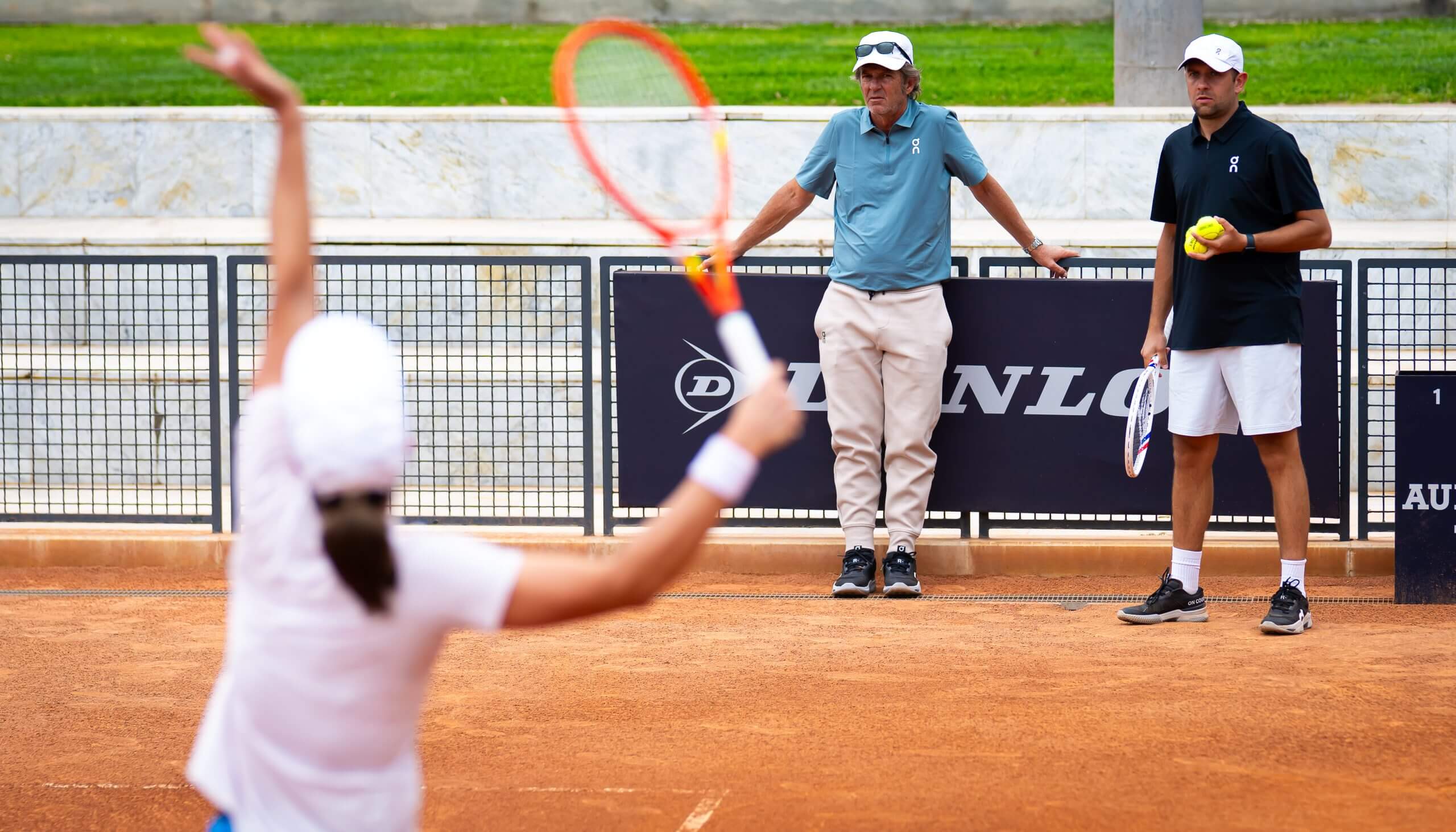
Świątek is progressing through the tournament under new coach Francisco Roig, who joined her team two months ago. She has reached the fourth round, where she faces No. 15 seed Marta Kostyuk, maintaining a solid 3-0 record against her. Świątek acknowledges improvements in her decision-making on court, stating, “I feel like the decision-making has been better, and that’s an improvement.”
Her journey to this point has seen challenges. Earlier in the year, Świątek faced setbacks at major WTA 1000 tournaments. She lost the world No. 2 ranking to Rybakina following a quarterfinal exit at the BNP Paribas Open in Indian Wells, California, and suffered a second-round loss to Linette at the Miami Open. This loss ended her streak of 73 consecutive opening-match wins, signaling a turning point.
Struggling with her performance, Świątek described experiencing tennis as “complicated” in her mind. Her winning tactics had always relied on a balance of offense and defense. Instead of adapting during matches, she found herself over-relying on aggressive play.
Previously caught between two playing styles, Świątek’s victories often relied on direct, first-strike tactics taught by Tomasz Wiktorowski. On the other hand, she had started to introduce a more patient style with former coach Wim Fisette. Despite past successes, inconsistent results followed this approach, sometimes leading to mismatched strategies and errors during crucial points.
To address this inconsistency, Świątek changed her coaching approach. After parting ways with Fisette, she spent time in Spain training at Rafael Nadal’s academy. Impressed by Roig’s humor and complementary coaching style, Świątek has worked on evolving her game. Roig has implemented longer practice rallies and focused on improving Świątek’s footwork, emphasizing fluid movement on court.
Świątek’s improved mindset became evident in her match against world No. 35 Sara Bejlek. Despite 38 unforced errors, she controlled the match from start to finish. Świątek reflected, “I didn’t mind … I wanted to be flexible and adjust and play my game.” Her subsequent victory over Linette highlighted her improved control and decision-making abilities.
Discussing her renewed approach, Świątek explained the importance of trusting her intuition and making rational in-game decisions. She remarked positively, “Now I feel that, for most of time, I make good decisions, and kind of rationally.” Świątek aims to continue this success, adjusting to cooler weather conditions at Paris as the tournament progresses.
Čoaching adjustments and a strategic focus have allowed Świątek not only to improve but also to handle the challenges she faces calmly. The confidence she’s gaining suggests she has the ability to extend her successful performance through the remainder of the French Open.
Leave a Reply